Choosing the right fabric is one of the most important decisions for apparel buyers. A wrong choice can affect product quality, customer feedback, and profit margins. For brands and distributors, understanding the difference between 100% cotton and cotton polyester blend T-shirts helps reduce purchasing risks.
For wholesale T-shirt orders, neither 100% cotton nor cotton polyester blend is always the better choice. 100% cotton T-shirts offer better softness, breathability, and a premium feel, making them suitable for brands focused on comfort and natural fabrics. Cotton polyester blends provide better durability, shape retention, lower shrinkage, and more competitive pricing, making them a practical option for large-scale production and commercial apparel programs.
When we work with apparel buyers at Vison Clothing, we often find that the best fabric depends on the product position, target market, and expected selling price. Instead of choosing based on fabric popularity, buyers should evaluate how the material performs throughout the entire supply chain.
Which Is Better, a Cotton or Polyester T-Shirt?
The answer depends on what the buyer wants to achieve.
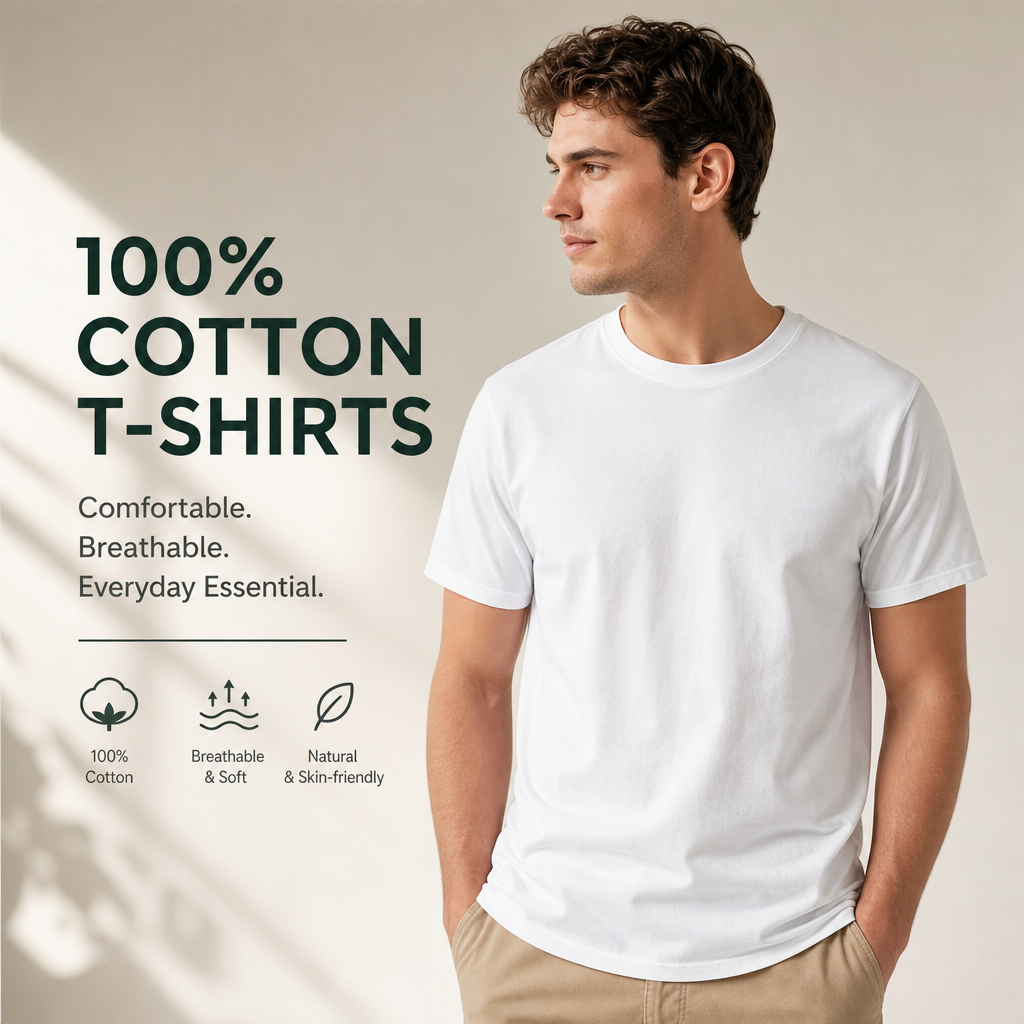
A 100% cotton T-shirt is usually selected for products where comfort and natural texture are the main selling points. Cotton fibers absorb moisture well and provide a soft touch, which is why many premium casualwear brands prefer cotton fabrics.
However, pure cotton also has limitations. It can shrink after washing, wrinkle more easily, and lose shape faster compared with blended fabrics. For brands selling large quantities, these issues may increase quality control pressure.
Cotton polyester blends combine natural cotton fibers with polyester fibers. This combination improves fabric stability while keeping a comfortable wearing experience. Many wholesale buyers choose this option because it offers a better balance between quality and production cost.
For example, 60/40 cotton polyester blend T-shirts are widely used in promotional apparel, workwear, team uniforms, and everyday casual clothing because they perform consistently during mass production.
What Are the Advantages of 100% Cotton T-Shirts?
Better Comfort and Natural Hand Feel
The biggest advantage of cotton is its comfort. Cotton fibers create a soft surface that feels natural against the skin.
For brands targeting premium casualwear or lifestyle clothing, this feature can become an important product selling point.
Good Breathability
Cotton allows air to move through the fabric more easily. This makes cotton T-shirts comfortable in warm environments.
More information about cotton fiber properties can be found here:
[Reference resource: https://www.cottonworks.com/]
Strong Market Acceptance
Many customers recognize cotton as a high-quality material. A “100% cotton” label can help brands communicate natural materials and premium positioning.
For buyers developing higher-priced collections, pure cotton may support stronger brand value.
What Are the Disadvantages of Pure Cotton Fabric?
Although cotton has many advantages, it is not perfect for every wholesale order.
Higher Shrinkage Risk
Cotton fibers naturally shrink when exposed to heat and moisture. Manufacturers usually control this through processes such as pre-shrinking or fabric treatment, but buyers still need reliable suppliers to manage quality.
More Wrinkles During Use
Compared with polyester blends, cotton wrinkles more easily. This can create additional requirements for customers who want low-maintenance clothing.
Lower Shape Retention
After repeated washing, some cotton garments may lose their original shape faster than blended fabrics.
For large retail programs, these factors should be considered before selecting 100% cotton.
Is 60% Cotton 40% Polyester a Good Blend?
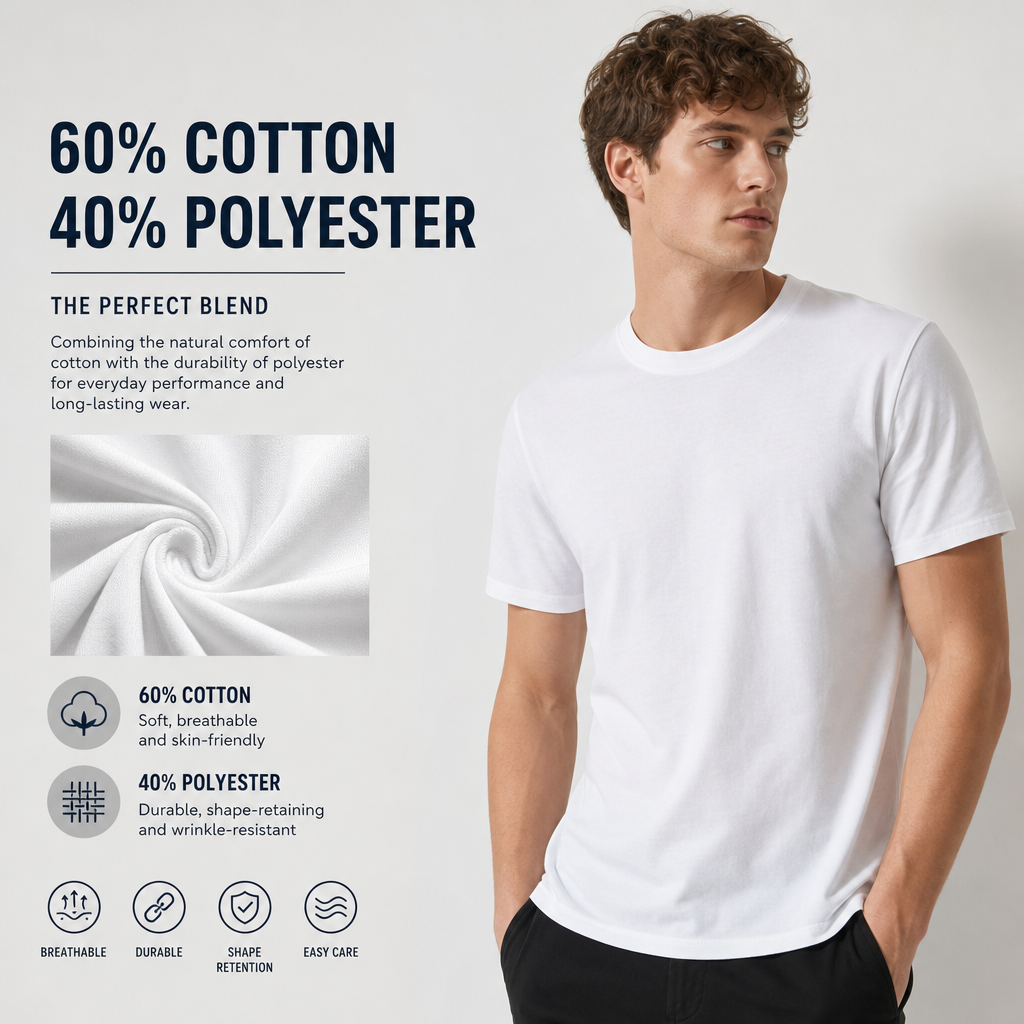
Yes, 60% cotton and 40% polyester is one of the most commonly used fabric combinations for commercial T-shirts.
This ratio keeps much of cotton’s softness while adding polyester’s durability and stability.
For apparel buyers, the advantages include:
- Reduced shrinkage after washing
- Better wrinkle resistance
- Improved color retention
- Longer garment lifespan
- More stable production results
Many brands choose this fabric because it performs well across different sales channels. It can be used for retail collections, corporate apparel, promotional clothing, and wholesale T-shirt programs.
For buyers comparing cotton polyester shirt options, the fabric ratio is an important factor. Different percentages create different balances between comfort, performance, and cost.
Why Do Wholesale Buyers Choose Cotton Polyester Blend T-Shirts?
For bulk purchasing, consistency is often as important as fabric quality.
A wholesale buyer may order thousands or tens of thousands of pieces. Small differences in shrinkage, color stability, or fabric performance can create customer complaints and additional costs.
Cotton polyester blends help manufacturers achieve more stable production results.
From a factory perspective, we often recommend blended fabrics for buyers who need:
- Large order quantities
- Competitive pricing
- Reliable delivery schedules
- Easy-care garments
- Consistent sizing between production batches
For companies managing seasonal sales, delivery timing is critical. A fabric that maintains stability during manufacturing can help reduce production delays.
Polyester vs Cotton in Summer: Which Fabric Performs Better?
The answer depends on the environment and product purpose.
Pure cotton generally provides a cooler and softer feeling because of its moisture absorption ability. It is often preferred for casual summer clothing.
However, polyester has advantages in moisture management and quick drying. This is why polyester materials are often used in sportswear.
A cotton polyester blend can provide a middle solution. It offers more comfort than pure polyester while improving durability compared with pure cotton.
For brands selling in different regions, such as Europe, America, and Australia, climate conditions and customer expectations should be considered before choosing the final fabric.
How Should Apparel Buyers Choose the Right T-Shirt Fabric?
There is no universal fabric that works for every brand.
When selecting materials for wholesale T-shirts, buyers should consider:
Product Position
Premium lifestyle products may benefit from 100% cotton. Cost-sensitive commercial programs may perform better with cotton polyester blends.
Target Market
Different markets have different expectations. Some customers prioritize natural fabrics, while others care more about durability and price.
Production Requirements
Large orders require stable quality. Fabric performance, supplier experience, and quality control systems all influence the final result.
At Vison Clothing, we help brands and apparel buyers select suitable fabrics based on product goals, order quantity, and market requirements. With five production lines and OEM manufacturing experience, our focus is helping customers achieve reliable quality with competitive costs.
Summary
For wholesale T-shirt buyers, choosing between 100% cotton and cotton polyester blend depends on product positioning, market needs, and budget. The right fabric choice helps brands improve quality, control costs, and build stronger customer trust.