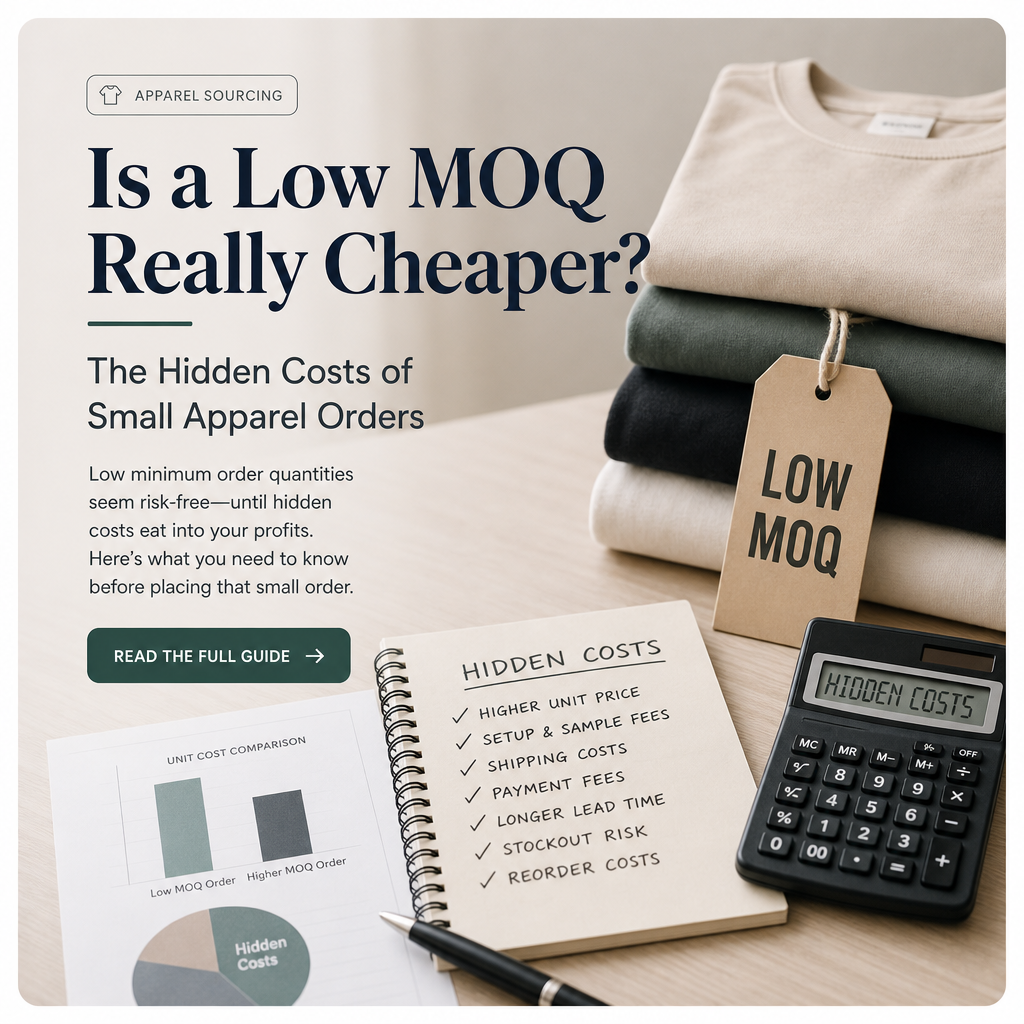
A low MOQ sounds attractive when you are starting a new clothing line.
You can test a design without putting a large amount of money into inventory. If the product does not sell, you are not left with thousands of unwanted pieces.
That is a real advantage.
But there is another side that buyers sometimes discover after receiving the quotation.
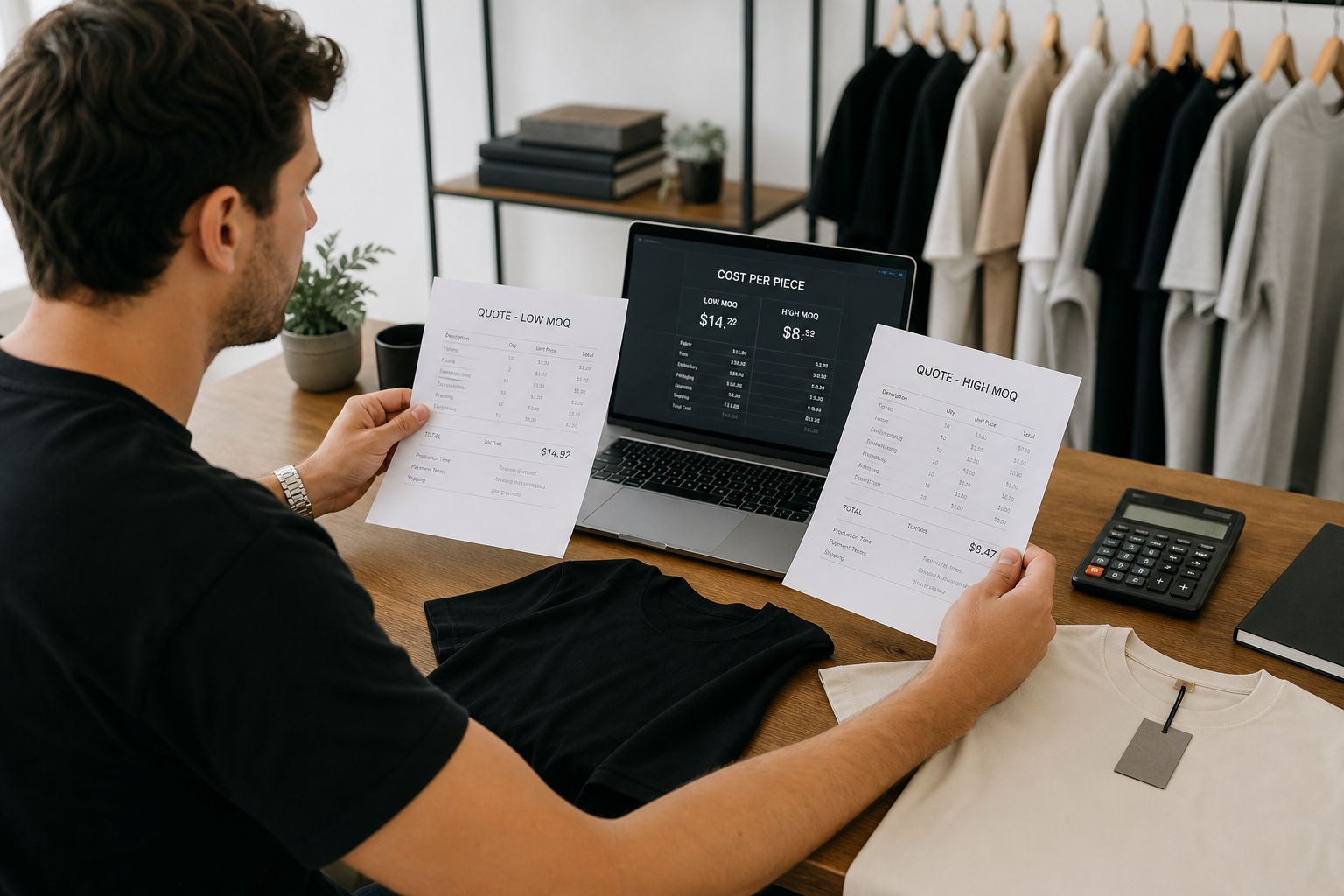
A small order does not always have a lower total cost.
The price per piece can actually be higher because the factory has many of the same development and production costs to cover, but across fewer garments.
For apparel brands and wholesalers, understanding these costs before placing an order can help you make a better decision.
What Does Low MOQ Mean in Clothing Manufacturing?
MOQ stands for Minimum Order Quantity.
In apparel manufacturing, the MOQ may be based on the total number of pieces, a style, a color, or sometimes a combination of these.
For example, a factory might quote:
100 pieces per style
Another factory may require:
300 pieces per color
These are very different conditions.
A buyer should ask exactly how the MOQ is calculated before comparing suppliers.
This is particularly important for custom clothing.
A factory may accept 100 pieces, but that does not necessarily mean you can order 20 pieces in five different colors with the same price.
Why Is a Small Clothing Order More Expensive?
The main reason is simple.
Some production costs do not decrease much when the quantity becomes smaller.
Take pattern making as an example.
If a factory spends several hours creating a pattern for a hoodie, the work is almost the same whether the order contains 100 pieces or 1,000 pieces.
The same applies to sample development.
The factory still needs to prepare the fabric, make the sample, check the measurements, and make adjustments.
These costs are spread across the order.
With 1,000 pieces, the cost per garment becomes relatively small.
With 100 pieces, it becomes much more noticeable.
Hidden Cost 1: Sampling and Pattern Development
Sampling is one of the first costs that gets overlooked.
A custom T-shirt or hoodie may require several rounds of development before the fit is approved.
You may need to adjust:
- Body length
- Chest width
- Sleeve shape
- Hood size
- Rib dimensions
- Pocket position
- Fabric weight
The factory spends time on each revision.
The number of garments in the final order does not change that workload very much.
For a small production run, development costs therefore have a bigger impact on the final cost per piece.
If you are ordering 100 hoodies, spending $150 on development adds $1.50 per garment.
With 1,000 hoodies, the same development cost adds only $0.15 per garment.
The factory did the same work.
The order quantity changed the unit economics.
Hidden Cost 2: Fabric Minimums
Fabric is another important issue.
A buyer may only need 100 hoodies.
The fabric mill or fabric supplier may have a much higher minimum quantity for custom production.
This becomes particularly relevant when you want:
100% cotton
A specific GSM
Custom colors
Special washing
Custom knitting or finishing
A small apparel order may therefore need to use available stock fabric instead of producing a completely custom fabric.
If custom fabric has to be arranged, the additional cost may be charged to the small order.
This is one reason why a supplier may offer a much better price when the quantity increases.
Hidden Cost 3: Custom Dyeing
Color can create another MOQ problem.
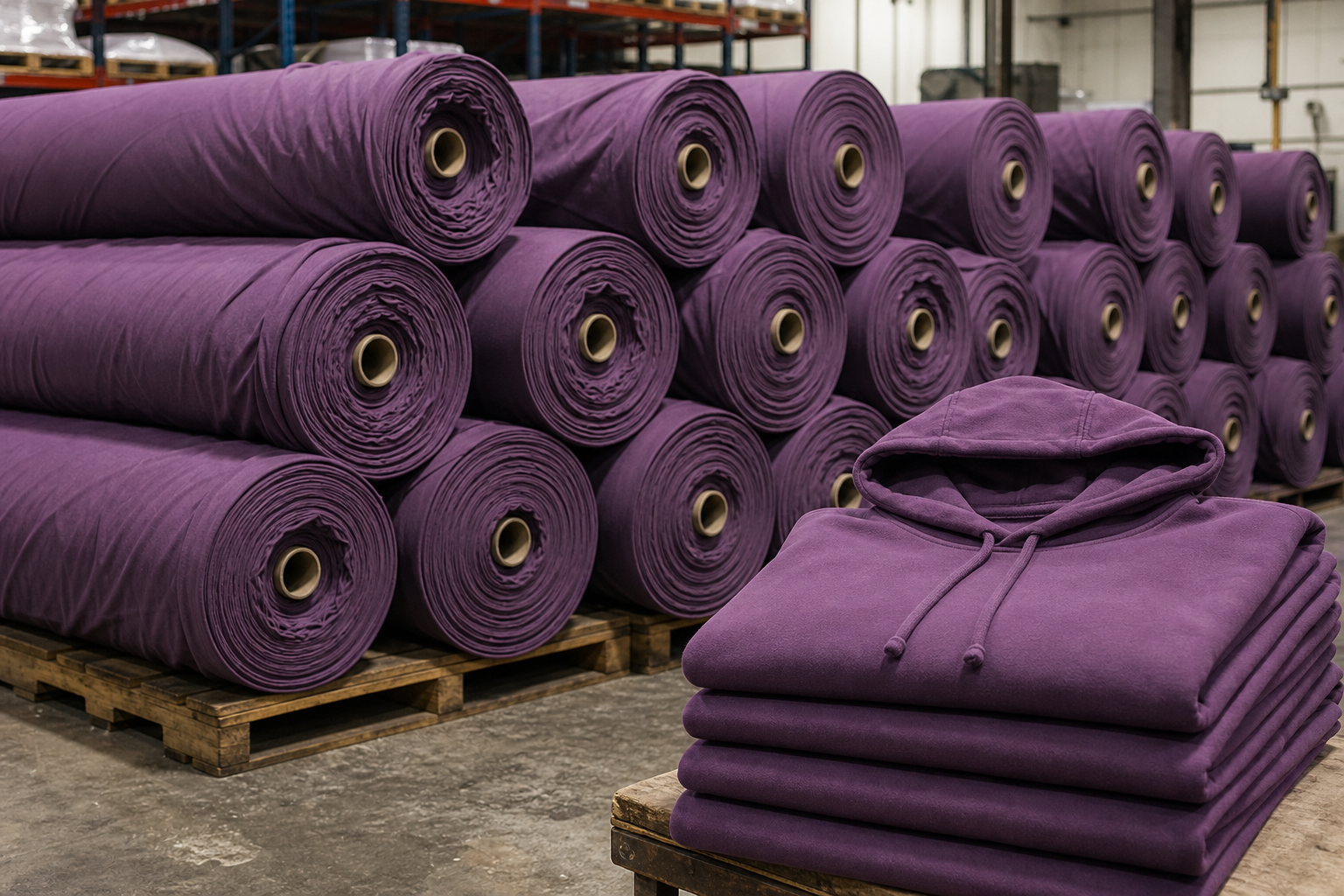
Suppose you want 100 hoodies in a color that the factory does not currently have in stock.
The fabric needs to be dyed specifically for your order.
The dye house may have its own minimum quantity.
The actual fabric required for 100 hoodies may be far below that minimum.
Someone still has to pay for the unused fabric or the additional dyeing cost.
The result can be a higher fabric cost per garment.
This is why stock colors are often easier to use for low-MOQ production.
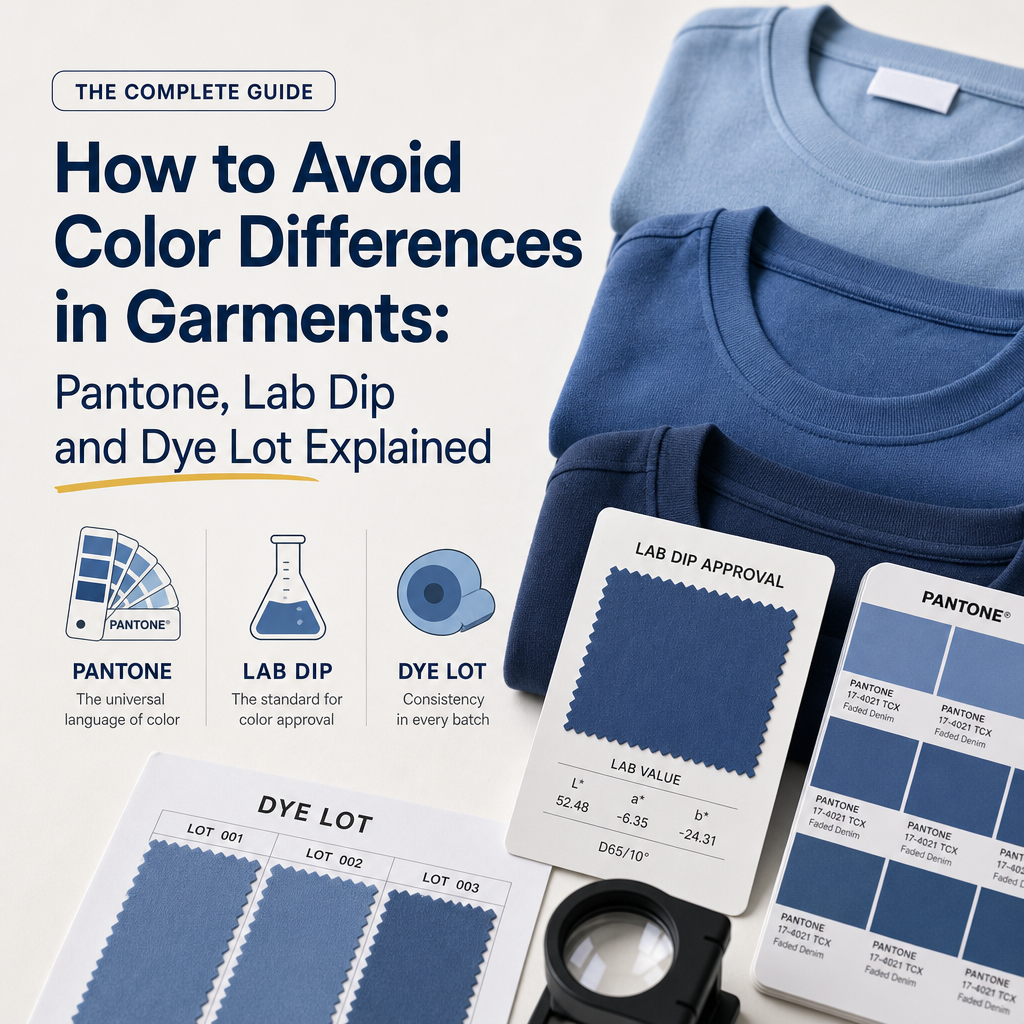
If your brand requires a very specific Pantone color, ask the supplier about the dyeing MOQ before finalizing the order quantity.
Hidden Cost 4: Printing and Embroidery Setup
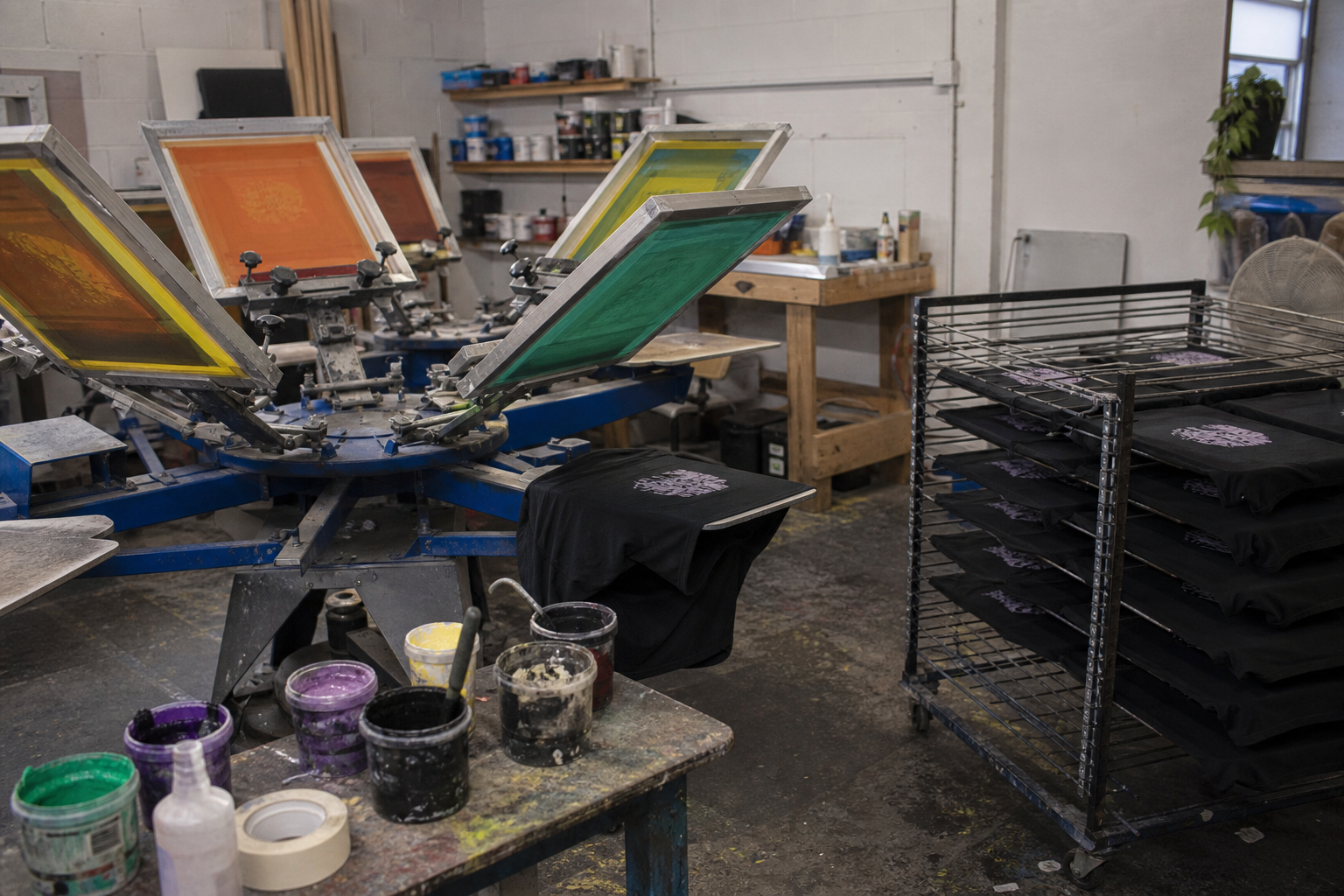
Printing is another area where small orders can become expensive.
Some printing methods require screens, plates, setup work, or special preparation.
If you order 1,000 T-shirts, the setup cost is spread across many pieces.
If you order 50 pieces, the same setup cost is spread across only 50.
The same principle applies to embroidery.
A small logo may not be expensive on its own, but digitizing and machine setup still take time.
This does not mean small orders should avoid custom printing.
It simply means that the printing method should match the order size.
For very small quantities, some techniques can make more sense than others.
Hidden Cost 5: Garment Washing
Washing can make a small order more complicated.
A garment-washed T-shirt or hoodie requires additional processing after sewing.
The factory needs to control the washing recipe, temperature, chemicals, drying, shrinkage, and final appearance.
If the order is small, the washing cost per piece can be higher.
There may also be a minimum processing charge from the washing facility.
This is especially relevant for vintage streetwear.
A buyer might request a heavily washed 100% cotton hoodie in several colors, but each color can create another production requirement.
The cost can move quickly away from the original low-MOQ quotation.
Hidden Cost 6: Size Breakdown
Quantity is not the only issue.
The size breakdown matters too.
Imagine you order 100 T-shirts:
- 20 S
- 30 M
- 30 L
- 20 XL
That is manageable.
But if you order 100 pieces across seven sizes, the number of garments per size becomes much smaller.
This can make production planning less efficient.
It is not necessarily a major additional cost, but it is something the factory needs to consider when planning cutting and production.
For a new brand, a smaller number of sizes may sometimes be more practical for the first order.
Hidden Cost 7: Packaging
Packaging costs can also become significant in small orders.
Standard polybags and cartons are relatively straightforward.
Custom packaging is different.
You may want branded polybags, custom cartons, stickers, hangtags, tissue paper, or special folding.
The packaging supplier may have its own MOQ.
If you only need 100 sets, you may have to pay for a larger quantity than your production order requires.
This leaves unused packaging inventory.
For a small first order, simple packaging can sometimes be a better choice.
You can upgrade it once the product has proven itself.
Hidden Cost 8: Quality Control
Quality control does not disappear because the order is small.
The factory still needs to check measurements, sewing quality, appearance, labels, printing, and other specifications.
In some cases, small orders can actually require more attention per garment because the order may contain several different colors or complicated details.
If you are using an independent inspection company, there may also be a minimum inspection charge.
For example, inspecting 1,000 pieces does not necessarily cost ten times as much as inspecting 100 pieces.
This means inspection costs can have a larger effect on small orders.
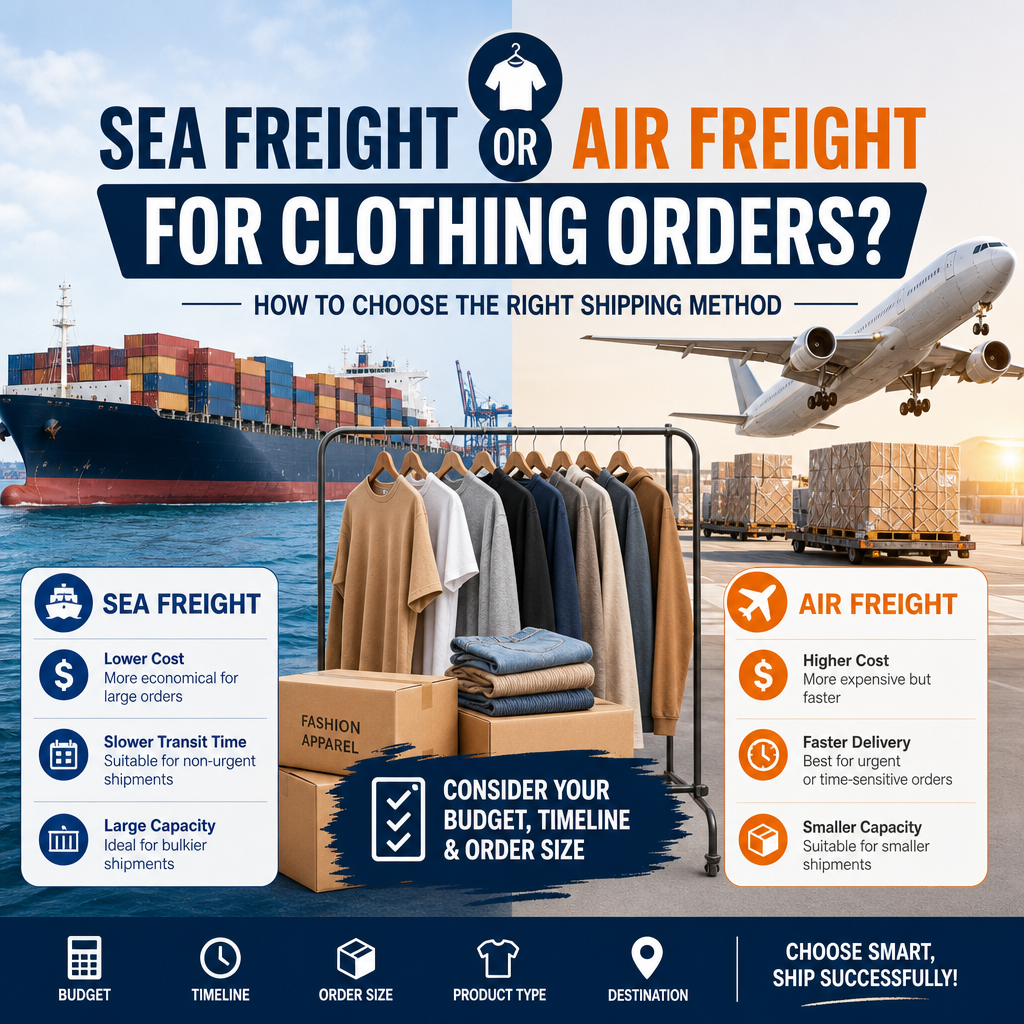
Hidden Cost 9: Shipping
Shipping is often forgotten when buyers compare factory prices.
A small order may have a low product value, but international shipping can still be expensive relative to the order.
This is especially noticeable with air freight or courier shipments.
For example, shipping 100 hoodies may cost a significant amount per piece.
With 1,000 hoodies, the freight cost is distributed across a much larger number of garments.
For overseas buyers, the number that matters is not only the factory unit price.
You should look at the landed cost.
That means considering the product cost together with shipping and other import-related expenses.
Hidden Cost 10: Production Efficiency
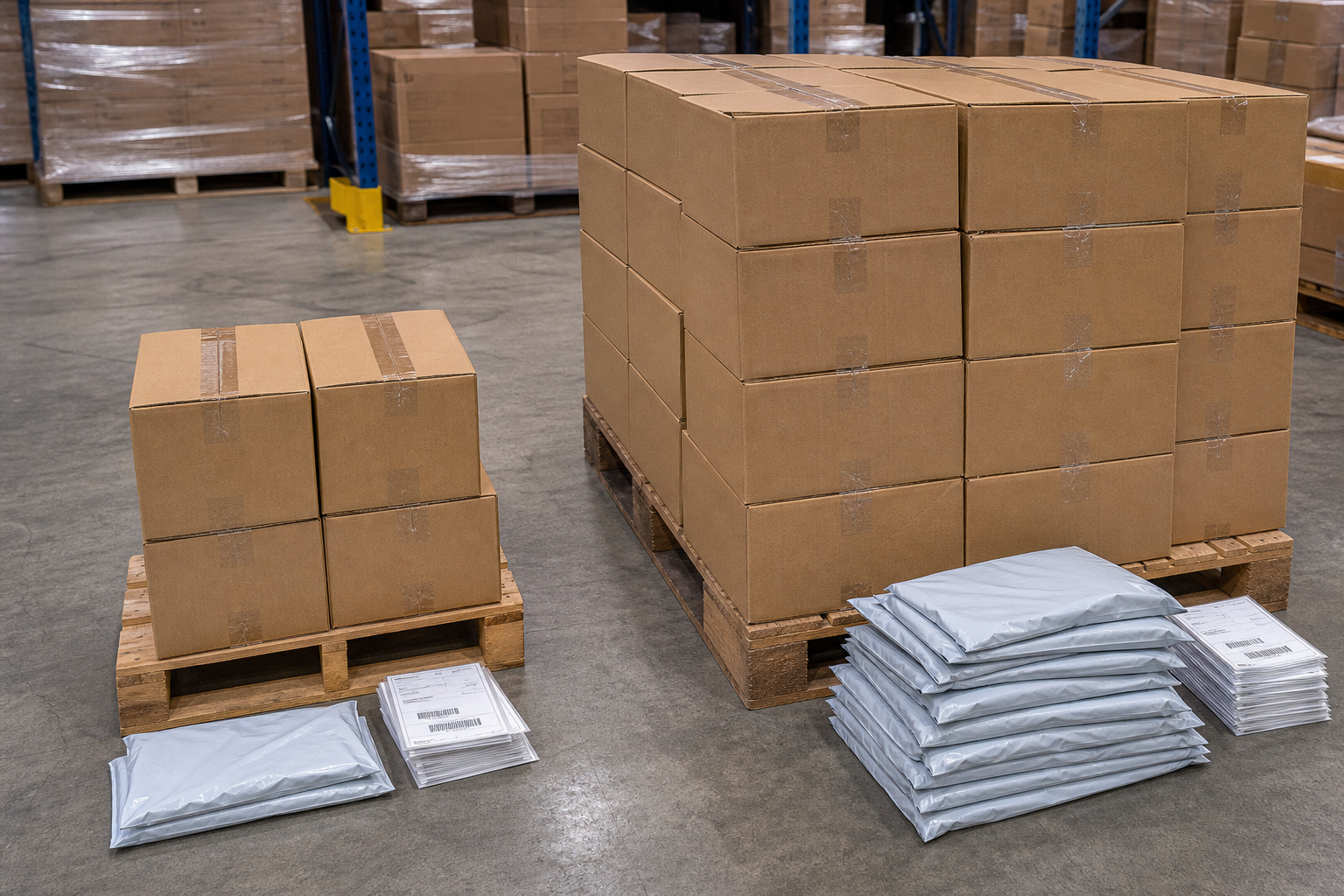
Large production runs are generally easier for a factory to plan.
Once cutting and sewing are running smoothly, the production line can continue working on the same style.
A 100-piece order may require setup and line preparation that takes a similar amount of time to a larger order.
The factory still needs to organize workers, cutting, sewing, quality checks, and packing.
When the order is very small, those fixed production activities represent a larger cost per garment.
This is one of the main reasons a low MOQ does not automatically mean a low unit price.
Does a Higher MOQ Always Save Money?
No.
Buying more products simply to obtain a lower unit price is not necessarily a good business decision.
If you order 2,000 pieces and only sell 800, the remaining inventory has a cost.
Storage costs money.
Discounting slow-moving products reduces your margin.
Unsold inventory can also become outdated if your collection is trend-driven.
For a new brand, this risk can be more important than saving a few dollars on the factory price.
A larger MOQ makes more sense when you already have evidence that the product sells.
When Does Low MOQ Make Sense?
Low MOQ can be a good option in several situations.
You are testing a new design
You do not know how customers will respond yet.
A smaller order limits your inventory risk.
You are launching a new brand
You may need several styles but do not have enough capital to purchase large quantities of each one.
You are testing a new market
The product may work well in one country but not another.
A smaller first order gives you room to test.
You need to test the supplier
Before committing to a large production run, a smaller order can help you evaluate communication, quality control, packaging, and delivery performance.
This is particularly useful when working with a new overseas manufacturer.
When Should You Increase the MOQ?
Once a product has proven demand, the calculation changes.
Suppose your first 100 hoodies sell quickly.
You receive repeat orders from retailers.
Customers are asking for more sizes.
At this point, ordering another 100 pieces at a high unit price may not be the most efficient option.
You may be better off increasing the order to 500 or 1,000 pieces.
The exact quantity depends on the sales forecast and available cash flow.
The goal is not to chase the lowest possible factory price.
The goal is to find a quantity that gives you a reasonable unit cost without creating unnecessary inventory.
Low MOQ vs High MOQ
| Factor | Low MOQ | Higher MOQ |
|---|---|---|
| Initial Investment | Lower | Higher |
| Unit Cost | Usually higher | Usually lower |
| Inventory Risk | Lower | Higher |
| Custom Fabric | More difficult | Easier |
| Custom Dyeing | More expensive per piece | More efficient |
| Printing Setup | Higher per piece | Lower per piece |
| Packaging | Limited options | More flexibility |
| Freight Cost per Piece | Usually higher | Usually lower |
| Product Testing | Easier | More commitment |
| Cash Flow Pressure | Lower | Higher |
How Can You Reduce the Cost of a Small Apparel Order?

You do not always need to increase the MOQ.
There are other ways to make a small order more efficient.
Using stock fabric is one option.
Keeping the number of colors under control can also help.
For the first order, standard packaging may be more practical than fully custom packaging.
You can also use a printing method that does not require a large setup cost.
Another option is to produce several styles using the same fabric.
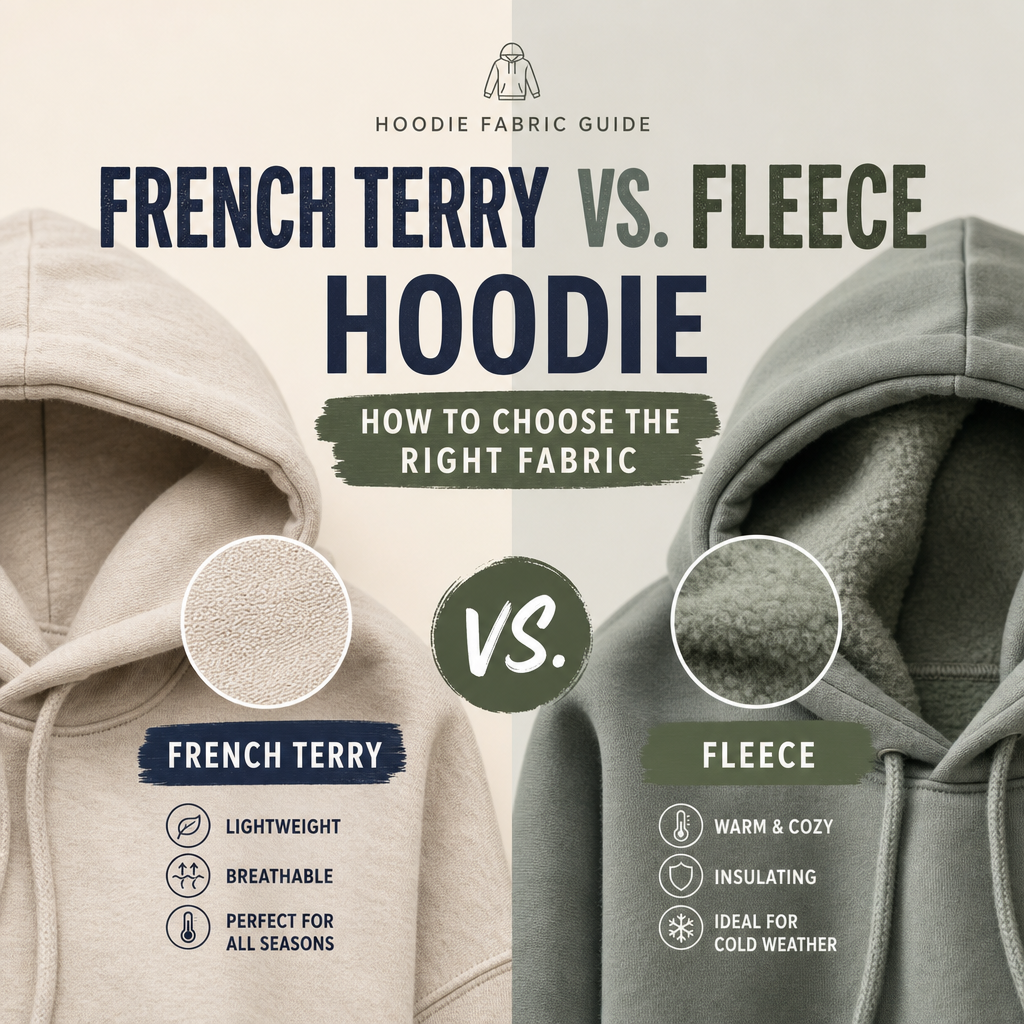
For example, if you are developing a small streetwear collection, you might use the same 100% cotton French Terry for several hoodie styles.
The total fabric requirement becomes larger even though each individual style has a relatively small quantity.
This is something worth discussing with the manufacturer before the quotation is finalized.
What Should You Ask a Low MOQ Clothing Manufacturer?
Do not ask only:
“What is your MOQ?”
Ask what the MOQ actually includes.
For example:
Is the MOQ per style or per color?
Can I mix colors?
Can I mix sizes?
Is the fabric in stock?
Is custom dyeing available at this quantity?
Are sampling costs included?
Is custom packaging included?
Is there an additional charge for small orders?
What happens if I reorder the same style?
These questions give you a much clearer picture of the real production cost.
A supplier offering a 50-piece MOQ may not necessarily be cheaper than one requiring 200 pieces.
You need to compare the complete quotation.
How We Handle Low MOQ Orders at Vison Clothing
At Vison Clothing, we work with apparel brands, wholesalers, and buyers on OEM production.
When a customer asks for a low MOQ, we first look at the product requirements.
A simple T-shirt using available fabric is easier to handle at a small quantity than a heavily washed hoodie using custom-developed fabric and special packaging.
We also look at whether several styles can share the same fabric.
This can sometimes make a small collection more practical.
For new customers, we prefer to make the production requirements clear before sampling. If there are additional costs caused by custom fabric, dyeing, washing, printing, or packaging, the buyer should know about them before placing the order.
That makes the quotation easier to understand and avoids surprises later.
If you are testing a new design, you can also start with a smaller quantity and increase the order once the product has been tested in your market.
FAQ
Is a low MOQ always cheaper?
No. A low MOQ reduces the amount of inventory you need to buy, but the unit cost is often higher because fixed production costs are spread across fewer garments.
What is a good MOQ for a new clothing brand?
There is no universal number. A small first order can make sense when you are testing a product or supplier. The right quantity depends on the product and expected sales.
Why do low MOQ clothing orders cost more?
Sampling, fabric preparation, dyeing, printing setup, washing, packaging, and production setup can all have fixed or minimum costs.
Can I order different colors under one MOQ?
Sometimes. It depends on the factory and the fabric. Always ask whether the MOQ applies per style, color, or total order.
Does custom fabric require a higher MOQ?
Usually. Fabric mills often have their own minimum production quantities, especially for custom colors or special fabric constructions.
Is low MOQ better for startups?
It can reduce inventory risk and initial cash requirements. However, the higher unit price needs to be included in your product costing.
How can I reduce the cost of a small apparel order?
Stock fabrics, fewer colors, standard packaging, simpler printing methods, and combining several styles with the same fabric can help.
Should I choose a supplier based on MOQ alone?
No. Check the complete quotation, fabric quality, sample quality, production lead time, QC process, communication, and shipping terms.
Final Thoughts
A low MOQ solves one problem: you do not need to buy a large quantity at the beginning.
It does not automatically solve the cost problem.
For a new product, a small order can be a sensible way to test the market. Once the product has proven demand, increasing the quantity can bring the unit cost down.
The important number is not the MOQ shown on the supplier’s website.
It is the total landed cost of the order.
Before placing a small apparel order, ask the factory how fabric, dyeing, printing, washing, packaging, and shipping will affect the final price.
At Vison Clothing, we manufacture OEM apparel for brands, wholesalers, and apparel buyers. If you have a small production requirement, send us your Tech Pack or product specifications. We can review the order and explain where the main costs are coming from before sampling.