When a buyer starts developing a new hoodie, one of the first fabric questions is usually:
French Terry or fleece?
It sounds like a simple choice, but the answer depends on what you are trying to make.
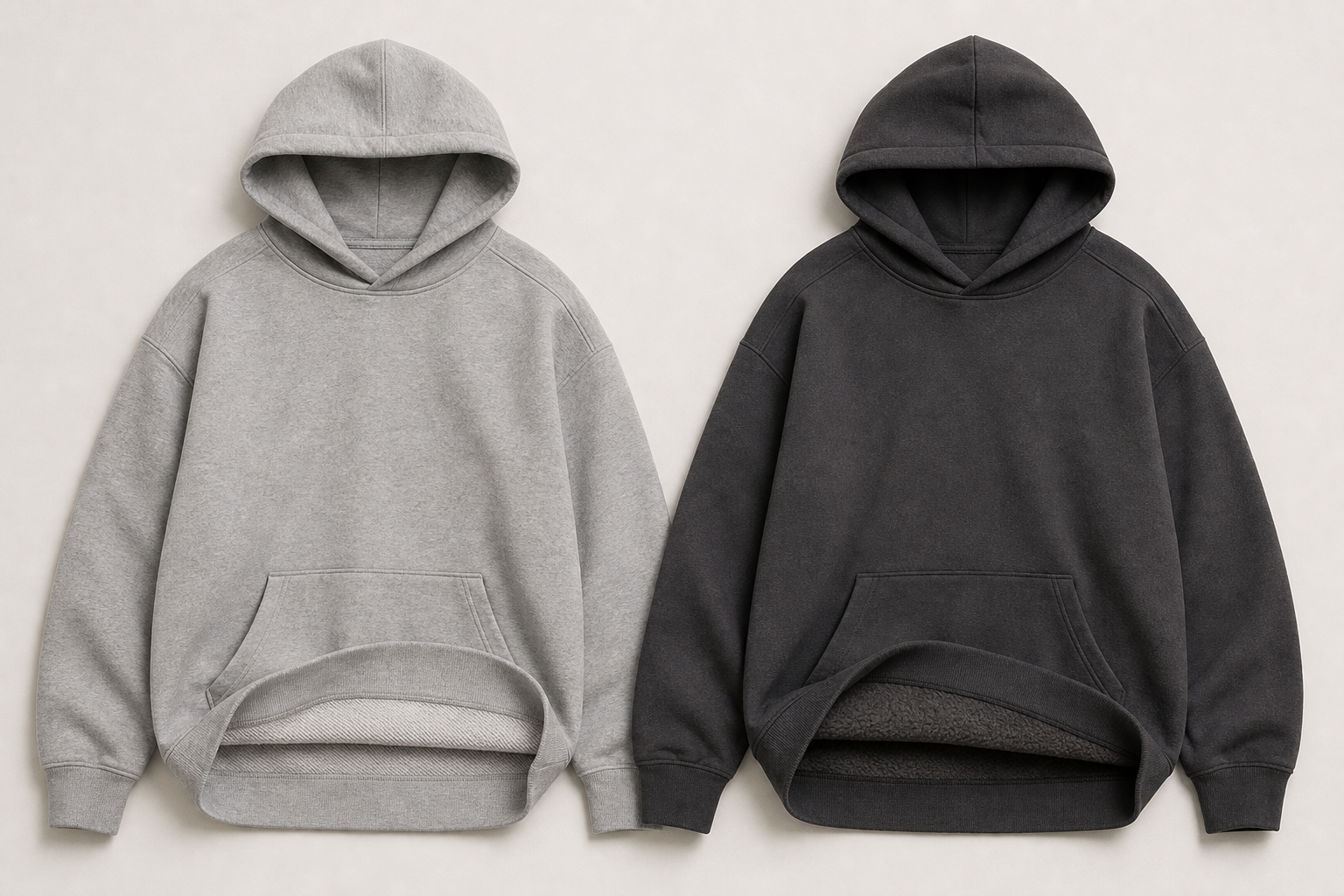
A 400 GSM French Terry hoodie will not feel like a 400 GSM fleece hoodie. The weight may be similar, but the inside of the fabric, warmth, drape, and overall hand feel are different.
For brands selling in Europe and North America, the decision usually comes down to the season, target price, fit, and how the finished hoodie should feel.
I work with buyers on these details during product development, so in this guide I will explain how I normally look at the two fabrics.
What Is the Difference Between French Terry and Fleece?
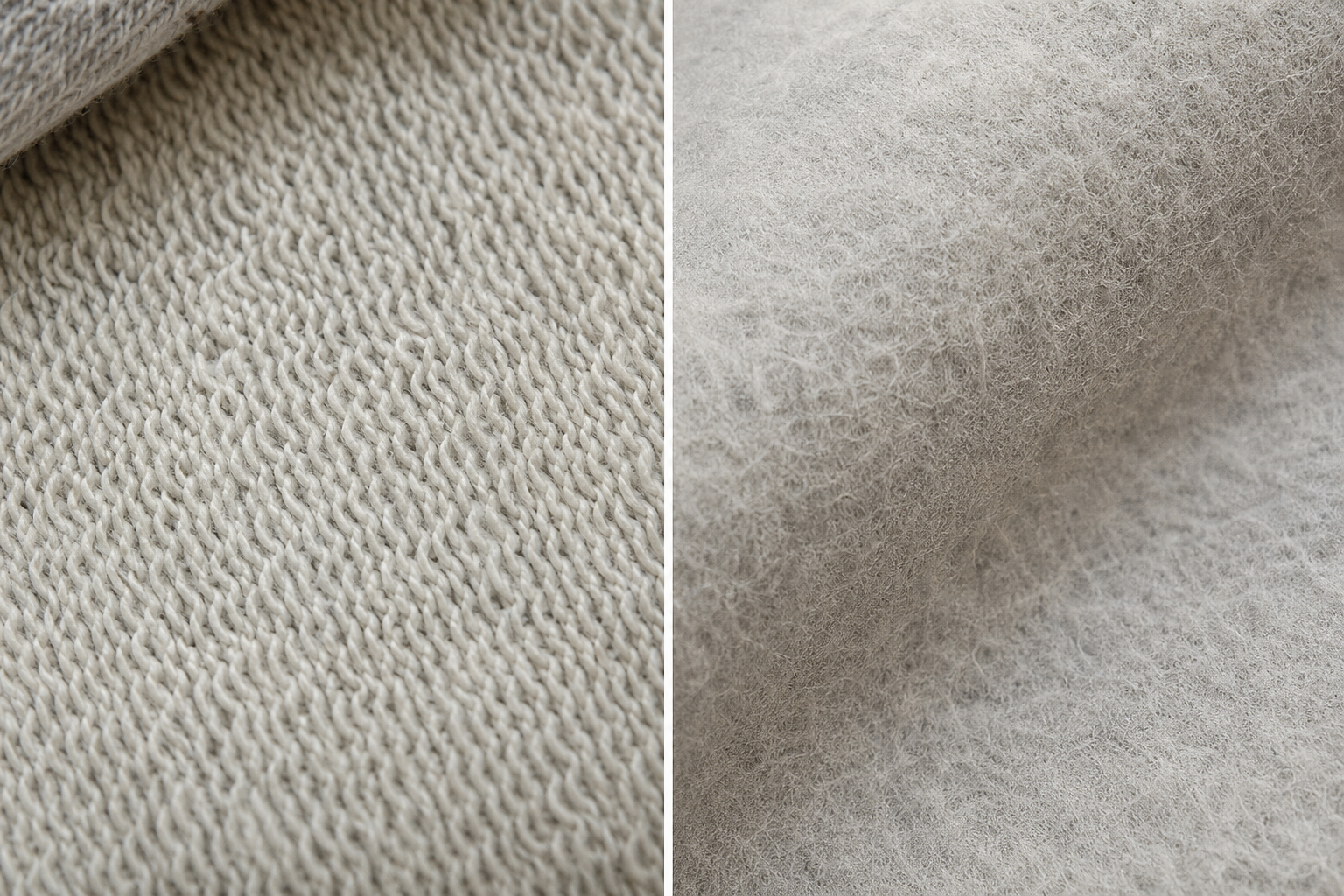
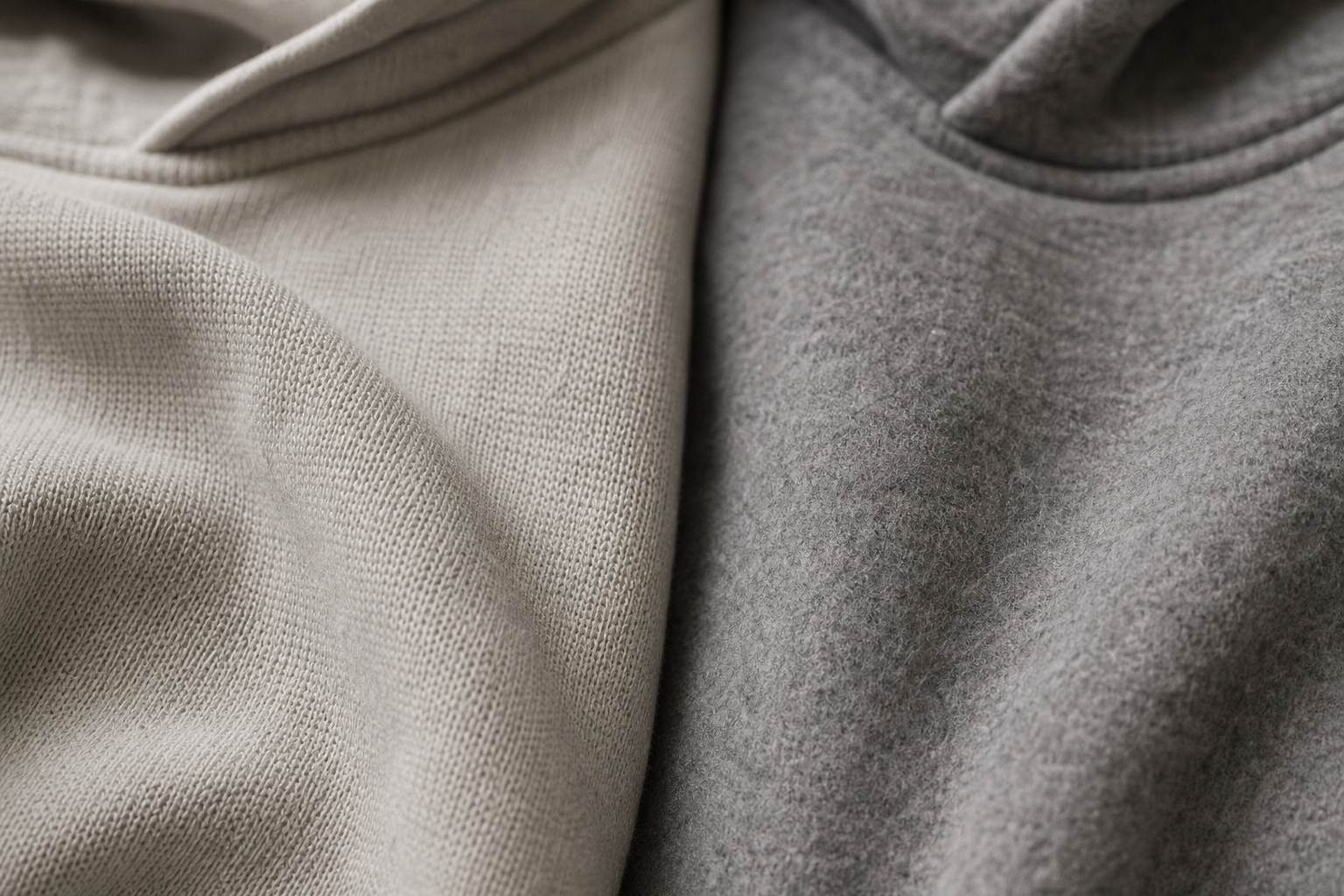
The easiest way to understand the difference is to look at the inside of the fabric.
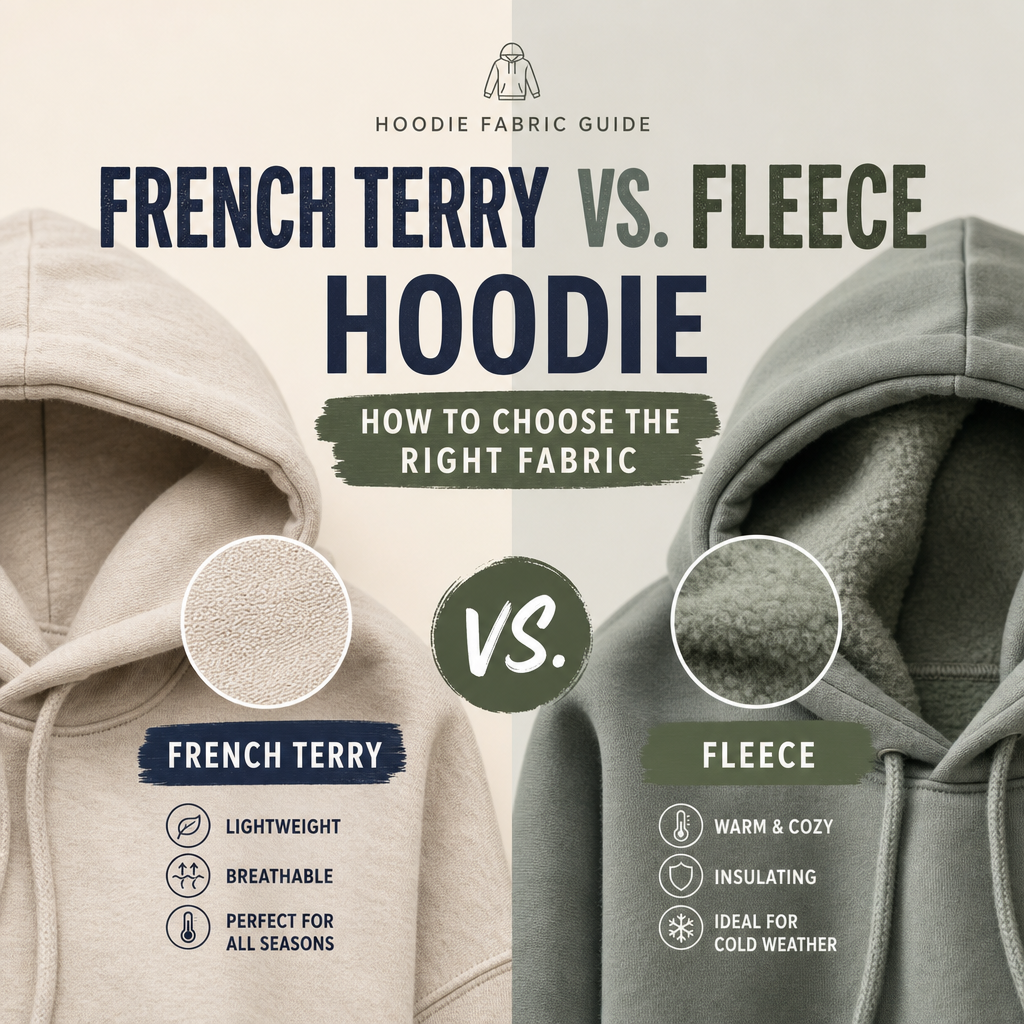
French Terry has small loops on the back. These loops remain visible after knitting, so the inside feels relatively smooth and structured.
Fleece is brushed after knitting. The brushing pulls some of the fibers to the surface and creates a soft, fuzzy layer.
You can feel the difference immediately.
French Terry tends to have a cleaner and more natural feel. Fleece feels warmer and softer against the skin.
The difference becomes more noticeable as the fabric gets heavier.
This is why a buyer should not choose a hoodie fabric based on GSM alone.
When Should You Choose French Terry?
French Terry works well for hoodies that need to be worn across different seasons.
It is a common choice for spring and fall collections. It can also work for heavyweight streetwear hoodies when the brand wants a firm, substantial garment without a brushed interior.
The fabric has a relatively clean appearance.
That makes it a good match for Boxy Fit and Drop Shoulder hoodies.
For example, a 400 GSM 100% cotton French Terry hoodie can have plenty of weight while keeping a fairly sharp silhouette.
It will not have the same warm, fluffy feeling as fleece, but that is sometimes exactly what the design needs.
A buyer making a premium streetwear hoodie should consider this option before automatically choosing fleece.

When Does Fleece Make More Sense?
Fleece is usually the better choice when warmth is important.
The brushed inside holds more air and creates a softer layer against the body. This makes fleece particularly suitable for fall and winter products.
A 350–450 GSM fleece hoodie can feel much warmer than a French Terry hoodie with a similar GSM.
This is useful for brands selling in colder parts of Europe, Canada, and the northern US.
There is another reason brands choose fleece.
Many consumers already associate a brushed hoodie with comfort and warmth. For a winter collection, that familiar feeling can be an advantage.
The downside is that a heavily brushed fabric can make an oversized garment feel quite bulky.
That is something I would check during sampling.
Does Higher GSM Mean a Better Hoodie?
No.
This is one of the most common misunderstandings when buying heavyweight apparel.
GSM tells you the weight of the fabric per square meter. It does not tell you everything about the fabric.
Two fabrics can both be 450 GSM and still have very different hand feels.
The yarn, knitting construction, fiber composition, finishing, and brushing all have an effect.
For example, one 450 GSM hoodie may feel firm and structured. Another may feel soft and bulky.
If you are developing a heavyweight hoodie, I recommend asking for the actual fabric sample.
Touch it.
Wash it.
Then look at the garment after washing.
That will tell you much more than the GSM number on a quotation.
Is French Terry Cheaper Than Fleece?
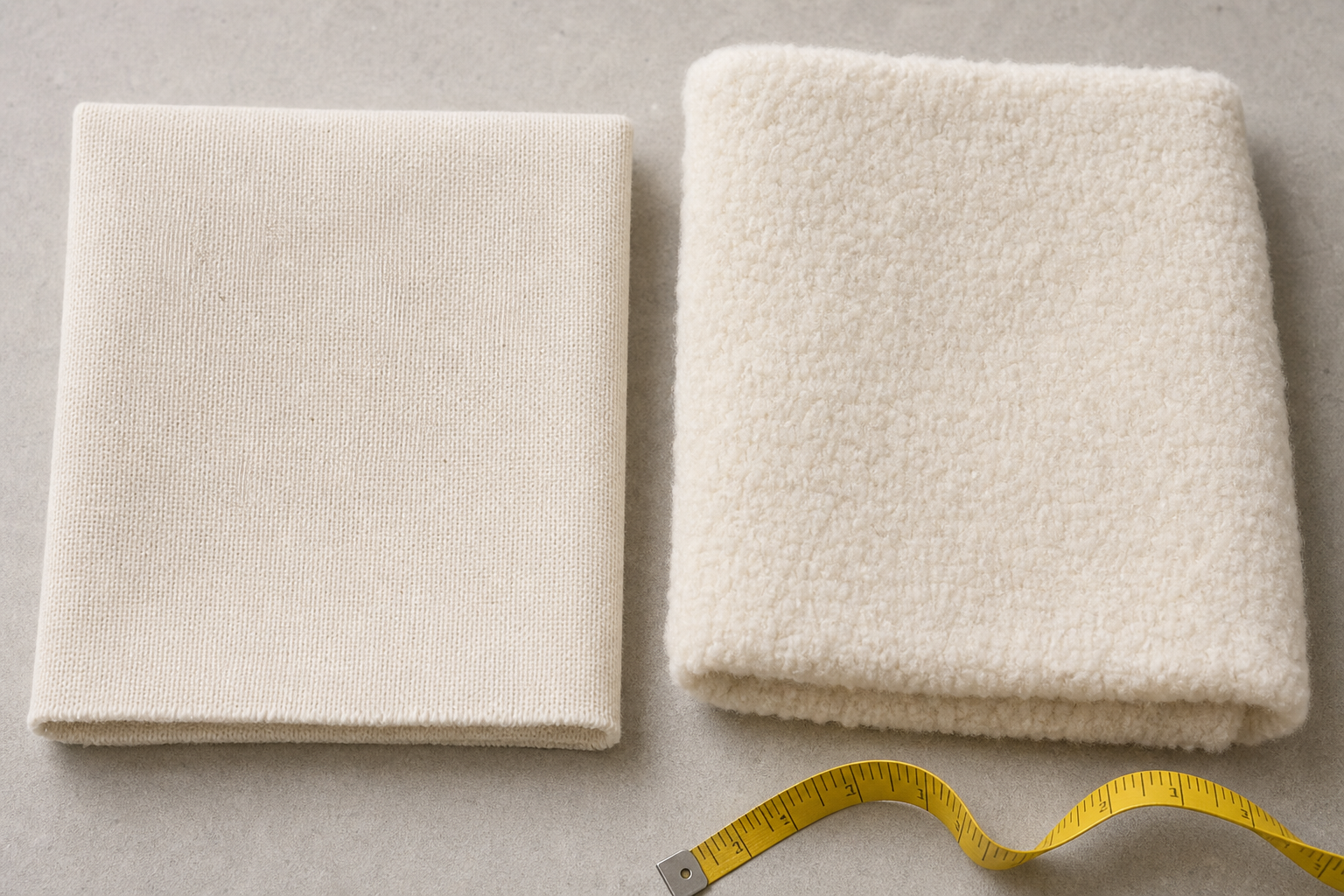
Usually, a basic French Terry fabric can be less expensive than a comparable brushed fleece fabric.
But this is not a rule that can be applied to every order.
The final fabric price depends on the full specification.
A heavyweight 100% cotton French Terry with special dyeing and garment washing can cost more than a standard cotton-polyester fleece.
This is why we normally need more information before giving a useful comparison.
For example:
400 GSM / 100% Cotton / French Terry / Garment Washed
is a very different product from:
400 GSM / 80% Cotton 20% Polyester / Fleece
Even though both are listed as 400 GSM.
If you are comparing two suppliers, make sure they are quoting the same type of fabric.
Otherwise, a lower price may simply mean that you are buying a different product.
What Is the Difference Between 100% Cotton and Cotton-Polyester?
100% cotton is popular with premium streetwear brands.
The hand feel is natural, and the fabric works particularly well for heavyweight garments and vintage-style washing.
There is one issue that needs attention:
shrinkage.
Cotton can shrink during washing.
This does not mean 100% cotton is a bad choice. It means the fabric needs to be properly prepared and tested.
For a Boxy Fit hoodie, this matters because the body length and width are part of the design.
If the approved sample measures correctly before washing but becomes noticeably shorter after washing, the final silhouette can change.
Cotton-polyester blends can offer better dimensional stability.
The polyester content also changes the feel and behavior of the fabric, so it is not simply a matter of choosing whichever option is more stable.
The right choice depends on the product.
Does Fleece Pill More Easily?
Not necessarily.
Pilling is often blamed on fleece, but the fabric name itself does not explain the whole problem.
Fiber quality matters.
Yarn construction matters.
The way the fleece is brushed and finished also matters.
A poor-quality fleece can pill badly. A well-made fleece can perform much better.
This is why we recommend testing the actual fabric when pilling is an important concern.
A simple development test can reveal problems early.
Wash the fabric or sample according to the intended care instructions, then check the surface.
For a brand planning a large production run, it is much cheaper to discover a pilling problem during sampling than after thousands of hoodies have been shipped.
Which Is Better for Winter Hoodies?
For a cold-weather hoodie, fleece is usually the easier choice.
The brushed interior provides warmth without requiring the fabric to become extremely heavy.
French Terry can still be used for winter products, especially when the GSM is high and the hoodie is intended to be layered.
The market matters here.
A hoodie designed for Toronto in January has different requirements from one designed for Los Angeles in October.
If a brand sells throughout Europe and North America, it may make sense to develop different fabric weights for different collections rather than using one construction all year.
Is French Terry Suitable for Spring and Fall?
Yes.
This is one of its strongest points.
A French Terry hoodie can be substantial enough for cool weather while remaining more breathable than a heavily brushed fleece.
This makes it useful for transitional seasons.
For many brands, around 300–380 GSM can be a practical starting point for a lighter hoodie, while heavier French Terry can be used when the product needs a more substantial streetwear look.
The actual choice should still be based on the finished garment.
A 350 GSM fabric can feel very different depending on its construction.
What About Heavyweight French Terry?
Heavyweight French Terry has become a popular option for streetwear.
It works particularly well when the design relies on the shape of the garment.
Think about a short Boxy Fit hoodie with dropped shoulders.
The body needs enough weight to hold its shape.
Heavyweight French Terry can provide that structure without the thick, fuzzy interior of fleece.
This can give the hoodie a more substantial appearance while keeping the inside relatively clean.
For brands focused on premium 100% cotton streetwear, this is often worth testing.
What About Heavyweight Fleece?
Heavyweight fleece is a different type of product.
It is usually chosen when the brand wants the hoodie to feel warm and substantial.
It can work well with oversized winter silhouettes.
But the pattern needs to account for the fabric.
A pattern developed for 350 GSM French Terry may not work properly when the fabric is changed to 500 GSM fleece.
The sleeves may feel too wide. The body can become too bulky. The hood can also become heavier than expected.
The fabric and pattern should be developed together.
Which Fabric Is Better for a Boxy Fit Hoodie?
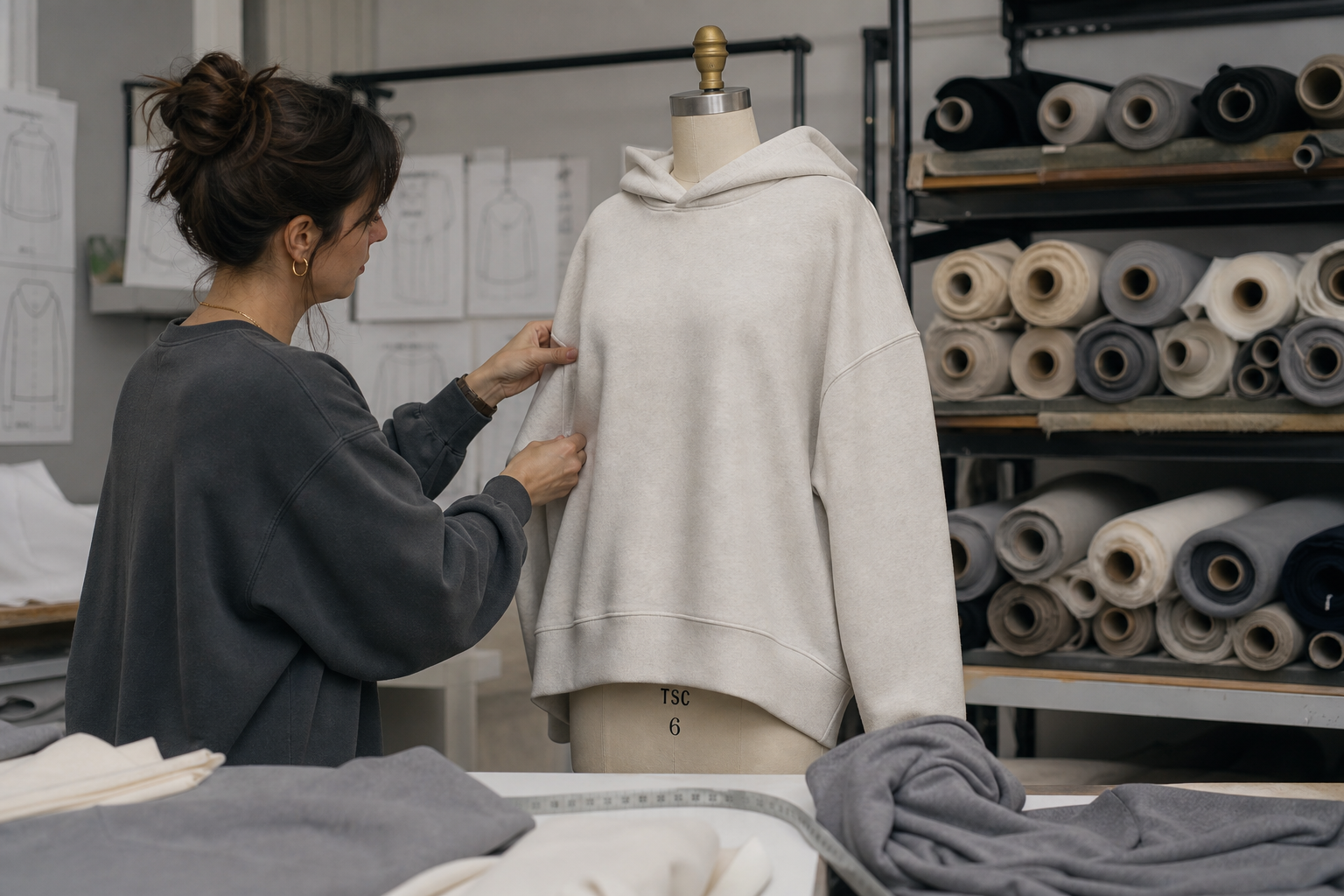
For a clean Boxy Fit, I would usually start by testing heavyweight French Terry.
The fabric has enough body to support the wider shape without adding too much volume.
That does not mean fleece cannot work.
If the design is deliberately oversized and intended for winter, a heavyweight brushed fleece can produce a strong silhouette.
The important thing is to adjust the pattern.
Do not take a French Terry pattern and simply replace the fabric with heavy fleece.
The finished hoodie may not fit the way the original sample did.
Does Washing Affect French Terry and Fleece?
Yes, and buyers should test this before approving bulk production.
French Terry can become softer after washing.
Depending on the dye and wash process, the color can also become less uniform.
Fleece can also change after washing. The brushed surface may become softer, flatter, or slightly different in appearance.
This becomes particularly important when developing vintage or washed streetwear.
The approved sample should be washed before it becomes the bulk reference.
Otherwise, the factory may be working from a sample that does not represent the final product.
Which Fabric Works Better for Vintage Hoodies?
Both can work.
French Terry is a good option when you want the hoodie to retain some structure after washing.
Fleece works when the product needs a warmer and softer character.
The wash process should match the fabric.
A heavy stone wash or strong fading process can affect the fabric differently from a light enzyme wash.
If the brand wants a specific vintage appearance, I recommend sending a physical reference or developing several wash samples.
A photograph is useful for showing the general direction, but it cannot accurately communicate hand feel.
How Much Does the Fabric Choice Affect Hoodie Cost?
It can have a noticeable effect, but fabric is only one part of the final garment cost.
For a custom hoodie, the quotation may also include pattern development, cutting, sewing, washing, printing or embroidery, labels, packaging, and other requirements.
A heavyweight 100% cotton hoodie will normally cost more than a basic lightweight hoodie.
Adding a special garment wash will increase the cost further.
The same applies to custom dyeing or complicated finishing.
This is why buyers should compare complete specifications instead of comparing only the factory’s unit price.
A cheaper hoodie may have a different fabric composition, lower GSM, simpler finishing, or fewer production processes.
What Should a Buyer Ask a Hoodie Manufacturer?
When sourcing a custom hoodie supplier, I recommend asking specific questions.
For example:
What French Terry and fleece weights can you produce?
Can you provide a fabric swatch before sampling?
What is the fabric composition?
What is the expected shrinkage after washing?
Do you have experience with heavyweight 100% cotton hoodies?
Can you produce garment-washed hoodies?
How do you test pilling?
Can you match a physical reference sample?
These questions are more useful than simply asking for a price list.
They also help the buyer understand whether the supplier has experience with the type of hoodie being developed.
How We Handle Hoodie Fabric Selection at Vison Clothing
At Vison Clothing, we normally start with the product itself.
If the customer wants a structured heavyweight hoodie for a streetwear collection, we may suggest heavyweight French Terry.
If warmth is more important, we may suggest fleece.
If the brand wants 100% cotton, we can work with cotton French Terry or cotton fleece depending on the required result.
We also look at the pattern.
A fabric that works well for a regular-fit hoodie may not be suitable for a very wide Boxy Fit.
For washed garments, we prefer to test the finished hoodie rather than approving the fabric alone.
This helps us check the actual result after sewing and washing.
For overseas buyers, this also makes communication easier. Both sides can refer to the approved sample when discussing the bulk order.
If you already have a reference hoodie, Tech Pack, target GSM, or fabric sample, you can send it to us before sampling. We can check the requirements and suggest a suitable fabric direction.
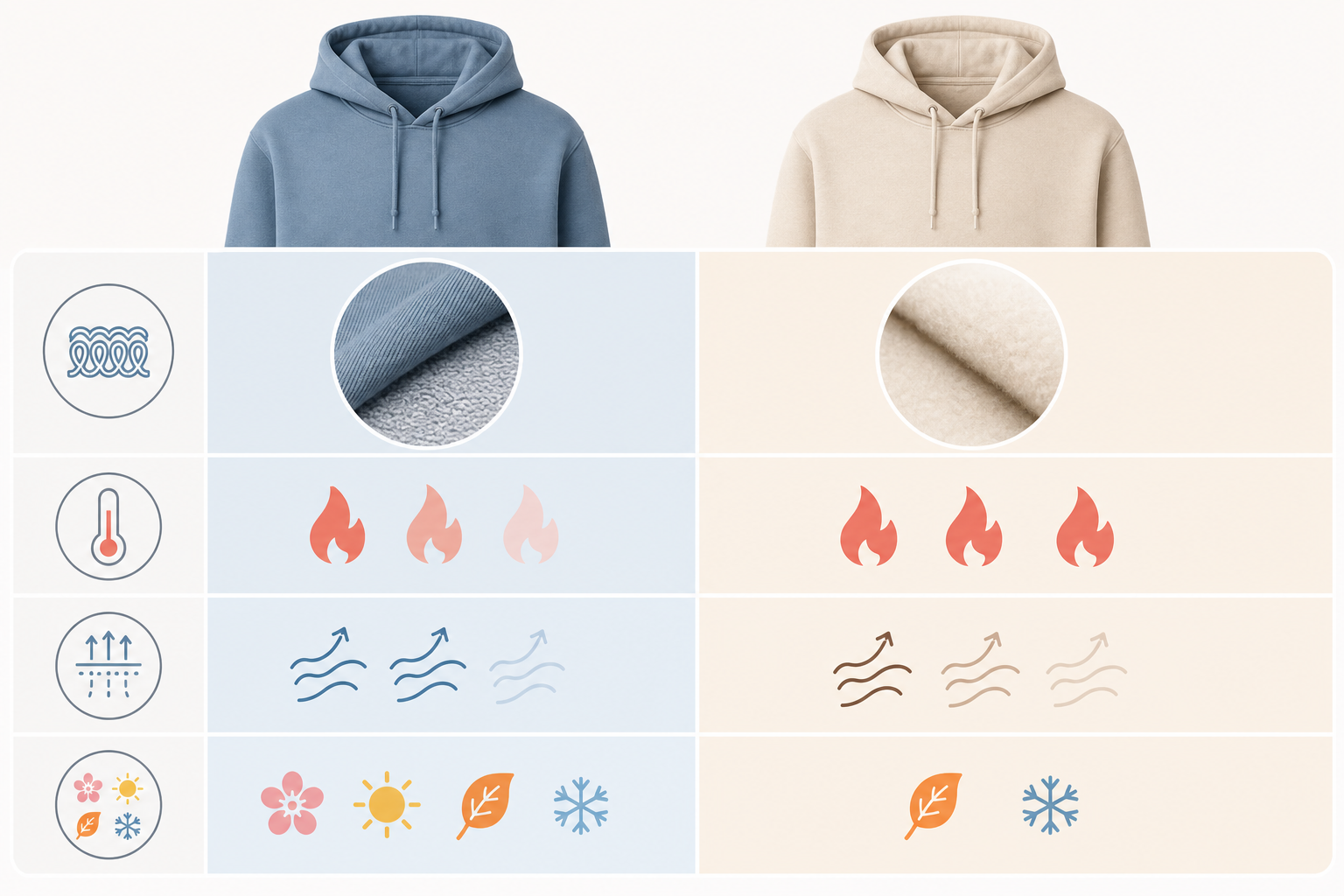
French Terry vs Fleece: Quick Comparison
| Feature | French Terry | Fleece |
|---|---|---|
| Inside | Looped | Brushed |
| Hand Feel | Clean and structured | Soft and warm |
| Warmth | Moderate | Higher |
| Breathability | Generally better | Generally lower |
| Spring/Fall | Very suitable | Suitable |
| Winter | Suitable at higher GSM | Very suitable |
| Heavyweight Streetwear | Very suitable | Very suitable |
| Boxy Fit | Easy to control | Needs careful pattern development |
| 100% Cotton | Common | Available |
| Pilling | Fabric dependent | Fabric dependent |
| Shrinkage | Needs testing | Depends on composition |
| Vintage Wash | Suitable | Suitable |
FAQ
Is French Terry better than fleece for hoodies?
It depends on the product. French Terry is a good choice for a more structured and breathable hoodie. Fleece is better when warmth and a soft interior are the priority.
Is French Terry good for heavyweight hoodies?
Yes. Heavyweight French Terry is commonly used for premium streetwear hoodies, especially Boxy Fit and Drop Shoulder styles.
Is fleece warmer than French Terry?
Generally, yes. The brushed inside creates a warmer feel.
Is 100% cotton good for a heavyweight hoodie?
Yes. It is a popular choice for premium streetwear. The main point to check is shrinkage after washing.
Does fleece always pill?
No. Pilling depends on the fabric quality, fiber, yarn, construction, and finishing. Testing the actual fabric is the safest way to check.
What GSM is good for a heavyweight hoodie?
Around 380–450 GSM is a common range. Some premium streetwear brands use 450 GSM or more.
Which is better for a summer hoodie?
A lighter French Terry is generally more suitable. Fleece is usually better suited to cooler weather.
Is cotton-polyester fleece cheaper?
It can be, but the price depends on the GSM, blend ratio, construction, finishing, order quantity, and other specifications.
Can French Terry be garment washed?
Yes. French Terry can be enzyme washed, stone washed, garment washed, and treated with other finishing processes.
Can fleece be used for premium streetwear?
Yes. Heavyweight fleece is widely used for premium and oversized streetwear hoodies.
Final Thoughts
French Terry and fleece solve different problems.
If you want a hoodie with a firm shape and a cleaner inside, French Terry is worth considering.
If the main requirement is warmth and softness, fleece is usually the better starting point.
For a heavyweight streetwear collection, both can work.
The important thing is to choose the fabric together with the pattern, season, and target price.
Do not approve a fabric only because the GSM looks good on paper.
Ask for a sample. Wash it. Check the measurements and hand feel again.
That small amount of testing can prevent much bigger problems once the order goes into production.
At Vison Clothing, we provide OEM hoodie manufacturing for apparel brands, wholesalers, and buyers. If you have a target GSM, reference garment, Tech Pack, or fabric specification, send it to us before sampling. We can help you decide whether French Terry or fleece is a better fit for your product.