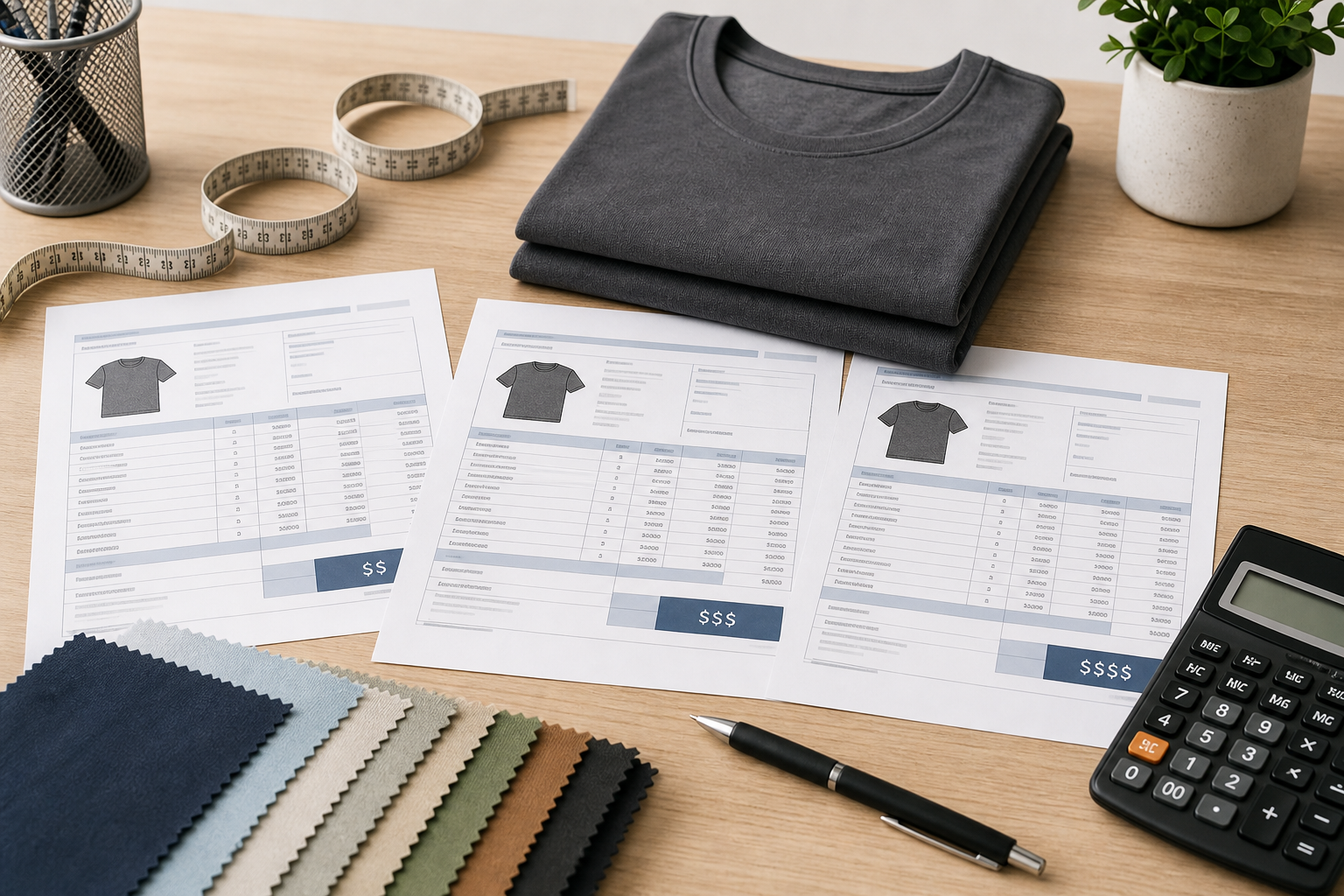
When a clothing buyer receives three different factory quotations for the same T-shirt, the numbers can sometimes look confusing.
One factory quotes $5.80. Another asks for $6.50. A third supplier comes back at $7.20.
Which one is actually cheaper?
The answer is rarely found by looking at the final price alone.
A garment quotation is built from several costs. Fabric is usually the largest one, but trims, sewing, printing, washing, production loss, packaging, and order quantity can all change the final number.
From our experience working with overseas apparel buyers, the biggest costing mistakes usually happen before an order is placed. A buyer compares two prices without checking whether both factories are quoting the same fabric weight, construction, printing method, packaging, and quality standard.
This guide explains how apparel manufacturing costs are normally calculated and what buyers should check before comparing supplier quotations.
What Is Included in Clothing Manufacturing Cost?
A basic garment cost usually includes several production components:
| Cost Component | What It Covers |
|---|---|
| Fabric | Main fabric, dyeing, finishing |
| Trims | Labels, buttons, zippers, cords, eyelets |
| Cutting & Sewing | Cutting, sewing, finishing labor |
| Printing / Embroidery | Artwork and decoration |
| Washing | Garment wash or special finishing |
| Production Loss | Fabric and manufacturing waste |
| Packaging | Polybags, hangtags, cartons |
| Factory Overhead | Production management and operating costs |
There is no fixed percentage that applies to every garment.
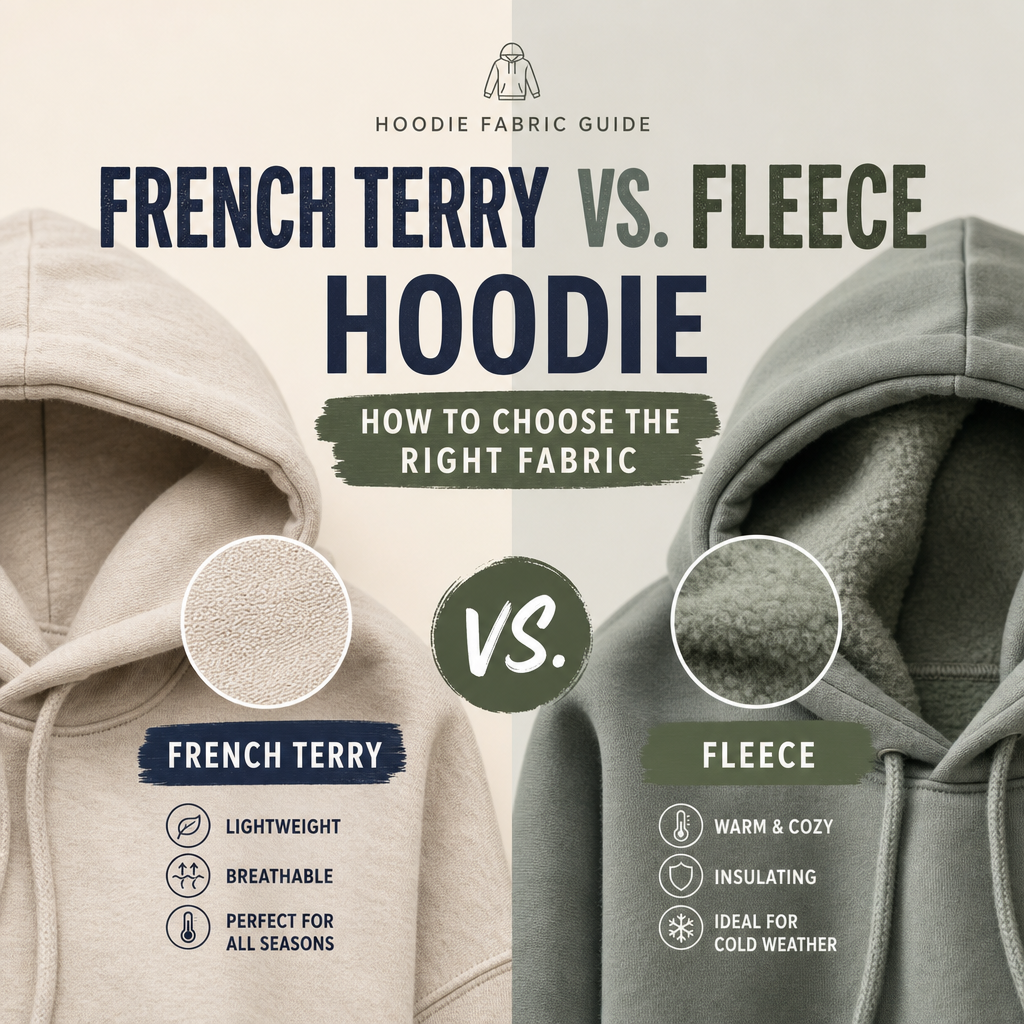
A lightweight 180 GSM T-shirt and a 450 GSM heavyweight hoodie have completely different cost structures. A basic blank garment may have very little decoration, while a streetwear hoodie with multiple prints, custom hardware, and garment washing can require much more processing.
For this reason, experienced buyers compare the specification behind the price, rather than the price itself.
1. Fabric Usually Has the Biggest Impact
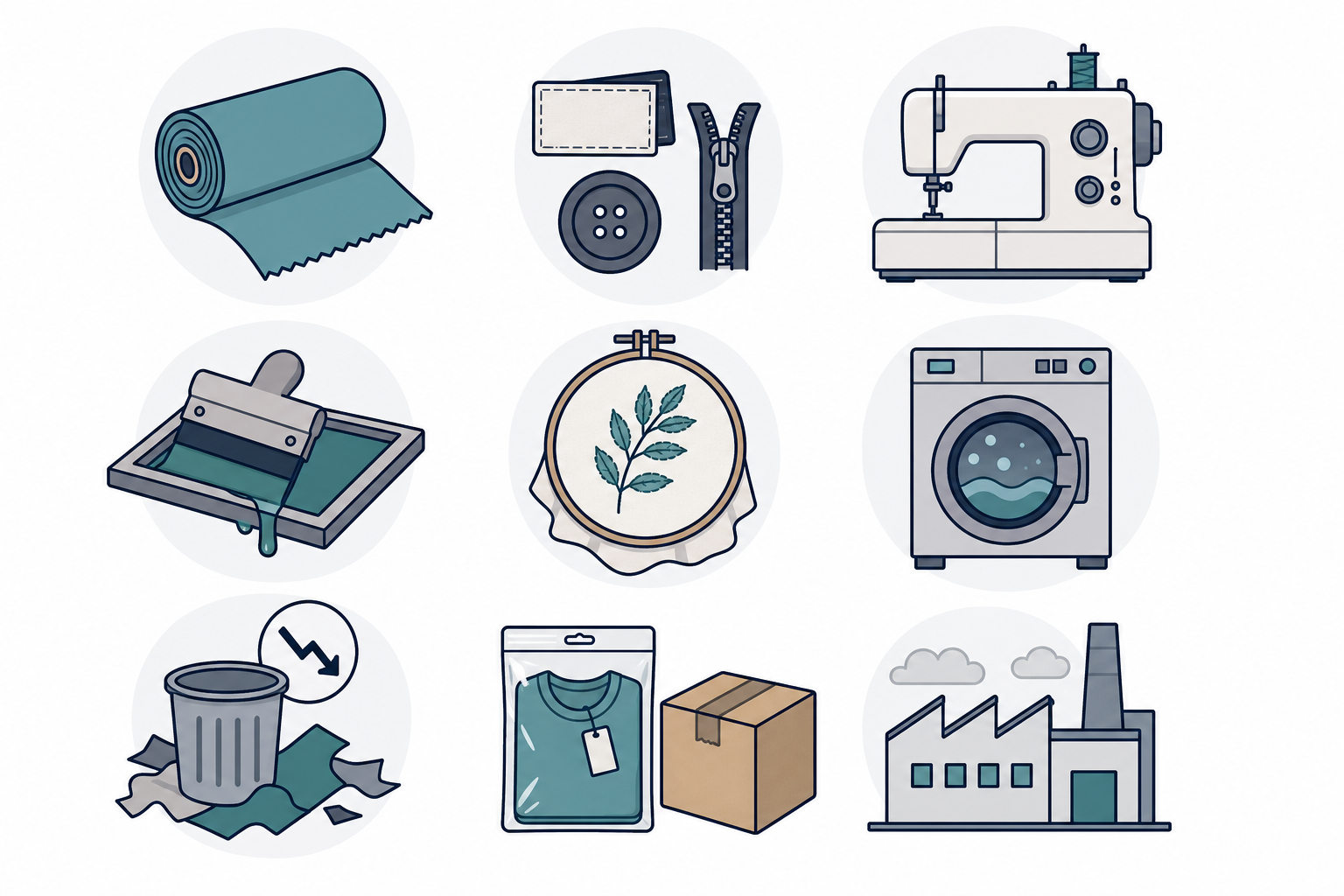
For many garments, fabric is the largest single cost.
That doesn’t mean the cheapest fabric automatically produces the lowest overall cost. Fabric quality affects cutting, sewing, washing, shrinkage, and even the number of garments that can be produced from a roll.
Fabric Composition
The fiber composition is the first thing to check.
A 100% cotton T-shirt will have a different cost from a polyester-cotton blend. Organic cotton, recycled fibers, specialty yarns, and other materials can increase the fabric price further.
For example, these specifications describe very different products:
100% Cotton / 180 GSM / Single Jersey
versus
100% Cotton / 240 GSM / Heavyweight Single Jersey
The second fabric contains significantly more material per garment, so its cost cannot be compared directly with the first.
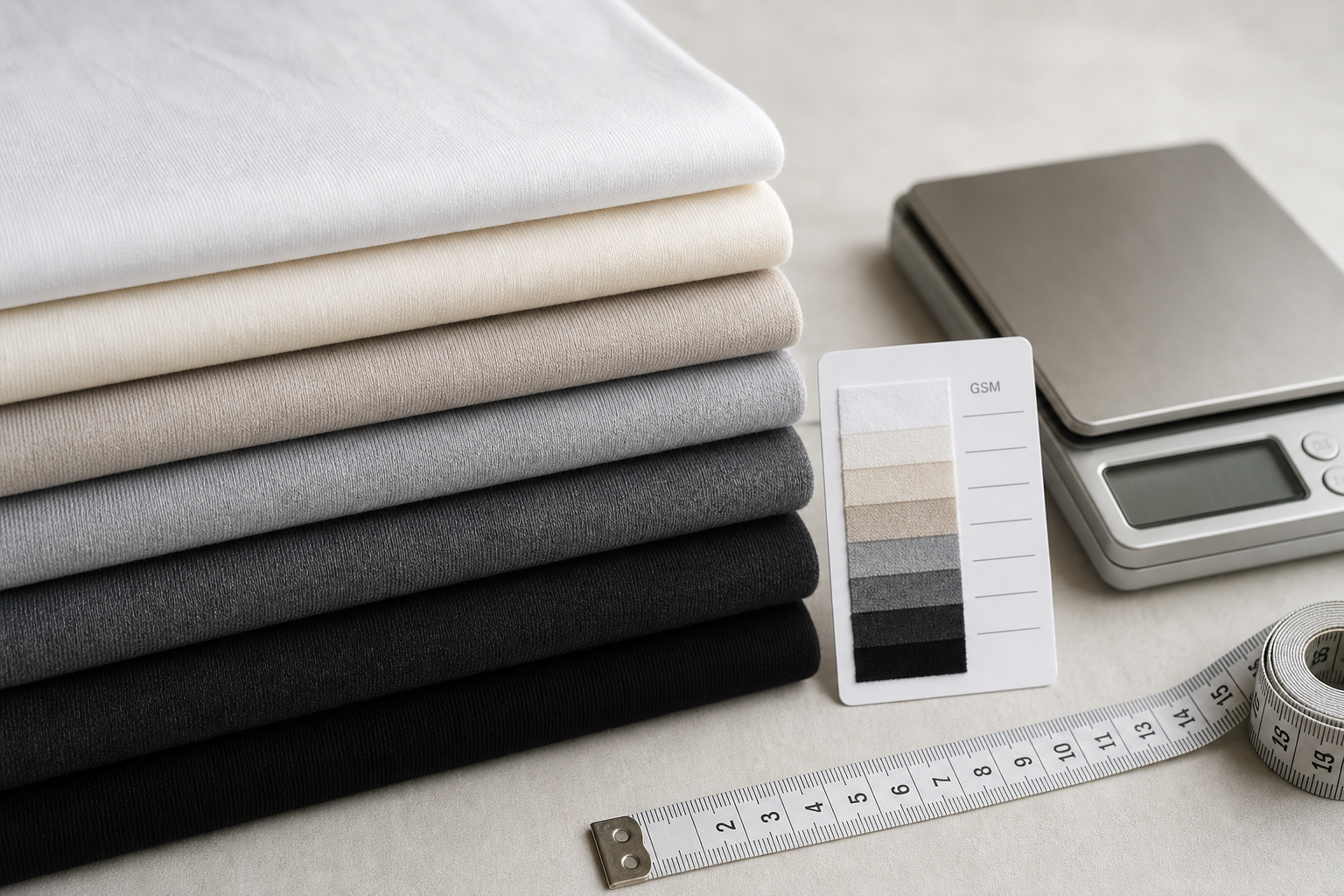
GSM and Yarn Count
GSM indicates fabric weight per square meter.
Higher GSM normally means more material is used, but GSM alone does not tell the whole story.
Yarn count, knitting construction, finishing, and fabric width can also influence the price.
For heavyweight streetwear, buyers often focus heavily on GSM. We recommend checking the actual fabric construction as well. Two fabrics with the same GSM can still feel and perform differently.
Dyeing and Finishing
The fabric may also require additional processing.
Common examples include:
- Garment washing
- Enzyme washing
- Silicone softening
- Brushing
- Peaching
- Anti-pilling treatment
If a quotation includes a finished fabric while another supplier quotes an unfinished material, the two prices are not directly comparable.
2. Trims Add More Than Buyers Expect
Trims are usually a smaller part of the total cost, but they can still make a noticeable difference in branded apparel.
Typical garment trims include:
- Main labels
- Care labels
- Size labels
- Hangtags
- Drawcords
- Eyelets
- Buttons
- Zippers
- Patches
- Woven badges
A basic T-shirt may only need several labels and a hangtag.
A heavyweight hoodie can require a drawcord, metal eyelets, custom cord ends, multiple labels, and branded hardware.
The specification matters as much as the quantity.
A standard woven label and a high-density woven label do not cost the same. A plastic drawcord tip and a custom metal cord end have very different production costs.
When reviewing a quotation, ask the supplier whether custom trims are included or quoted separately.
3. Cutting and Sewing Labor
Labor cost is often difficult for buyers to estimate because factories don’t usually calculate it as a simple hourly figure.
The production cost depends heavily on how complicated the garment is.
A basic T-shirt may require relatively few sewing operations.
An oversized hoodie can involve considerably more work, particularly if it has:
- A multi-panel hood
- Kangaroo pocket
- Rib construction
- Heavyweight fabric
- Decorative topstitching
- Custom labels
- Multiple sewing details
The number of operations affects production time.
Factory efficiency also matters. Two factories may have similar labor rates but different production efficiency.
This is one reason why comparing the “labor cost” line by line is not always useful. The more meaningful question is whether both factories can deliver the same garment specification at the quoted price.
4. Printing and Embroidery
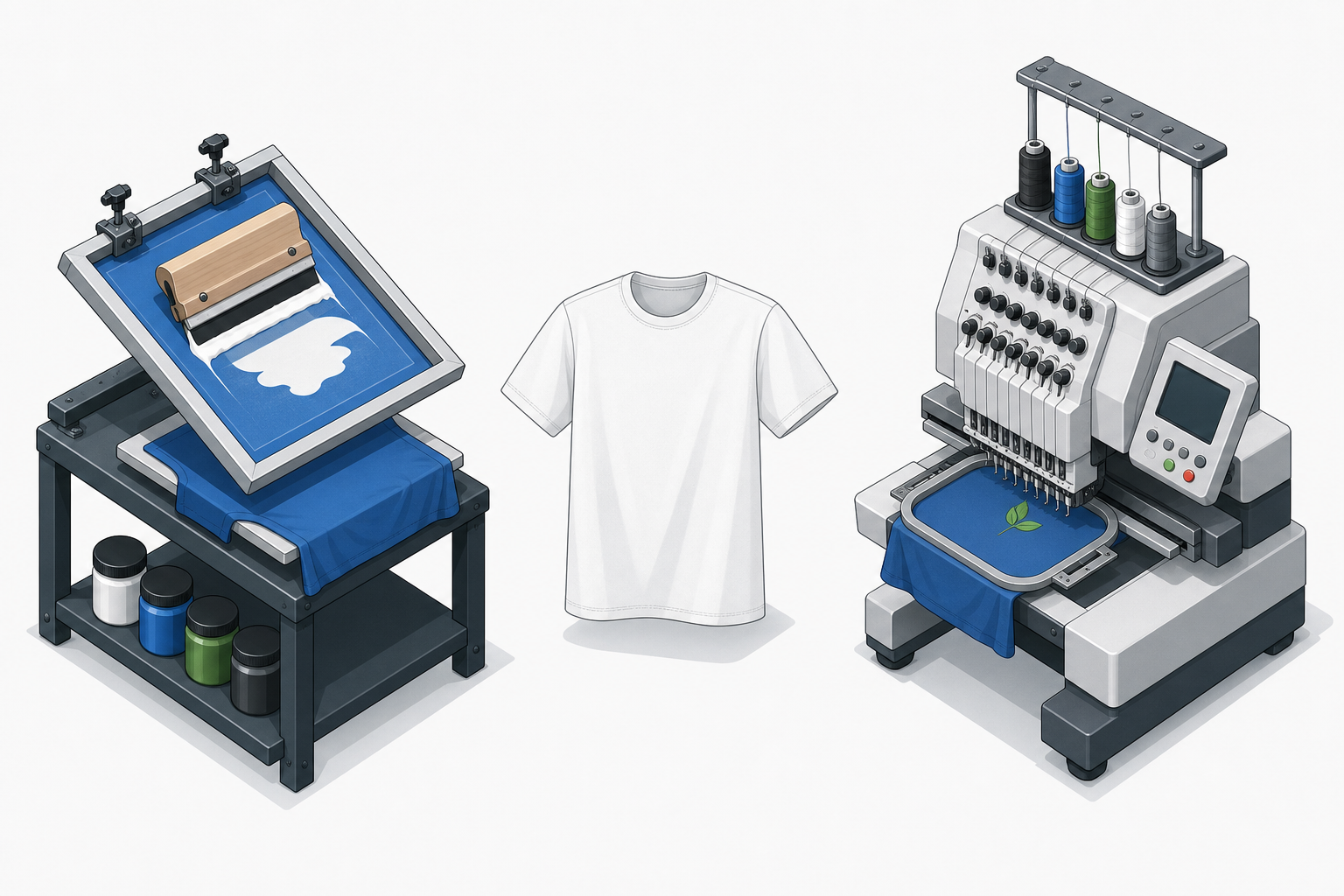
Decoration can have a significant effect on apparel costing.
The final price depends on the printing method, artwork size, number of colors, print location, and order quantity.
Screen Printing
Screen printing is widely used for bulk T-shirts and hoodies.
The setup cost can be higher for multi-color artwork, but the unit cost often becomes more competitive as order quantities increase.
DTG Printing
DTG can work well for detailed artwork and smaller quantities.
However, ink consumption and garment preparation can affect the final cost.
Puff and Special Effect Printing
Puff printing, high-density printing, discharge printing, and other specialty techniques require additional process control.
They should be costed separately rather than treated as standard screen printing.
Embroidery
Embroidery pricing depends on stitch count, artwork size, number of locations, and thread requirements.
A small chest logo and a large back embroidery design may look similar in a quotation but require very different production time.
For this reason, buyers should provide the actual artwork whenever possible before requesting a final price.
5. Washing and Special Finishing
Garment washing is another cost that can easily be missed during initial product development.
Common processes include:
- Enzyme wash
- Acid wash
- Stone wash
- Vintage wash
- Silicone wash
- Softener wash
A washed garment requires additional processing after sewing.
Washing can also affect shrinkage and color, so the factory may need to adjust the production process accordingly.
For streetwear products, the wash effect is often part of the design rather than simply a finishing step. In that case, the wash should be included in the costing from the beginning.
6. Production Loss and Fabric Waste
No factory can use 100% of every fabric roll.
There will always be some material loss during cutting.
The actual percentage depends on garment size, pattern shape, fabric width, size ratio, and how efficiently the patterns can be arranged.
Large oversized garments can create more cutting waste than compact garments.
Striped fabrics, checked fabrics, directional prints, and fabrics requiring pattern matching can also increase material consumption.
There may also be a small amount of production loss from defects, shade variation, or garments that fail inspection.
A professional costing calculation accounts for these factors rather than assuming every meter of fabric becomes a finished garment.
7. Packaging Costs
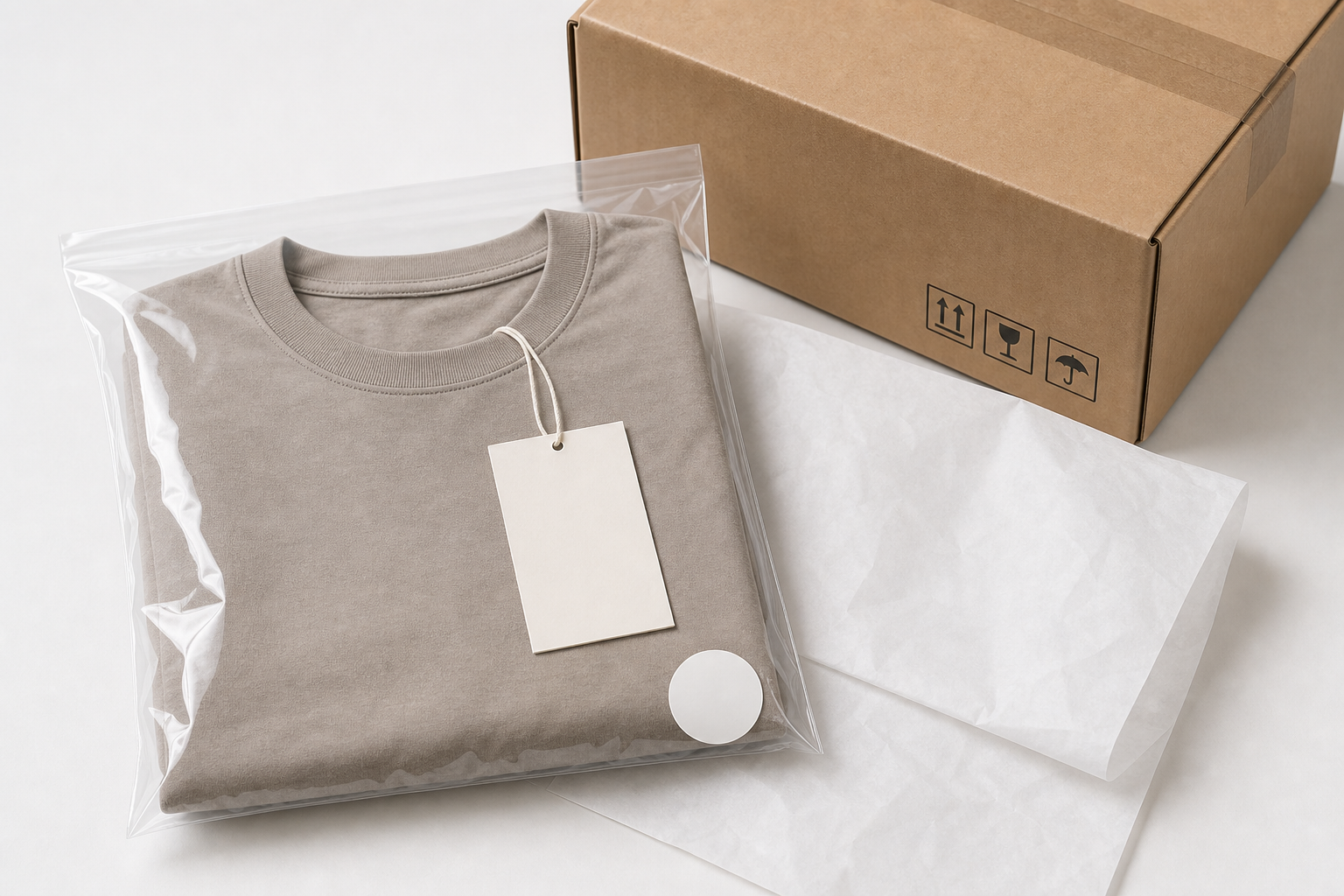
Packaging is often a small percentage of the garment price, but branded apparel can require more than a standard polybag.
Possible packaging components include:
- Individual polybag
- Recyclable or biodegradable bag
- Custom hangtag
- Barcode sticker
- Size sticker
- Tissue paper
- Custom carton
- Shipping mark
For a basic wholesale T-shirt, standard packaging may be sufficient.
For a premium streetwear collection, the brand may request custom packaging that becomes part of the product experience.
The important point is to confirm whether packaging is included in the supplier’s quotation.
A price that looks lower may simply exclude packaging that another factory has already included.
An Example of Garment Costing
Let’s take a hypothetical oversized T-shirt made from 240 GSM 100% cotton.
The following figures are for illustration only. They are not fixed industry prices and will change according to fabric quality, order quantity, location, and production requirements.
| Cost Item | Example Cost |
|---|---|
| Fabric | $3.10 |
| Trims | $0.25 |
| Cutting & Sewing | $1.30 |
| Printing | $0.80 |
| Washing | $0.35 |
| Production Loss | $0.20 |
| Packaging | $0.30 |
| Estimated Factory Cost | $6.30 |
This example shows why the fabric specification matters so much.
If the buyer changes the garment from 240 GSM to 300 GSM, the fabric consumption and cost may increase.
If the print changes from a small one-color chest logo to a large multi-color back graphic, the decoration cost changes too.
The final quotation needs to be recalculated whenever major specifications change.
Why Do Two Clothing Factories Give Different Prices?
This is one of the most common questions we receive from buyers.
Suppose one supplier quotes $8.20 and another quotes $9.10.
The $8.20 price isn’t automatically better.
Before making a decision, compare the specifications behind both quotations.
Ask:
Is the fabric the same GSM?
Is the composition exactly the same?
Are both fabrics pre-shrunk?
Is the printing method the same?
Are custom labels included?
Is garment washing included?
Does the price include packaging?
Are quality inspections included?
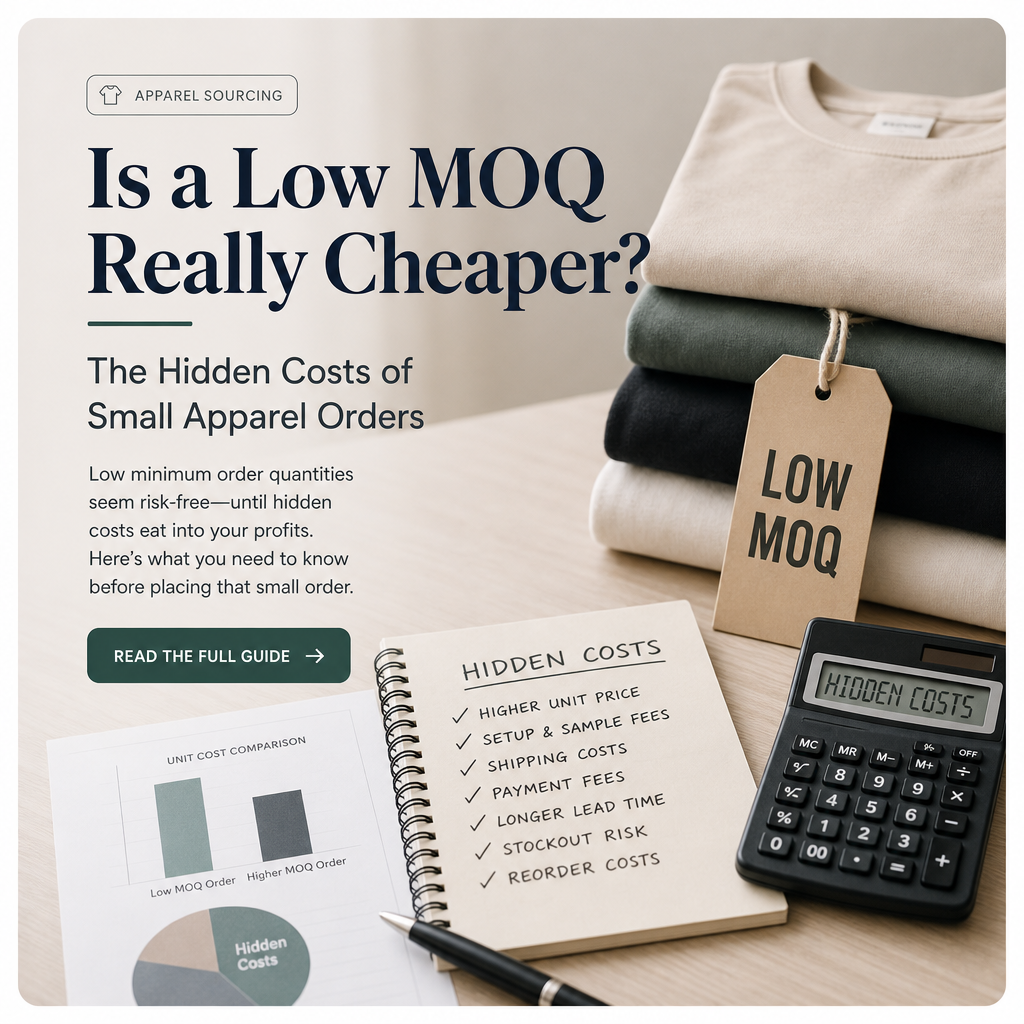
Are both suppliers quoting the same MOQ?
Are the Incoterms the same?
These questions often explain a price difference more clearly than the quotation itself.
A factory may quote a lower price by using a lighter fabric, standard trims, simpler packaging, or a different production process.
That doesn’t necessarily mean the factory is unreliable. It means the buyer needs to understand what is included.
How to Read a Clothing Manufacturer’s Quotation
When requesting a quotation, avoid sending only a product photo.
A factory needs enough information to calculate the product properly.
Ideally, provide:
- Tech Pack
- Fabric composition
- Fabric GSM
- Size range
- Colorways
- Artwork
- Printing requirements
- Wash requirements
- Labels
- Packaging
- Estimated order quantity
If the design is still being developed, tell the factory which specifications are confirmed and which are still open.
This makes the quotation easier to update later.
For buyers comparing several suppliers, using the same Tech Pack for every quotation is one of the simplest ways to make the comparison more meaningful.
Questions to Ask Before Accepting a Low Quote
A low quotation deserves a closer look, not an immediate rejection.
Ask the supplier what is included.
For example:
- What fabric GSM is included in this price?
- Is the fabric 100% cotton?
- Does the price include custom labels?
- Is printing included?
- Is garment washing included?
- What packaging is included?
- What is the expected fabric shrinkage?
- Is quality inspection included?
- Which Incoterm is being used?
Getting these answers in writing can prevent disagreements later.
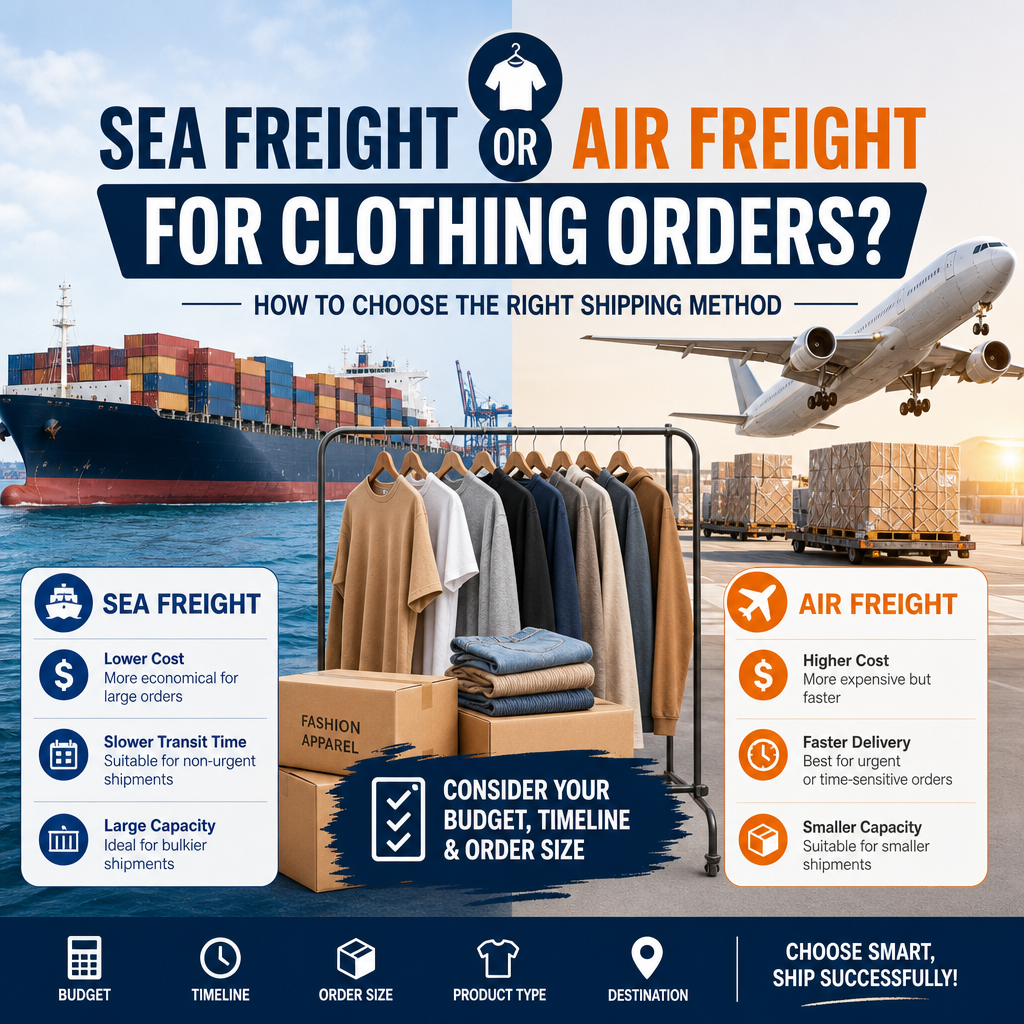
For international buyers, this is particularly important because a small difference in the factory quotation can become much larger once freight, inspection, customs, and additional processing are added.
How to Reduce Clothing Production Costs Without Lowering Quality
Cost reduction does not always mean choosing a cheaper material.
Sometimes the biggest savings come from simplifying the product.
For example, reducing unnecessary trims can lower both material and sewing costs.
Optimizing the print size can reduce ink usage.
Improving pattern efficiency can reduce fabric waste.
Increasing the order quantity can spread development and setup costs across more units.
The right approach depends on the product.
For a premium streetwear brand, replacing a heavyweight fabric with a lightweight one simply to reduce cost may damage the product’s positioning. It can be more sensible to keep the fabric and simplify packaging or decoration instead.
Good costing is about finding the right balance between product specification and target price.
How Vison Clothing Approaches Apparel Costing
When we receive an OEM inquiry, the first step is understanding what the customer actually wants to produce.
A product image alone is rarely enough for an accurate quotation.
We review the fabric, garment construction, decoration, trims, washing, quantity, and packaging requirements before confirming the production cost.
If some details are not finalized, we identify those items instead of making assumptions.
This is particularly useful for brands developing new products. A preliminary quotation can be prepared first, and then updated once the fabric or artwork is approved.
For brands looking for OEM apparel manufacturing, this approach makes the costing process easier to follow and reduces surprises later in development.
FAQ
What is included in apparel manufacturing cost?
Apparel manufacturing cost normally includes fabric, trims, cutting and sewing, printing or embroidery, washing, production loss, and packaging. Some quotations may also include additional services or factory overhead.
What is usually the biggest cost in clothing production?
Fabric is often one of the largest costs, particularly for heavyweight garments. However, the exact cost structure depends on the product and production requirements.
Why are heavyweight T-shirts and hoodies more expensive?
They use more fabric per garment and may require heavier yarns, specialized fabric construction, additional washing, or more demanding sewing processes.
Does printing increase clothing production costs?
Yes. The cost depends on the printing technique, artwork size, number of colors, print locations, and order quantity.
How can I compare two clothing manufacturers’ prices?
Give both suppliers the same Tech Pack and compare fabric specifications, trims, decoration, washing, packaging, MOQ, quality requirements, and Incoterms. Comparing the final unit price alone can be misleading.
Does MOQ affect garment cost?
Yes. Larger orders can spread setup and development costs over more units and may allow factories to purchase materials more efficiently. Smaller orders can carry higher unit costs.
Final Thoughts
There is no single percentage that tells you how much a T-shirt or hoodie “should” cost.
The final number comes from the product specification.
Fabric weight changes material consumption. A complicated pattern increases production time. Printing adds decoration costs. Custom trims and packaging affect the finished unit price. Even fabric waste can make a difference when production quantities are large.
For apparel buyers, the best way to compare suppliers is to make sure everyone is costing the same product.
A lower quotation is only useful when the quality, specifications, and service behind it are comparable.
At Vison Clothing, we work with brands, wholesalers, and apparel buyers on OEM production, from product development and sampling through bulk manufacturing. If you have a Tech Pack or product specification ready, our team can review the details and prepare a production quotation based on the actual requirements.