For apparel brands and buyers, developing a hoodie is not simply about choosing a thick fabric. The GSM, fiber composition, and finishing process all influence how the final product looks, feels, and performs after production.
In recent years, heavyweight hoodies have become a key product category for many European and American streetwear and casualwear brands. Buyers often prefer heavier fabrics because they create a stronger silhouette and a more premium feeling. However, choosing the wrong fabric weight or composition can lead to issues such as unexpected shrinkage, color fading, pilling, and higher production costs.
For most premium heavyweight hoodies, 380-500 GSM is a practical range. 100% cotton heavyweight hoodies are preferred by many brands because of their soft hand feel and natural texture, while cotton polyester blends offer better shape stability and production consistency. The right choice depends on the brand’s positioning, target customers, and quality expectations.
At Vison Clothing, we often help brands compare different hoodie fabrics before production. A hoodie that looks similar in a sample photo can perform very differently once it goes through washing, shipping, and customer use.
What GSM Is Suitable for a Heavyweight Hoodie?
GSM refers to the weight of fabric per square meter. In hoodie production, it affects the thickness, structure, and overall wearing experience.
280-320 GSM: A More Flexible Choice
Hoodies around 280-320 GSM are commonly used for basic collections and everyday casualwear.
They are lighter, easier to wear across different seasons, and more cost-efficient for large quantity orders.
For brands targeting entry-level products or warmer markets, this weight can be a practical solution.
However, it may not deliver the substantial feel that many premium streetwear customers expect.
350-400 GSM: A Popular Premium Range
Many brands choose 350-400 GSM when they want a hoodie with more structure without making it too heavy.
This weight works well for:
- Oversized hoodie designs
- Premium casual collections
- Seasonal fashion releases
It provides a thicker appearance and better drape compared with lighter fabrics.
400-500 GSM: Heavyweight Streetwear Standard
For brands developing premium streetwear, 400-500 GSM has become one of the most requested ranges.
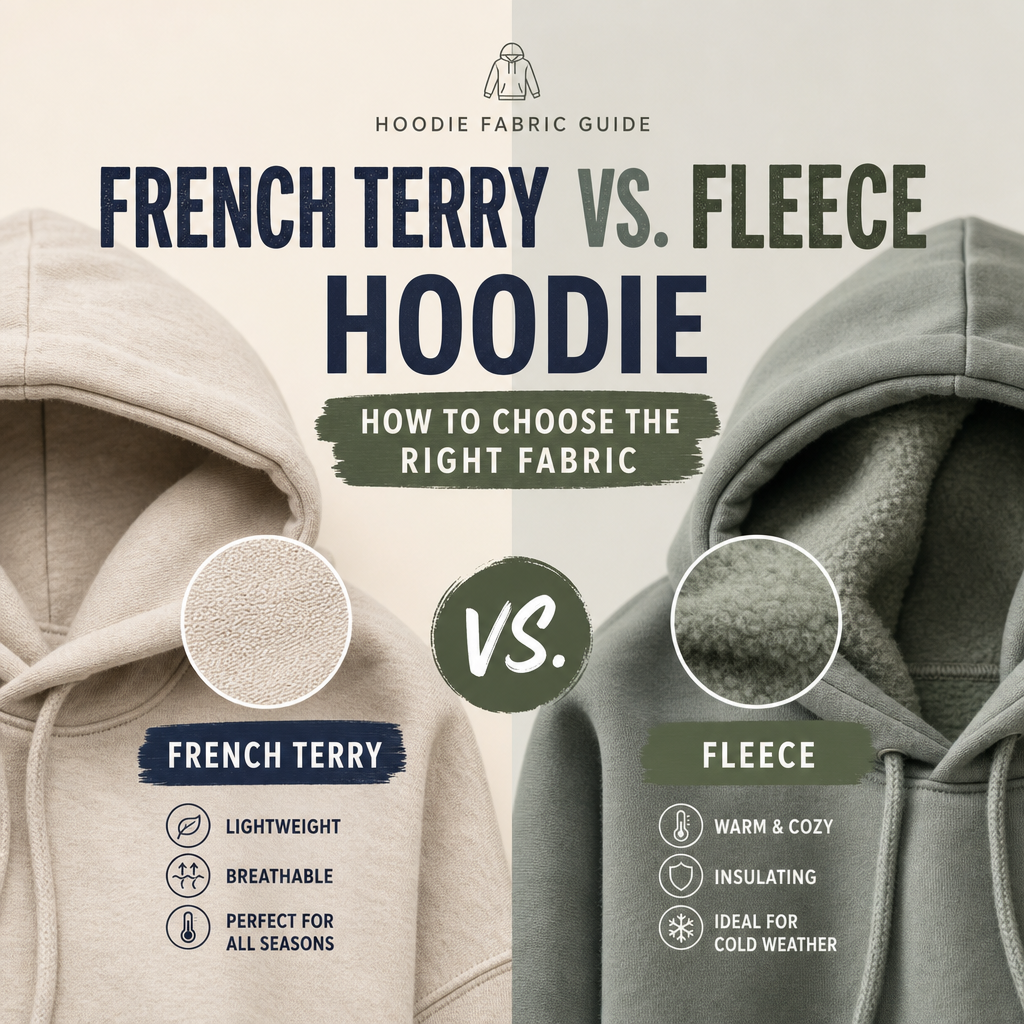
A heavyweight hoodie in this category usually has a stronger shape and a more expensive appearance. It is often made with heavy fleece or French terry fabric.
Many designers choose this range when the hoodie itself is an important part of the collection rather than just a basic layering item.
Is 600 GSM Too Heavy for a Hoodie?
600 GSM belongs to the ultra-heavyweight category.
It can create a very strong premium impression, but it is not suitable for every market. The higher fabric weight increases manufacturing costs and shipping expenses, and some customers may find it too heavy for regular daily wear.
For most brands, a well-made 400-500 GSM hoodie offers a better balance.
Why Do Many Brands Choose 100% Cotton Heavyweight Hoodies?
Many premium brands in Europe and the US continue to use 100% cotton for heavyweight hoodies because of the fabric’s natural feel.
Cotton gives the garment a softer surface and a more comfortable wearing experience. For streetwear brands that focus on material quality, this feeling is often part of the product identity.
Another reason is appearance. High-quality cotton fabrics can develop a unique look after repeated washing, which fits well with vintage-inspired and premium streetwear styles.
However, buyers should pay attention to cotton quality. A low-grade cotton hoodie may experience more shrinkage, uneven fading, or surface problems.
For premium production, factors such as yarn quality, fabric construction, and finishing are just as important as the fiber content.
Cotton vs Polyester Hoodie: Which Fabric Should Brands Choose?
When comparing cotton vs polyester hoodie options, the decision depends on the product goal.
A 100% cotton hoodie is usually chosen when the brand wants a premium natural feel. It works well for fashion collections where fabric experience is an important selling point.
The main challenges are that cotton requires more attention during production. Without proper pre-shrinking and fabric control, size changes after washing can become a concern.
A cotton polyester blend hoodie solves some of these challenges.
Common blends include:
- 80% Cotton / 20% Polyester
- 70% Cotton / 30% Polyester
- 60% Cotton / 40% Polyester
Adding polyester improves fabric stability and helps the hoodie maintain its shape during repeated wear and washing.
For brands producing larger quantities, blended fabrics can provide more consistent results between production batches.
How Can Brands Reduce Hoodie Pilling and Color Fading Problems?
Pilling and fading are two issues that apparel buyers often discuss during product development.
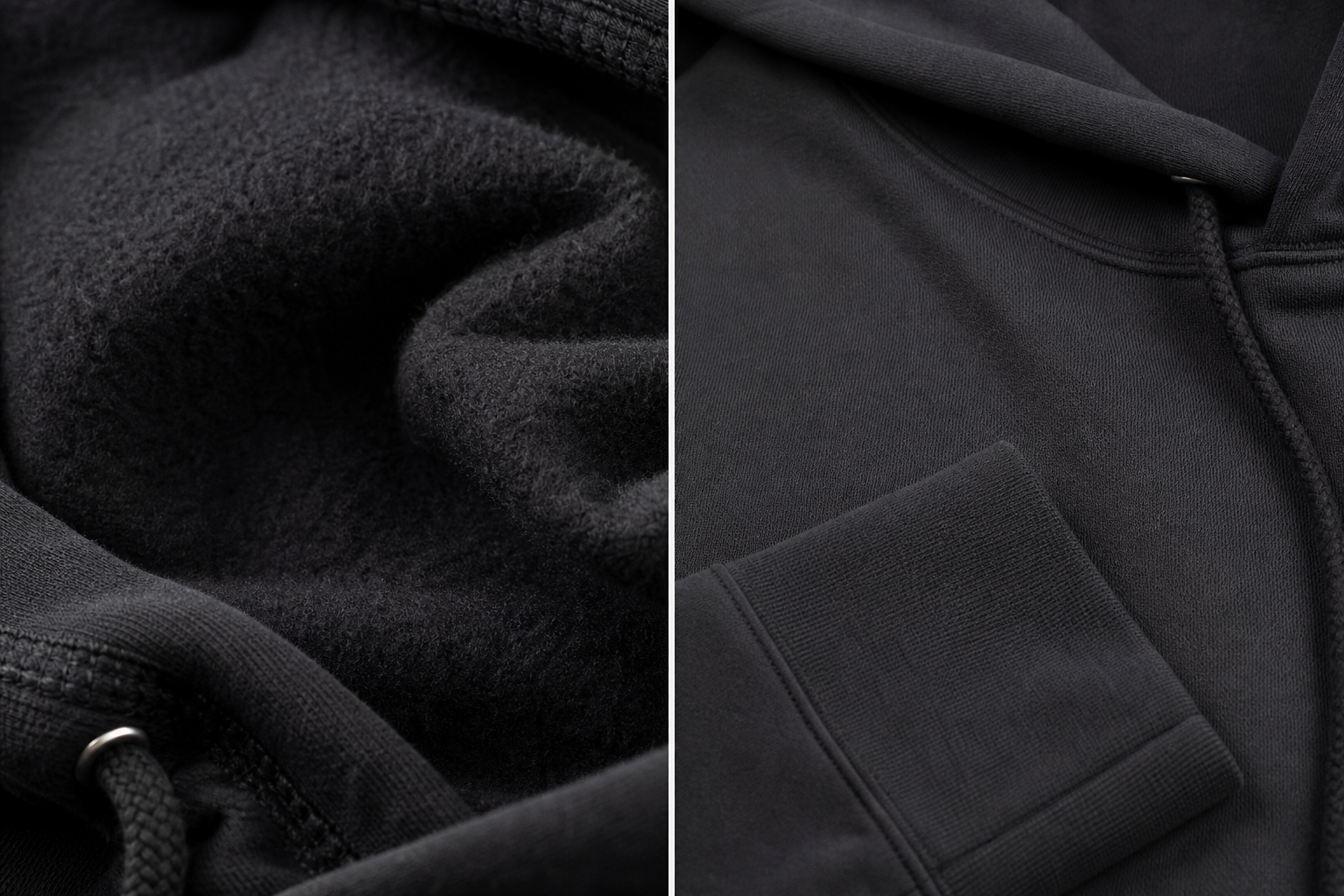
Pilling is influenced by more than just fabric composition. Cotton quality, yarn length, knitting method, and finishing treatment all affect the final result.
For example, higher-quality cotton with longer fibers generally performs better than lower-grade cotton.
Color fading is especially important for dark heavyweight hoodies. Black and deep-colored garments require careful dyeing processes to maintain color performance.
Some streetwear brands actually prefer natural fading because it creates a worn-in appearance. However, brands selling a consistent commercial product usually need stronger color fastness.
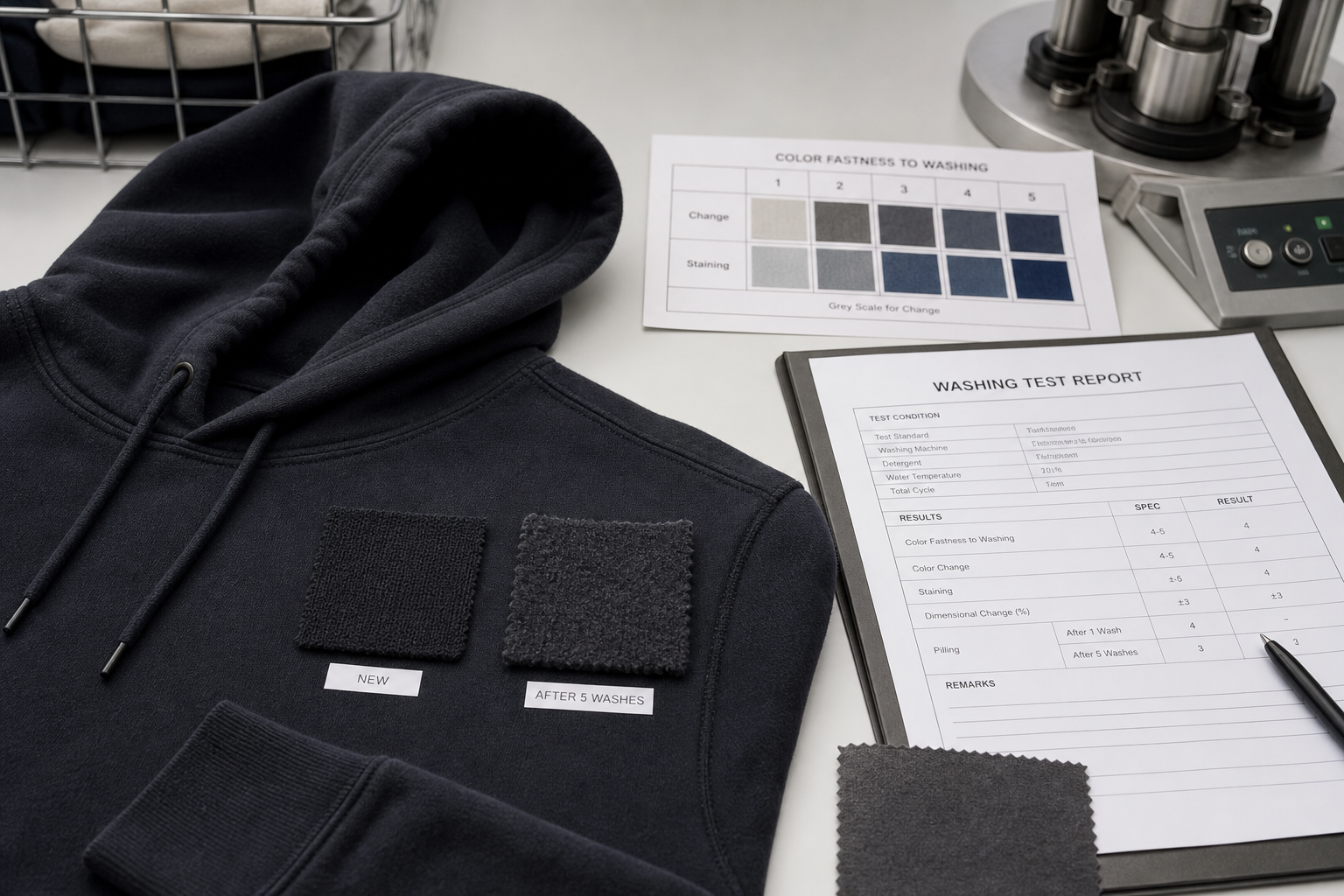
Before bulk production, buyers should request fabric test information and confirm:
- Shrinkage rate
- Color fastness
- Washing performance
- Fabric durability
This helps avoid quality problems after delivery.
Which Fabric Is Best for Premium Streetwear Hoodies?
There is no single fabric that works for every brand.
A luxury streetwear label may choose a 450 GSM 100% cotton fleece hoodie because the weight and texture support a premium product image.
A brand focusing on wider distribution may prefer a cotton polyester blend because it provides more stable performance at a competitive price.
Designers should consider how the fabric supports the entire product concept, including:
- Hoodie shape
- Fit structure
- Printing or embroidery
- Target retail price
The fabric choice should match the brand story and customer expectations.
How Should Brands Select a Reliable Hoodie Manufacturer?
A good hoodie manufacturer should do more than provide a fabric catalog.
During development, brands need a supplier that understands fabric performance and can control production details.
Important points include:
Fabric control:
The manufacturer should provide accurate GSM, composition details, and testing information.
Production experience:
Heavyweight fabrics require proper sewing techniques and equipment. Experience helps maintain consistency during bulk orders.
Communication and delivery:
For fashion brands, delays can affect product launches and seasonal sales.
Vison Clothing provides OEM apparel manufacturing services for brands and buyers worldwide. With five production lines and experience exporting to Europe, America, and Australia, we support customers with hoodie development, fabric selection, and bulk production.
Final Thoughts
For brands developing heavyweight hoodies, GSM and fabric composition directly influence product quality and market positioning. A 100% cotton heavyweight hoodie creates a premium natural experience, while cotton polyester blends offer practical advantages for stable production. The best choice comes from understanding the brand’s customers, pricing strategy, and long-term product goals.