Launching a new style is exciting. Getting it into production is where the real work begins.
Many brands spend weeks revising samples, not because the factory lacks experience, but because critical information is missing before development starts. A hoodie inspired by a reference photo may arrive with the wrong pocket size. A T-shirt can look similar to the original design but use a lighter fabric than expected. Sometimes the fit is right, but the print placement is off by a few centimeters. These issues are common during product development, and most can be traced back to one document—the Tech Pack.
A well-prepared Tech Pack gives every department the same set of instructions before the first sample is made. Pattern makers, merchandisers, production teams, and quality inspectors all work from the same specifications. That alignment saves time, reduces revisions, and helps avoid costly mistakes during bulk production.
At Vison Clothing, we develop OEM apparel for fashion brands, wholesalers, and private label customers in Europe, North America, and Australia. One pattern is consistent across projects: brands that provide complete Tech Packs usually move from sampling to production much faster than those relying only on reference garments or design sketches.
What Is a Clothing Tech Pack?
Think of a Tech Pack as the production blueprint for a garment.
It tells the factory exactly what needs to be made, which materials should be used, how the garment should be constructed, and what quality standards need to be achieved.
Unlike mood boards or design concepts, a Tech Pack contains technical information that can be used directly by production teams.
Most apparel manufacturers review the Tech Pack before quoting a project because it provides the details needed to estimate material consumption, production time, and manufacturing costs.
Whether you’re developing a basic cotton T-shirt or a heavyweight streetwear hoodie, a complete Tech Pack helps everyone work toward the same result.
Why Every Apparel Brand Needs a Tech Pack
Some new brands begin product development with inspiration photos collected from social media or existing garments purchased from retail stores.
Reference images are useful, but they leave many questions unanswered.
What fabric weight should the factory source?
Which stitching method should be used?
How wide should the rib cuffs be?
Where should the print be positioned?
How should the garment be folded for packaging?
Without clear answers, manufacturers have to make assumptions. Even experienced factories cannot accurately reproduce a product based on appearance alone.
Every assumption increases the chance of sample revisions.
From a buyer’s perspective, that usually means longer lead times, higher development costs, and delayed product launches.
A detailed Tech Pack helps prevent those situations before production begins.
It also creates a record that can be reused for future orders, making repeat production much easier.
What Should a Professional Tech Pack Include?
There is no single format used across the apparel industry. Every brand develops its own templates over time.
However, most professional Tech Packs contain the same core information.
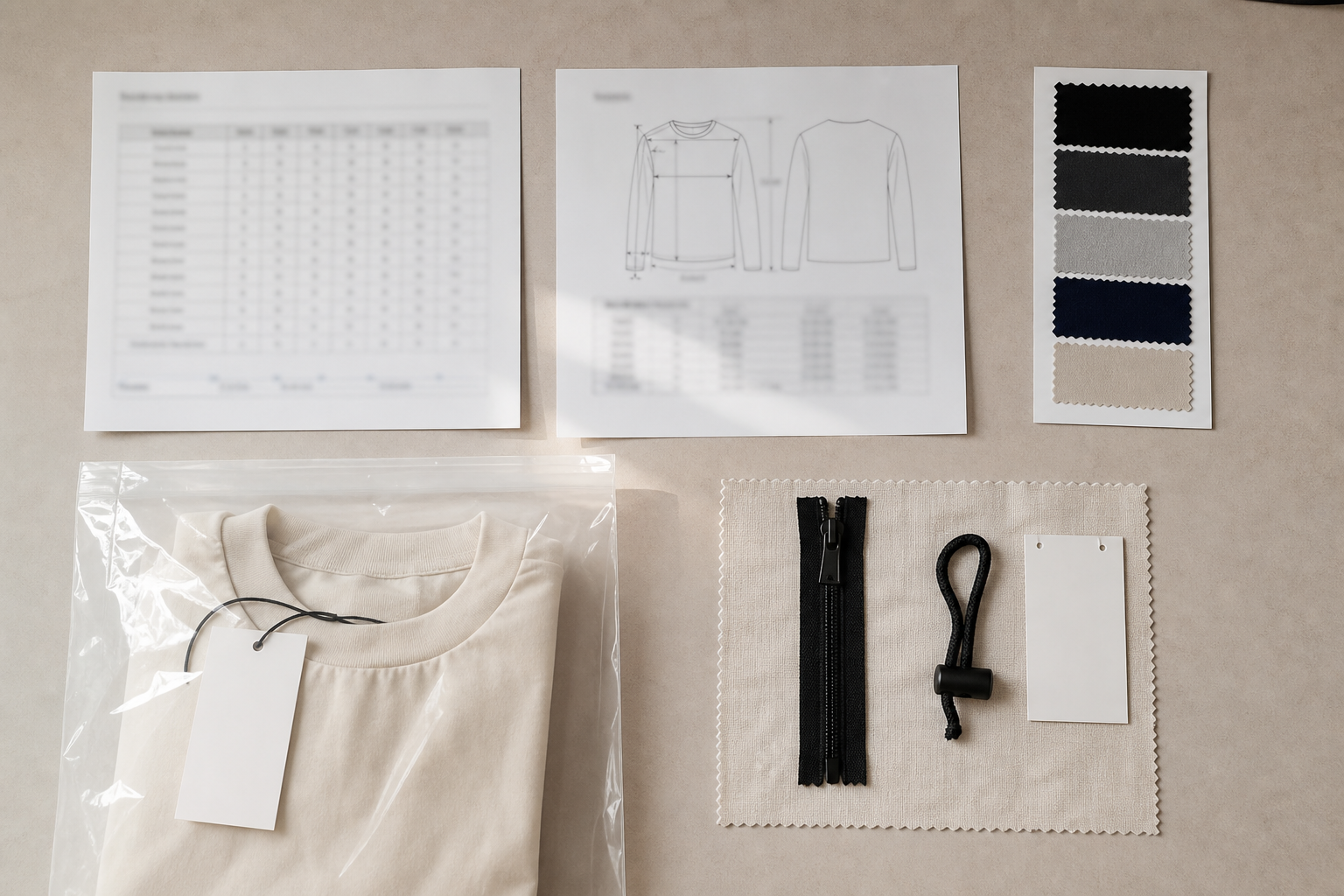
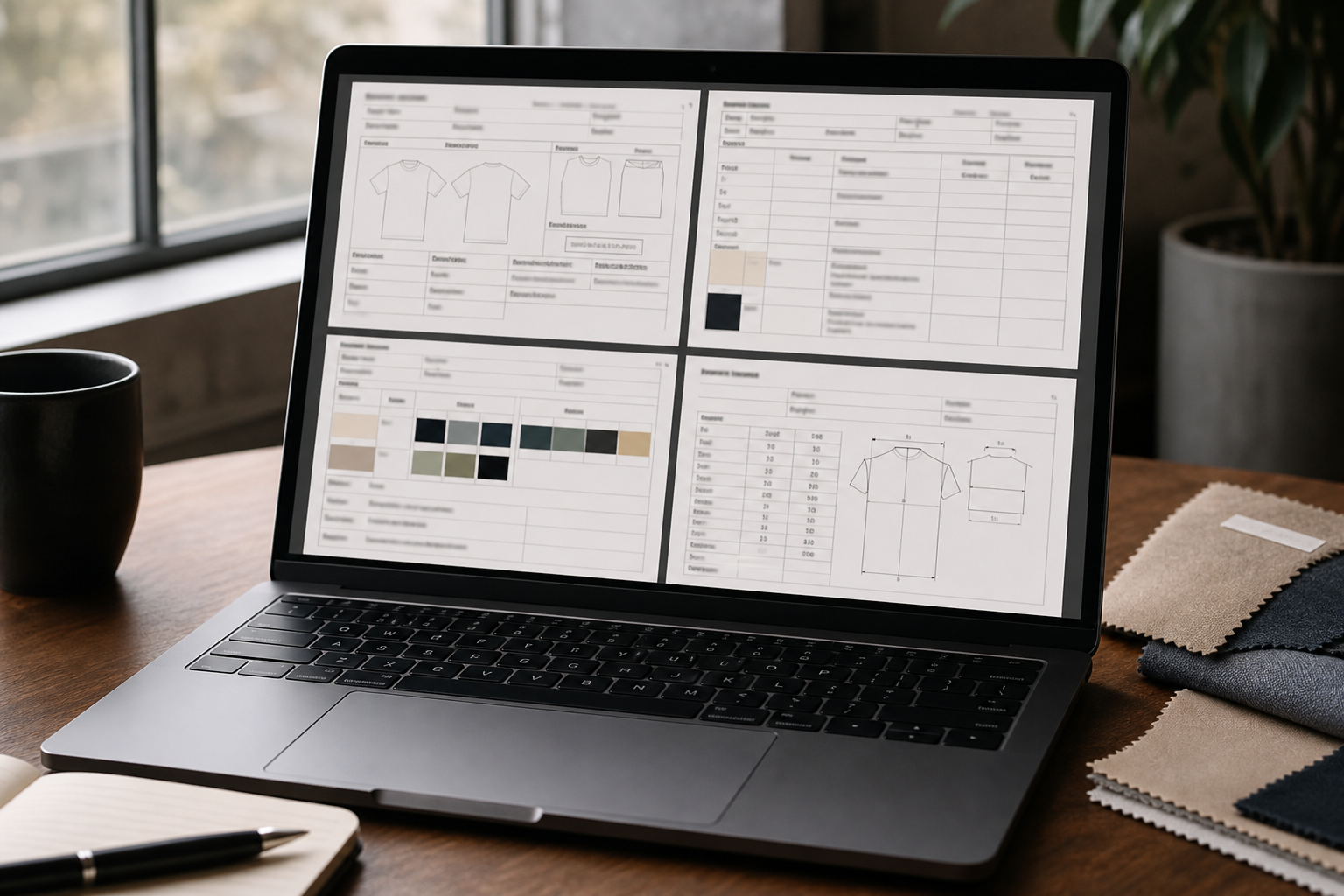
| Section | Purpose |
|---|---|
| Cover Page | Style name, style number, collection, revision date |
| Technical Sketch | Front, back and construction details |
| Bill of Materials (BOM) | Fabric, rib, trims, labels and accessories |
| Fabric Specification | Composition, GSM, finish and color |
| Colorways | Pantone references and available colors |
| Size Specification | Measurements, grading and tolerances |
| Artwork | Print or embroidery files with placement |
| Construction Notes | Stitch types, seam details and reinforcement |
| Labels | Main label, care label and size label |
| Packaging | Folding method, polybag, carton information |
| Quality Requirements | Testing standards and inspection notes |
Some brands create highly detailed Tech Packs with dozens of pages. Others keep everything within ten pages.
The length is less important than the clarity of the information. A concise document with accurate specifications is far more useful than a lengthy file filled with incomplete details.
Step 1: Create Technical Sketches That Factories Can Build From
The first page many manufacturers review is the technical sketch.
Unlike a fashion illustration, a technical sketch focuses on construction rather than presentation.
It should clearly show how every major component is assembled.
For a hoodie, that may include:
- Front and back views
- Hood shape
- Kangaroo pocket
- Sleeve construction
- Rib cuffs and waistband
- Drawcord location
- Stitching details
Flat sketches created in Adobe Illustrator remain the industry standard because they are clean, scalable, and easy to update.
Photographs can be attached as references, especially if you’re trying to explain a specific washing effect or vintage finish. However, photos should support the sketch rather than replace it.
One issue we often see during sample development is incomplete pocket or hood construction. These details may look obvious in a photograph, but they still need to be defined in technical drawings.
Step 2: Specify Fabric Beyond “100% Cotton”
Fabric descriptions that are too general often create unnecessary back-and-forth during development.
Writing “100% cotton” tells the factory very little.
A production-ready Tech Pack should answer questions such as:
- What type of knit fabric is required?
- What is the finished fabric weight?
- Which yarn count should be used?
- Is the fabric brushed or unbrushed?
- Has it been pre-shrunk?
- Does it require enzyme washing or garment washing?
For example, a heavyweight hoodie specification might look like this:
Fabric Type: French Terry
Composition: 100% Cotton
Weight: 420 GSM
Yarn Count: 26s
Finish: Pre-shrunk + Enzyme Wash
Color: Pantone Black C
These details allow the sourcing team to select suitable materials before sampling begins.
If the project involves custom-developed fabrics, include any available testing requirements such as shrinkage limits, color fastness standards, or pilling performance.
Providing this information early reduces the need for fabric changes later in development.
Step 3: Build a Size Specification That Leaves No Guesswork
The size chart is one of the most frequently used pages throughout production.
Pattern makers rely on it to create patterns.
Sample rooms use it when sewing prototypes.
Quality inspectors compare finished garments against it before shipment.
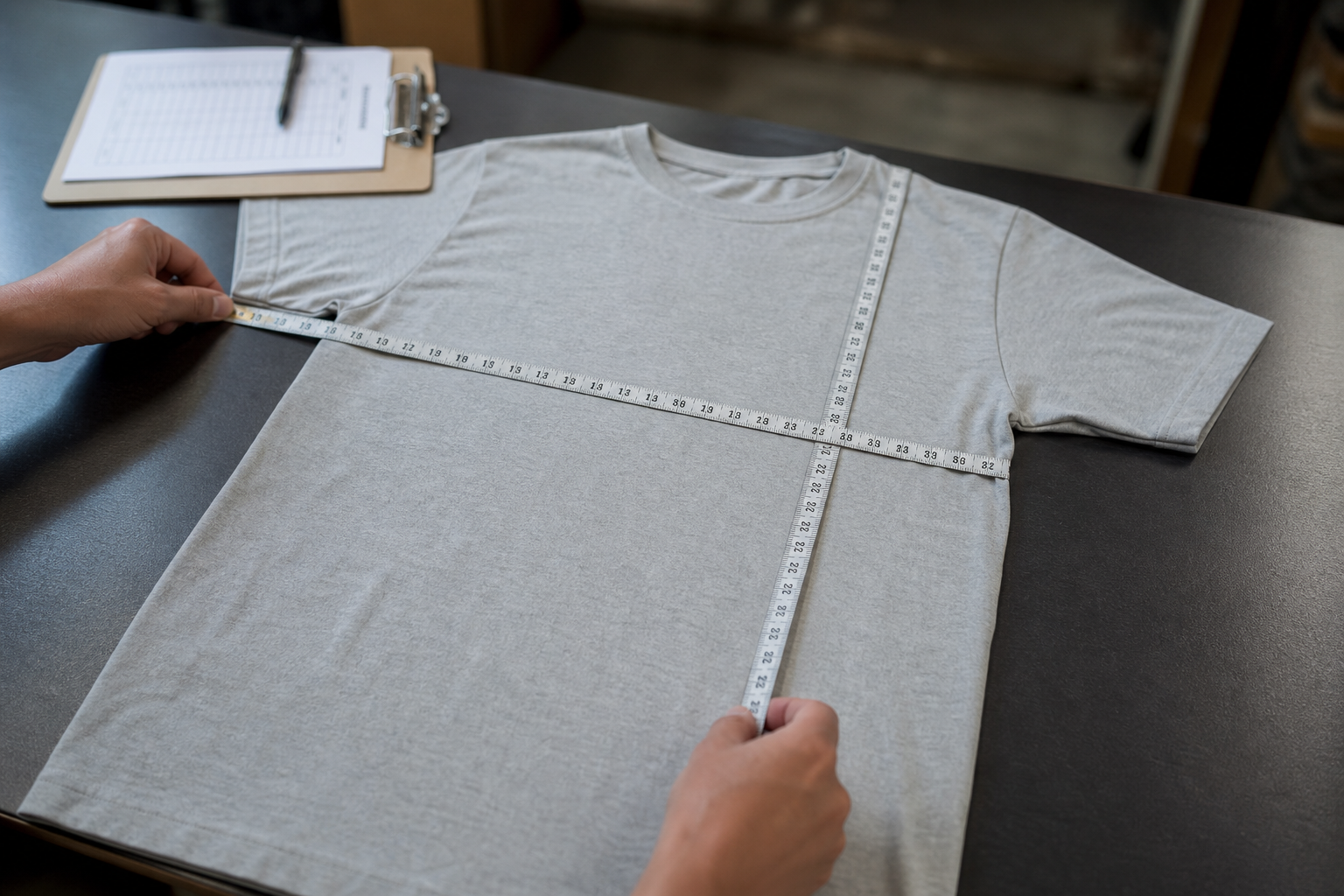
Every measurement should include three pieces of information:
- Point of Measurement (POM)
- Finished dimension
- Acceptable tolerance
For a heavyweight hoodie, the specification may include chest width, body length, shoulder width, sleeve length, cuff height, and bottom rib height.
Measurement diagrams are just as important as the numbers themselves.
For example, “body length” can be measured from different starting points depending on the factory’s standard. A simple illustration showing where the measurement begins and ends removes that uncertainty.
Tolerance should also be defined clearly.
Without an acceptable tolerance, inspectors have no consistent standard when evaluating finished garments, increasing the risk of disputes during final inspection.
A well-prepared size specification protects both the buyer and the manufacturer by setting clear expectations before production begins.
Step 4: Define Artwork the Way a Production Team Needs It
A print file and a Tech Pack serve different purposes.
The artwork file shows the design. The Tech Pack explains how that design should be applied to the garment.
This section should answer questions before sampling begins.
For every graphic, specify:
- Printing or embroidery method
- Artwork dimensions
- Placement measurements
- Pantone color references
- Special finishes, such as puff print, discharge printing, high-density print, or embroidery
For example, instead of writing “large chest logo,” provide measurable instructions such as:
- Print width: 280 mm
- Position: 90 mm below the neckline
- Centered on the front panel
- Pantone Black C
- Water-based screen print
These details allow the factory to prepare screens, confirm positioning, and reproduce the same result during bulk production.
If the artwork contains fine details, gradients, or distressed effects, include vector files whenever possible. High-resolution PDF, AI, or EPS files help avoid unnecessary redraws and reduce approval time.
Step 5: Create a Complete Bill of Materials (BOM)
A garment is more than fabric.
Drawcords, eyelets, labels, zippers, sewing thread, elastic, and packaging materials all need to be specified before purchasing begins.
This is where the Bill of Materials becomes essential.
A typical BOM should include:
| Component | Specification |
|---|---|
| Main Fabric | 100% Cotton French Terry, 420 GSM |
| Rib | 2×2 Cotton Rib |
| Drawcord | Flat Cotton, 10 mm, Black |
| Eyelets | Matte Black Metal |
| Main Label | Woven Label |
| Care Label | Satin Printed Label |
| Sewing Thread | Polyester Core-Spun |
| Hangtag | Custom Printed |
| Polybag | Recyclable PE Bag |
One missing trim can delay an entire production schedule.
We’ve seen projects where sampling was completed on time, but bulk production had to wait because the customer hadn’t approved the woven label or zipper pull.
Adding these details to the Tech Pack keeps purchasing and production moving together.
Step 6: Include Packaging Requirements
Packaging is often treated as the final step, but many retailers and distributors have strict packing requirements.
If instructions are missing, the factory may package the garments according to its own standard, which may not match the customer’s warehouse process.
A Tech Pack should include packaging information such as:
- Folding method
- Polybag size
- Barcode position
- Carton quantity
- Carton dimensions
- Shipping marks
- Special retailer requirements
Brands selling through large retailers should also specify whether price tags, size stickers, or carton labels follow retailer guidelines.
Clarifying these details before production reduces repacking costs later.
10 Common Tech Pack Mistakes That Lead to Sample Revisions
Most sampling delays are not caused by poor workmanship. They happen because information is incomplete or open to interpretation.
These are the mistakes we encounter most often.
1. Fabric weight is missing
Writing “cotton fleece” without GSM leaves too much room for interpretation.
2. Measurements have no tolerances
Factories need acceptable production tolerances during quality inspection.
3. Artwork files are low resolution
Small images copied from websites cannot be used for production.
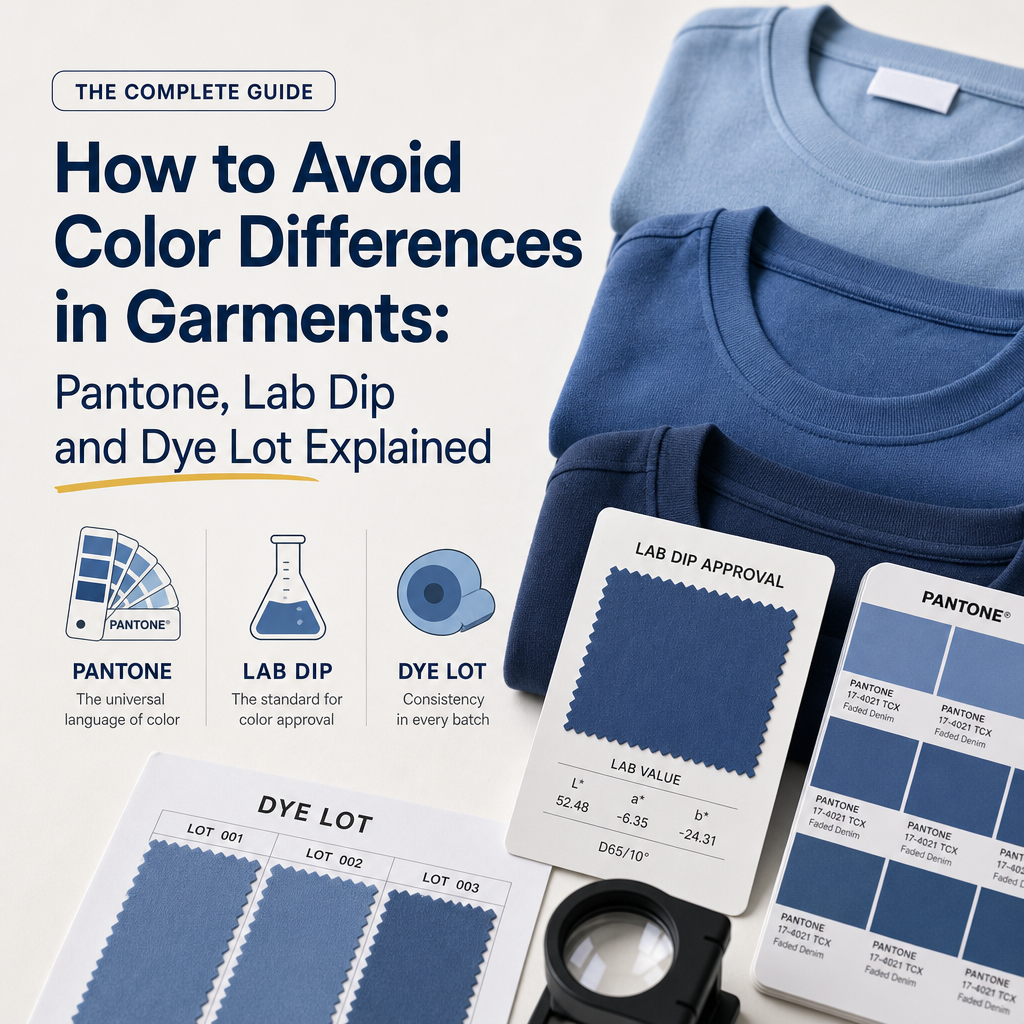
4. Pantone colors are not specified
Color names such as “off-white” or “dark green” are subjective.
Pantone references create a common standard.
5. Stitch construction is undefined
Topstitching, coverstitch, flatlock, or twin-needle construction all produce different results.
6. Trim details are incomplete
Labels, zippers, cords, buttons, and eyelets should all be identified before purchasing.
7. Packaging instructions are overlooked
Incorrect folding or labeling often creates additional work after production.
8. Multiple document versions are circulating
Using different versions of the Tech Pack during development creates confusion across departments.
Maintain one approved master version with revision dates.
9. Measurement diagrams are missing
Even accurate numbers can be interpreted differently without visual references.
10. Production comments are not updated
After every sample review, update the Tech Pack instead of relying on email conversations.
The latest approved information should always be stored in one document.
Free Clothing Tech Pack Template
Many buyers ask whether a Tech Pack has to be created in expensive fashion software.
The answer is no.
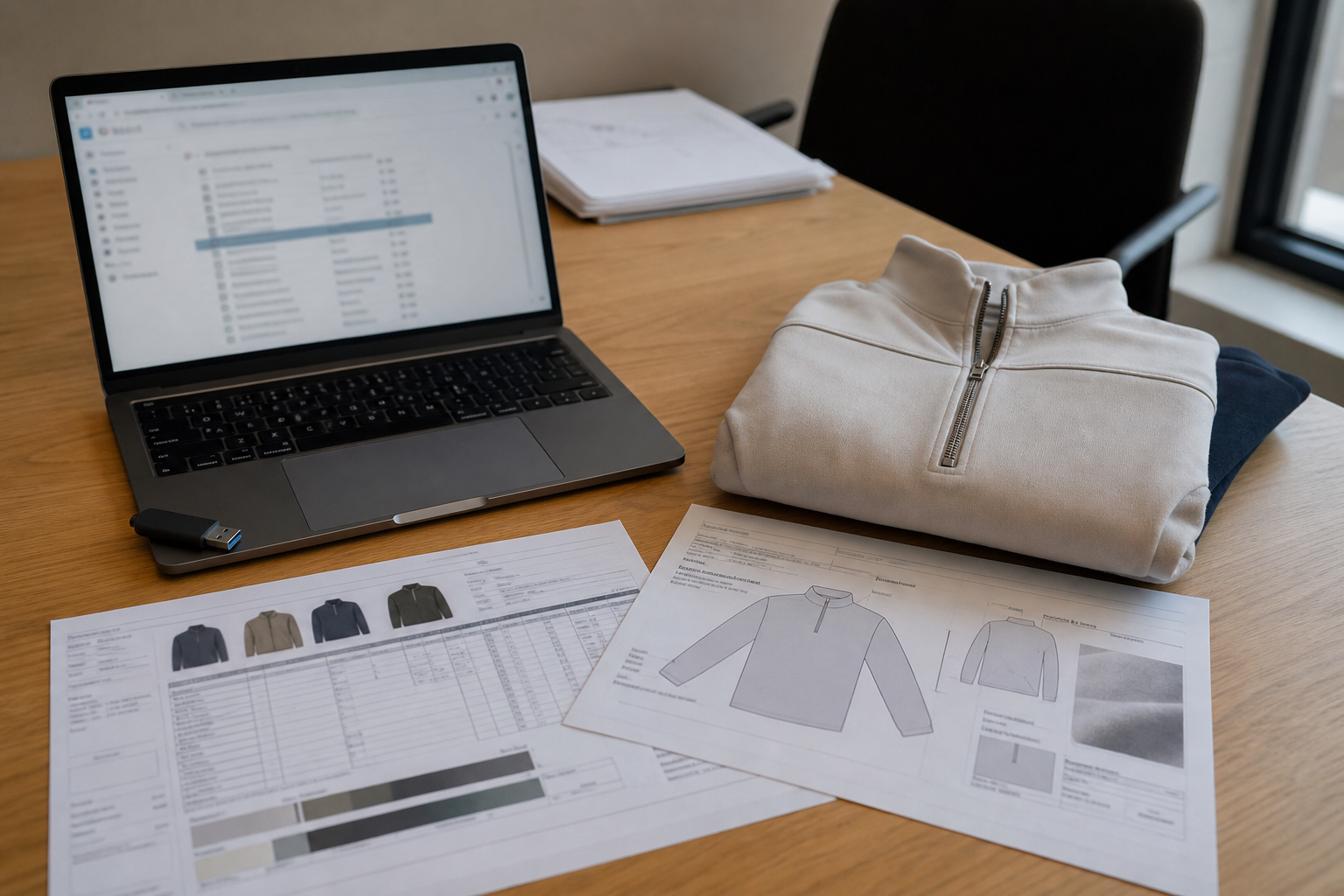
A clear Tech Pack can be built using familiar tools such as:
- Microsoft Excel
- Adobe Illustrator
- Adobe PDF
- Google Sheets
The software matters less than the quality of the information.
A practical template should include:
- Cover page
- Technical sketches
- Bill of Materials
- Fabric specifications
- Size chart
- Artwork page
- Construction notes
- Packaging instructions
- Revision history
As your product range grows, you can expand the template while keeping the overall structure consistent.
How We Review a Tech Pack Before Sampling
Receiving a Tech Pack is only the first step.
Before development begins, our merchandising and technical teams review every document to identify missing information that could affect production.
The review process usually follows this sequence:
- Confirm design details and technical sketches.
- Verify fabric availability and specifications.
- Review trims and accessories.
- Check size charts and grading.
- Evaluate artwork and decoration methods.
- Identify questions before sampling starts.
- Produce the first development sample.
If adjustments are needed after fitting, the approved comments are added to the latest Tech Pack version before the next sample is made.
Keeping all revisions in one document makes communication much more efficient, especially when several departments are involved.
FAQ
What is the purpose of a clothing Tech Pack?
A Tech Pack provides the technical information a clothing manufacturer needs to develop samples and produce garments consistently. It reduces misunderstandings and improves communication throughout production.
Can a factory create a Tech Pack for me?
Many manufacturers can assist with Tech Pack development, especially during OEM projects. However, the brand should still approve all specifications before sampling begins.
Is a Tech Pack necessary for small clothing brands?
Yes. Even for low minimum order quantities, a complete Tech Pack reduces sampling revisions and creates a reliable reference for future production.
What file format should a Tech Pack use?
Most brands use PDF for sharing and Adobe Illustrator or Excel for editing. Factories typically receive both editable files and a final PDF version.
How detailed should a Tech Pack be?
The document should include enough information for production without leaving room for assumptions. If a factory has to guess, that detail probably belongs in the Tech Pack.
Final Thoughts
A Tech Pack is more than a design document. It becomes the reference used throughout sampling, sourcing, production, and quality inspection.
The time invested in creating clear specifications at the beginning often saves weeks during development and helps avoid costly revisions later.
For apparel brands working with overseas manufacturers, a complete Tech Pack creates a smoother production process from the first sample to bulk delivery.
At Vison Clothing, we support fashion brands, wholesalers, and private label businesses with OEM apparel manufacturing, sample development, and production planning. If your team is preparing a new collection and needs technical guidance before sampling, we’re happy to review your Tech Pack and provide practical feedback based on manufacturing requirements.