When people talk about denim, they usually focus on fabric weight, fit, or color. In manufacturing, however, the character of a pair of jeans or a denim jacket is often shaped much later—inside the washing plant.
Two garments can be cut from the same denim fabric and sewn with the same pattern, yet look completely different after finishing. The washing process changes the color, texture, softness, and even the way customers perceive the product.
Denim washing is the finishing stage that transforms raw garments into finished products with a specific look and feel. Depending on the techniques used, a garment can appear clean and modern, naturally faded, heavily distressed, or vintage. The right wash should always be selected according to the brand’s design direction, target price, and customer expectations—not simply because it’s fashionable.
If you’re developing a denim collection, understanding these processes will make communication with your factory much easier and help avoid costly revisions during sampling.
Denim Washing Starts Long Before the Garment Enters the Washing Plant
Many buyers assume washing is simply the last production step. In reality, the wash effect is influenced by decisions made much earlier.
The fabric composition, indigo dye quality, yarn construction, sewing thread, and even the stitch density all affect how a garment reacts during washing. A finish that looks excellent on one fabric may produce completely different results on another.
For this reason, experienced manufacturers rarely promise an exact wash effect based only on a reference photo. A physical wash sample is almost always required before bulk production begins.
Rinse Wash: Keeping the Original Character of the Denim
Not every collection needs dramatic fading.
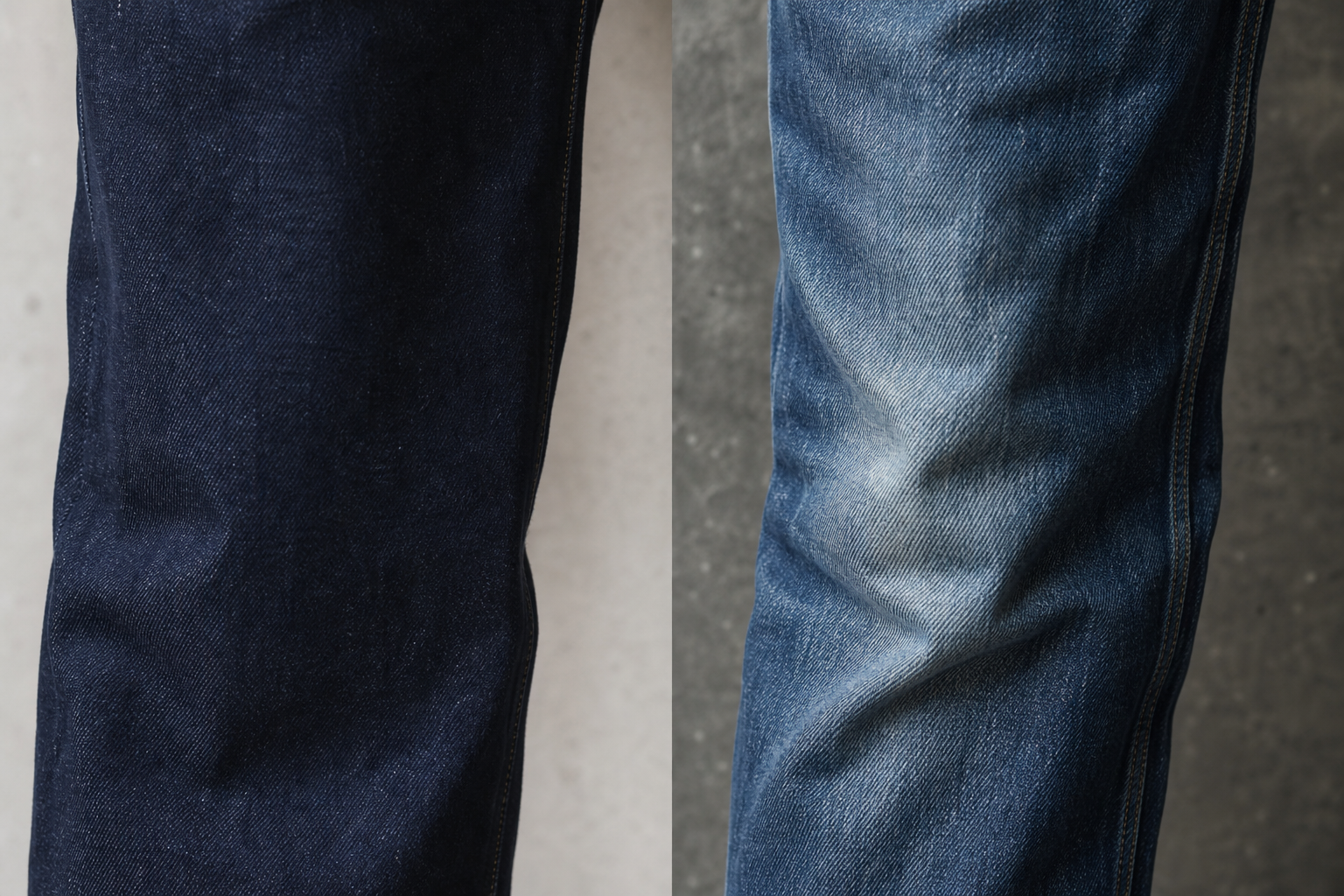
For brands that prefer a clean, classic appearance, rinse washing is often enough. The garment is washed mainly to remove excess dye and finishing chemicals while making the fabric more comfortable to wear.
The color remains deep and consistent, preserving the original appearance of the denim. You’ll often see this finish on premium basics, workwear, and minimalist collections where the focus is on fabric quality rather than heavy distressing.
Because the process is relatively simple, rinse washing also helps keep production costs under control.
Stone Wash: The Finish That Defined Vintage Denim
Stone washing has been part of denim manufacturing for decades, and it remains one of the most requested finishes.
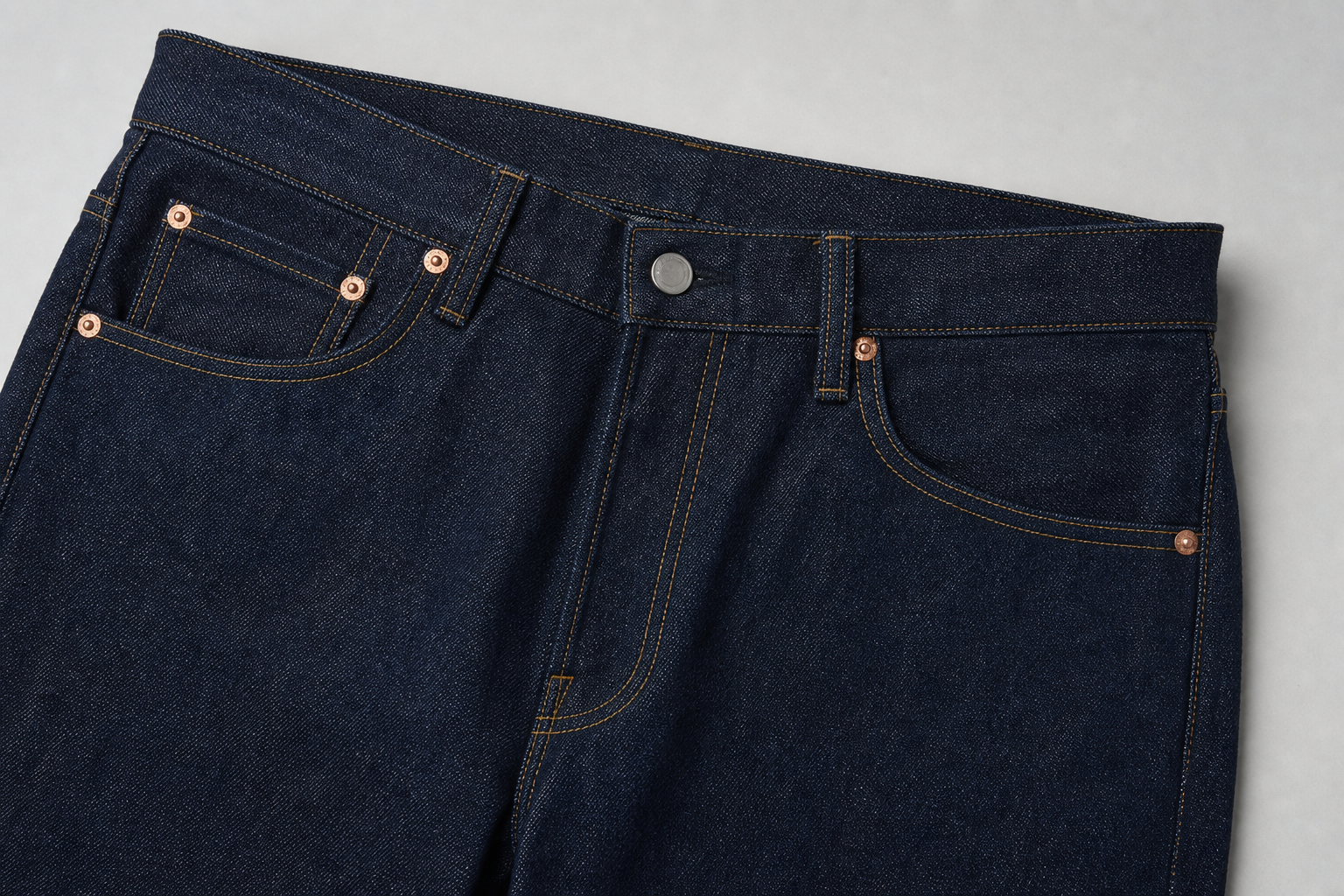
Pumice stones tumble together with the garments inside industrial washing machines. As the stones rub against the fabric, they gradually remove indigo from raised areas, creating the faded appearance that customers associate with worn-in denim.
Besides changing the color, stone washing softens the fabric considerably. New jeans feel less stiff, making them comfortable from the first wear.
From a production perspective, the challenge is consistency. Small differences in washing time, stone size, machine loading, or fabric construction can noticeably change the final appearance. That’s why experienced factories rely on approved wash standards rather than trying to match photos alone.

Enzyme Wash: A Softer Alternative
As denim production has become more environmentally conscious, enzyme washing has become increasingly common.
Instead of relying mainly on abrasion, enzymes remove loose surface fibers and gently reduce the intensity of the indigo dye. The result is a cleaner finish with a softer hand feel.
Many brands combine enzyme washing with other finishing techniques rather than using it by itself. It works particularly well when the goal is to achieve a natural, slightly worn appearance without creating aggressive fading.
Another advantage is that enzyme washing generally places less mechanical stress on the garment than traditional stone washing.
Acid Wash: High Contrast That Never Goes Unnoticed
Acid wash first became popular in the 1980s, but it continues to appear in modern streetwear and fashion collections.
Unlike stone washing, which creates gradual fading, acid washing produces stronger contrasts and irregular patterns across the fabric. Every garment develops slightly different marks during production, so each piece has its own character.
Designers often choose acid wash when they want denim to become the visual focus of the collection rather than simply serving as a basic garment.
Because bleaching agents are involved, controlling processing time is critical. Even small adjustments can noticeably change the final result.
Snow Wash: Built for Bold Vintage Collections
Snow wash creates bright, scattered highlights across the denim surface, producing a more dramatic effect than standard fading.
This finish works particularly well on heavyweight denim jackets and relaxed-fit jeans because the larger panels allow the contrast to develop naturally.
Although snow wash is often associated with retro fashion, many contemporary designers use it to add texture without introducing printed graphics or additional trims.
Bleach Wash: Lightening Indigo with Care
Bleach washing removes indigo more aggressively than most other finishing methods.
Depending on the treatment, the result may be a subtle light-blue wash or an almost white appearance.
The process requires careful control because excessive bleaching can weaken cotton fibers over time. For that reason, manufacturers usually conduct wash trials before approving production, especially when lightweight denim fabrics are involved.

Vintage Wash Isn’t a Single Process
One of the biggest misconceptions in denim sourcing is treating “vintage wash” as a standalone technique.
In reality, vintage finishes are usually created by combining several processes.
A garment might first receive an enzyme wash, followed by stone washing, hand scraping, whiskering, and light bleaching. The goal is to build layers of wear that resemble years of natural use.
The most convincing vintage denim rarely comes from one treatment alone. It’s usually the result of several carefully controlled finishing steps working together.
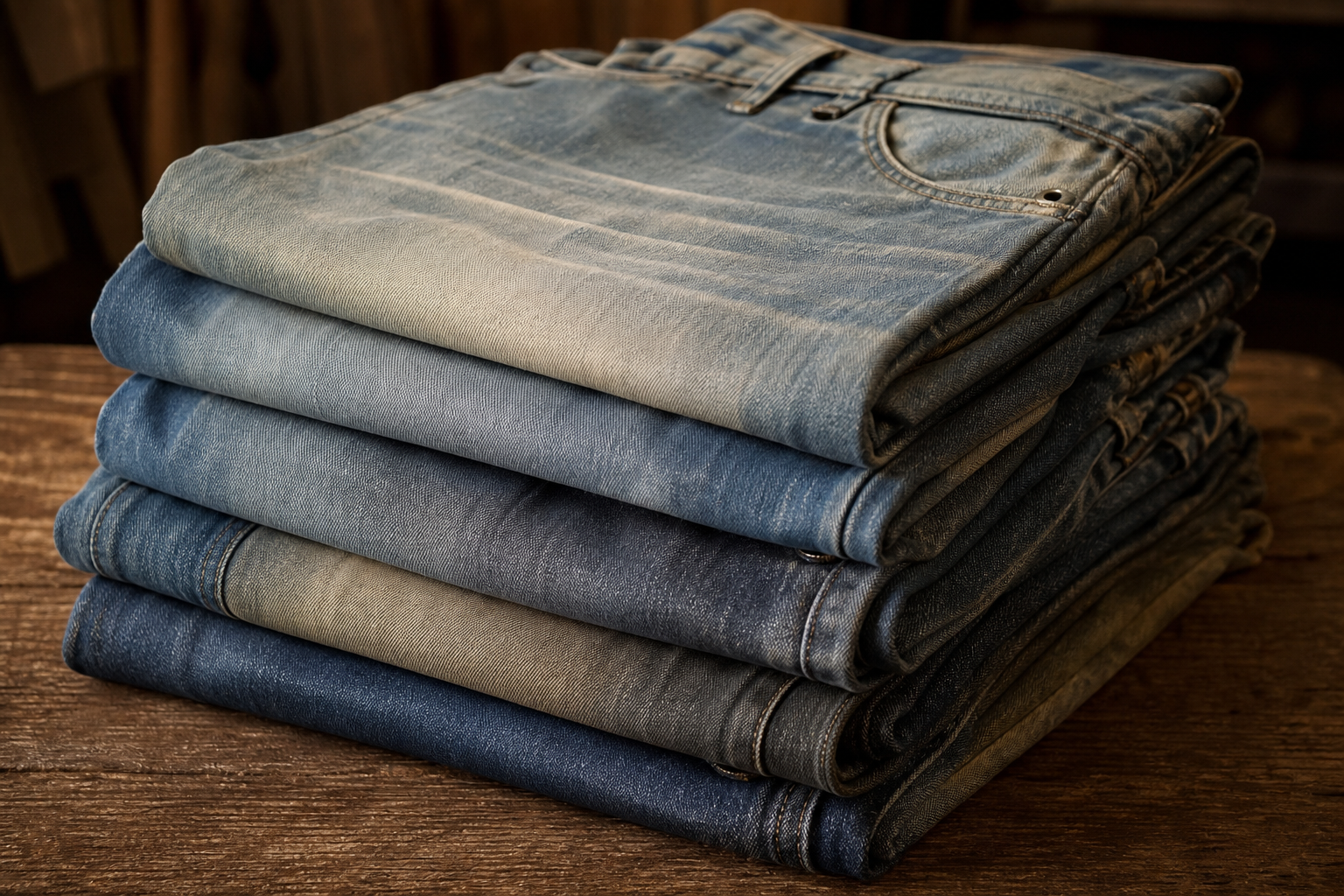
Dirty Wash: Adding Depth Instead of Brightness
Not every collection aims for clean blue denim.
Dirty wash introduces subtle grey, brown, or earth-tone pigments that settle into seams and textured areas. Instead of making the garment look newer, the finish creates depth and gives denim a more rugged appearance.
Workwear-inspired brands often choose this treatment because it complements heavyweight fabrics, utility details, and vintage styling.
Whiskering: The Details Customers Notice First
Take a close look at a well-made pair of jeans and you’ll probably notice the faded lines around the upper thigh.
These marks, known as whiskers, imitate the creases that naturally develop after years of wear.
Although laser technology is now widely used, experienced washing technicians still play an important role in deciding the placement, intensity, and overall balance of the effect.
Poorly positioned whiskers immediately make denim look artificial, while well-executed ones often go unnoticed—which is exactly the point.
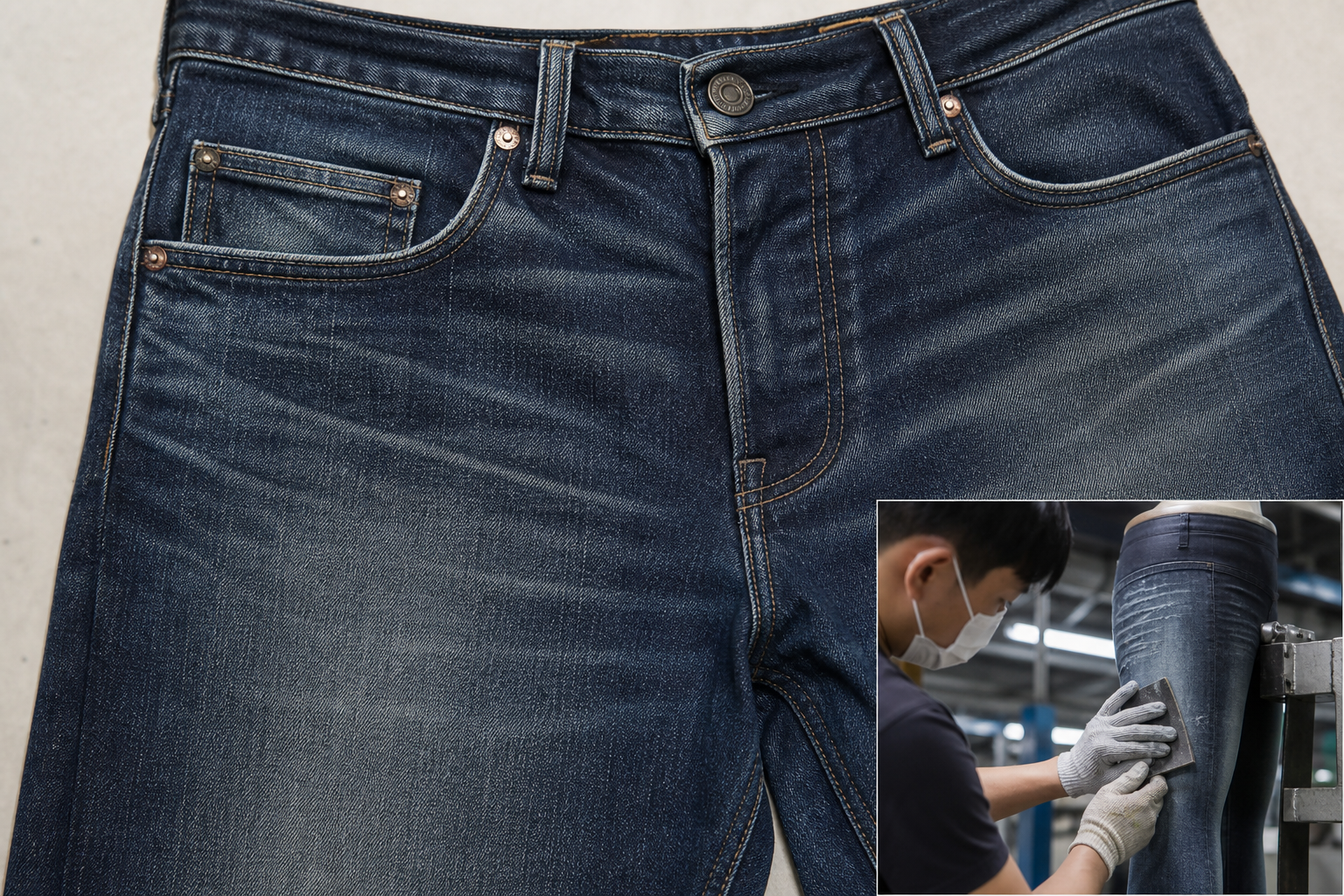
Hand Scraping: When Craftsmanship Still Matters
Despite advances in automation, some finishing work is still difficult to replace.
Hand scraping allows experienced technicians to create natural fading along seams, knees, pockets, and other high-wear areas.
Since every garment is treated individually, slight variations are expected. Those differences are often appreciated by premium brands because they give each piece a less manufactured appearance.
Although this method increases production time, it’s still widely used for higher-end denim collections.
Laser Finishing Has Changed Modern Denim Production
Over the past decade, laser technology has become one of the biggest innovations in denim manufacturing.
Instead of manually sanding every garment, designers can now create fading patterns digitally and transfer them directly to laser equipment.
This approach improves consistency across large production runs while making it much easier to revise artwork during product development.
Laser finishing also reduces dust generated during manual sanding, making it a cleaner and more efficient process for both workers and manufacturers.
Resin Treatment: Creating Permanent Shape
Some denim styles are designed to keep visible creases even after repeated washing.
To achieve this effect, manufacturers apply a resin treatment before curing the garment under controlled heat.
The result is a structured appearance that works particularly well with slim-fit jeans and fashion collections featuring three-dimensional details.
Because resin changes how the fabric behaves, it is normally tested together with the chosen washing process rather than treated as an independent step.
Ozone Washing and the Move Toward Sustainable Production
Environmental standards have become an important part of product development, especially for brands selling in Europe and North America.
Ozone washing is one example of how denim production is changing. Instead of depending heavily on bleaching chemicals, ozone gas is used to lighten indigo while reducing water and chemical consumption.
It isn’t the answer to every washing requirement, but it has become an effective option for brands looking to lower the environmental impact of their collections.
Today, ozone technology is often combined with laser finishing, enzyme treatments, and water recycling systems as part of a broader sustainability strategy.
Developing the Right Wash for Your Collection
One question buyers often ask is, “Which wash is the most popular?”
The better question is, “Which wash supports my product?”
A clean Scandinavian-inspired collection may only need a light rinse wash. A heritage workwear brand might combine dirty wash with subtle hand scraping. A streetwear label could prefer heavy bleaching, oversized whiskers, or acid washing to create stronger visual impact.
The wash should support the design—not compete with it.
Another point worth remembering is that denim rarely reaches its final appearance after the first sample. It’s common to adjust washing time, chemical concentration, or finishing details several times before approving bulk production. That development process is a normal part of creating a successful denim collection.
Working with an Experienced Denim Manufacturer
Choosing the right washing process is only one part of denim development. Equally important is finding a manufacturer that understands how different fabrics respond during finishing.
At Vison, we manufacture OEM denim jackets, jeans, and other apparel for brands, wholesalers, and retailers in Europe, North America, and Australia. During product development, we work closely with customers to evaluate fabrics, recommend suitable washing techniques, and develop physical wash samples before bulk production begins.
This approach reduces unnecessary revisions and helps ensure the finished garments reflect the original design concept.
If you’re planning a denim collection and would like technical advice on washing, finishing, or OEM production, feel free to contact our team.
Website: https://visonclothing.com
Email: [email protected]
Conclusion
A successful denim product is rarely defined by fabric alone. The washing process is what gives the garment depth, comfort, and personality. Understanding how each technique works makes it easier to develop products that are consistent with your brand, realistic for production, and better suited to your target market. In denim manufacturing, the best results usually come from combining the right fabric with the right finishing process—not from relying on a single wash.