If you’re sourcing custom apparel, one of the first decisions you’ll face is how to decorate the garment. The same artwork can look completely different depending on the technique you choose. More importantly, the production cost, minimum order quantity, durability, and lead time can also change.
There isn’t a single decoration method that’s “best” for every project. Screen printing is often the most economical choice for bulk production, DTG works well for small runs with detailed artwork, embroidery creates a premium finish, and specialty techniques such as puff printing, silicone, foil, and garment washing help brands achieve distinctive textures and visual effects.
As an OEM apparel manufacturer, we’ve worked with fashion brands, wholesalers, and private-label companies from Europe, North America, and Australia. One question comes up in almost every project: Which decoration technique should we use? The answer depends on your design, fabric, order quantity, and target price. Here’s a practical overview of the most common options.
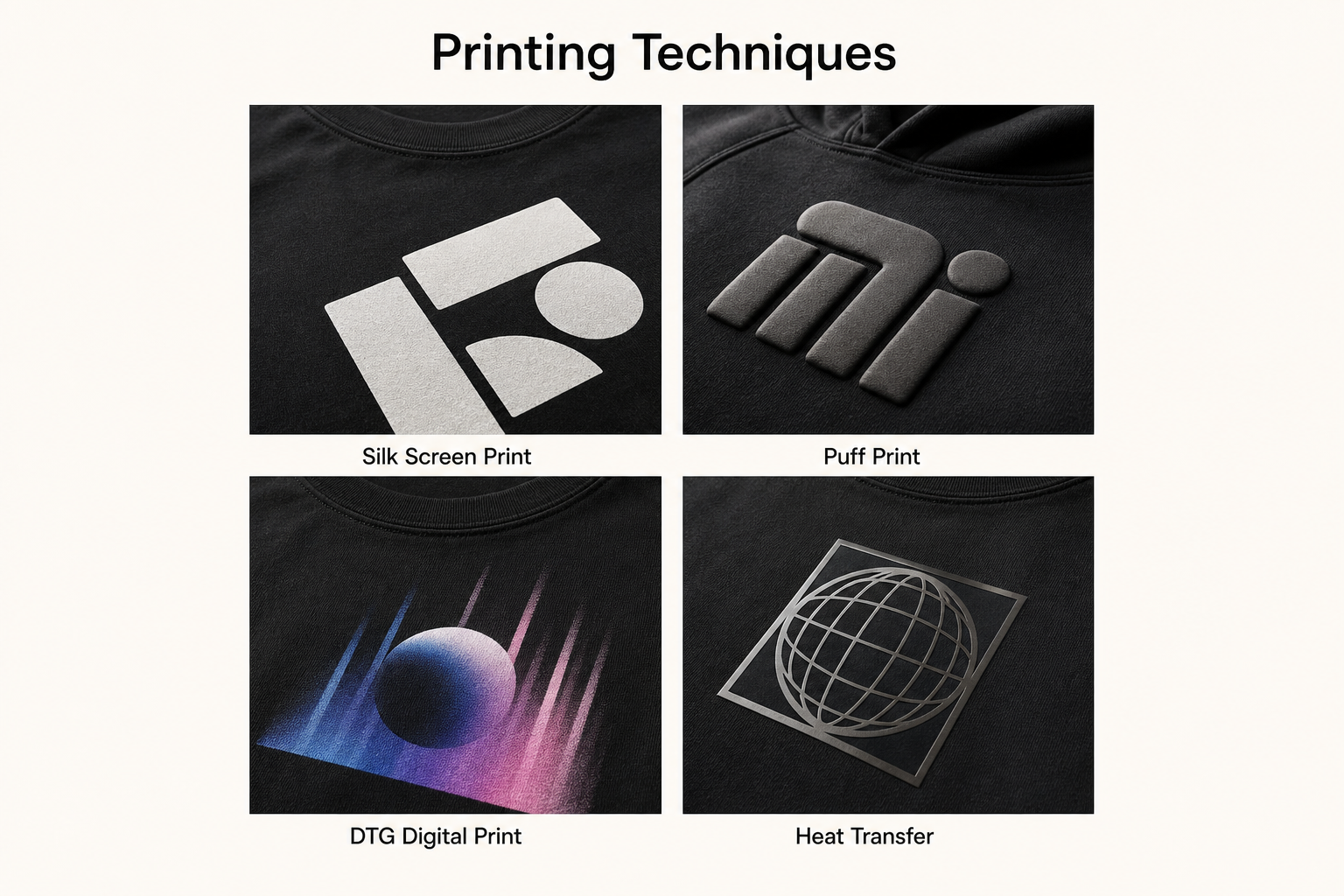
Screen Printing
Even with newer technologies entering the market, screen printing is still the most widely used decoration method for T-shirts and hoodies. Once the screens have been prepared, production becomes fast, consistent, and cost-effective for larger quantities.
This process produces solid colors with strong coverage and good wash durability. It works particularly well for logos, typography, and graphic designs that don’t require photographic detail.
For brands ordering several hundred or several thousand pieces, screen printing usually offers the lowest cost per garment. The only drawback is the initial setup, since each color requires its own screen. That setup cost makes it less practical for very small orders.
Puff Printing
Puff printing starts with traditional screen printing but uses ink mixed with a foaming additive. During curing, the printed area expands and forms a raised surface that gives the design extra depth.
Streetwear brands often use puff printing for oversized logos, bold lettering, or simple graphics. The effect is easy to see and adds another dimension without changing the garment itself.
One thing to keep in mind is that very fine lines or highly detailed artwork may not produce the cleanest result. Larger shapes generally create a stronger and more consistent puff effect.
DTG (Direct-to-Garment) Printing
DTG printing applies water-based ink directly onto the fabric, making it a good choice for artwork with gradients, photographs, or many colors.
Unlike screen printing, there is no need to create screens before production. That makes DTG especially useful for sampling, custom orders, or limited collections.
For larger production runs, however, the cost per piece is usually higher than screen printing. DTG also performs best on cotton garments, where the ink can achieve richer color and better detail.
Heat Transfer Printing
Heat transfer printing uses heat and pressure to apply a printed film onto the garment.
Many sportswear manufacturers use this method for player names, numbers, and customized graphics because each piece can be different without increasing setup costs.
Transfer technology has improved considerably in recent years, but the final durability still depends on the quality of the transfer material and the application process. High-quality transfers can withstand repeated washing, while lower-grade materials may eventually crack or peel.
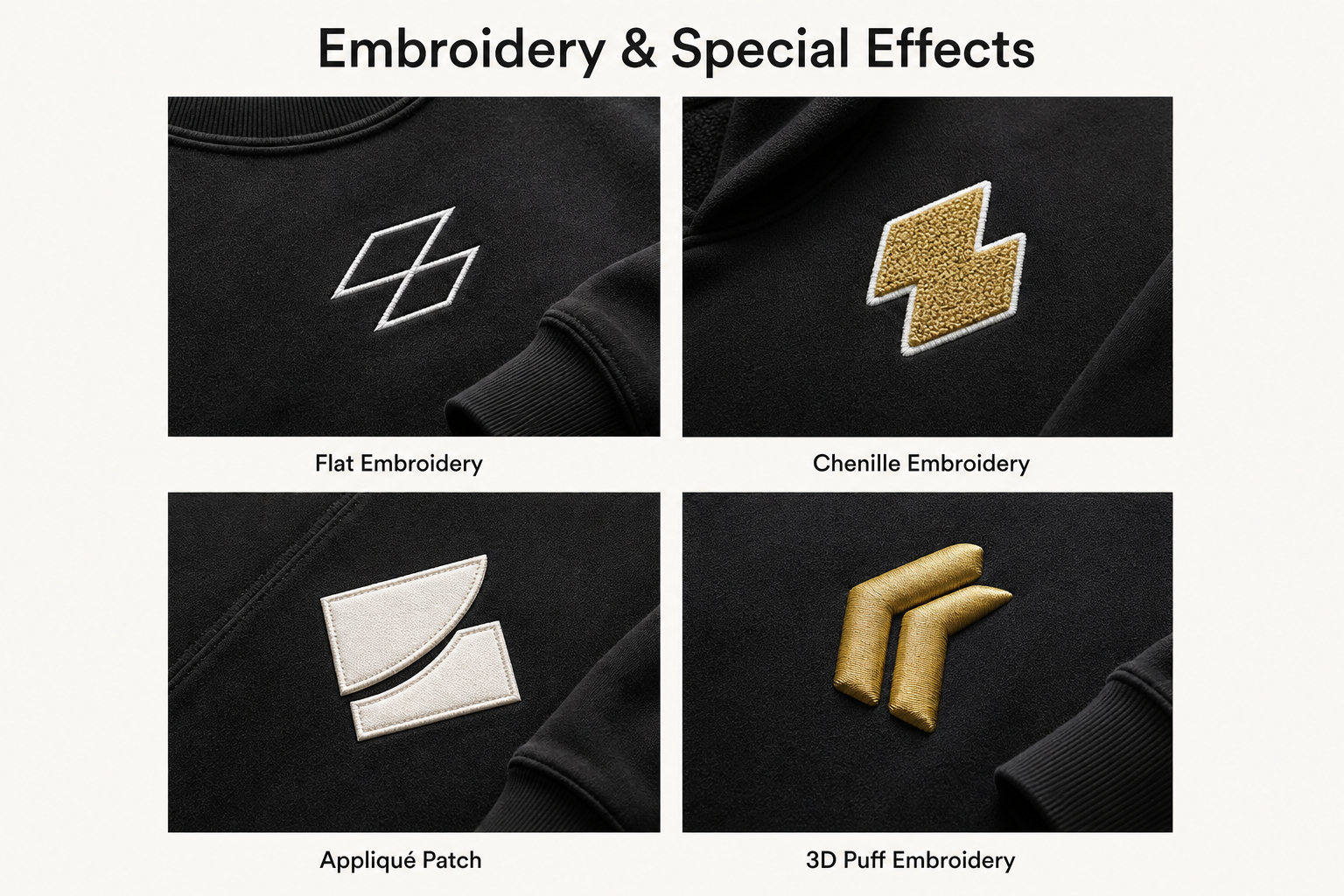
Flat Embroidery
Embroidery has long been associated with premium apparel because it adds texture instead of simply placing ink on the fabric.
Flat embroidery is commonly used for company logos, chest branding, sleeve details, and small decorative elements on hoodies, polo shirts, jackets, and caps.
Compared with printing, embroidery requires more production time, but it also creates a more structured and durable finish. Many premium fashion brands prefer embroidered logos because they maintain their appearance after years of wear.
Chenille Embroidery
Chenille embroidery creates a soft, towel-like texture using looped yarn. It has become a signature feature of varsity jackets, collegiate apparel, and many modern streetwear collections.
Rather than focusing on intricate details, chenille works best with bold letters and larger graphics. The raised surface immediately catches attention and gives garments a handcrafted feel that standard printing cannot easily replicate.
Appliqué Embroidery
Appliqué combines pieces of fabric with embroidery stitching. Instead of filling an entire design with thread, fabric panels are stitched onto the garment and secured with decorative embroidery.
Besides creating a layered appearance, appliqué also reduces the amount of stitching required for large logos. This makes it a practical choice for oversized graphics on heavyweight hoodies and sweatshirts.
Different fabrics—including twill, felt, denim, or corduroy—can be used to create completely different visual styles.
3D Puff Embroidery
3D puff embroidery uses a layer of foam underneath the stitches to lift parts of the design above the fabric surface.
This technique is often seen on baseball caps, hoodies, and streetwear logos where brands want maximum visibility. Because the raised effect relies on satin stitches covering the foam, simple lettering and clean shapes usually produce the strongest results.
Designs with very small details may lose definition, so artwork often needs minor adjustments before production.
Silicone Printing
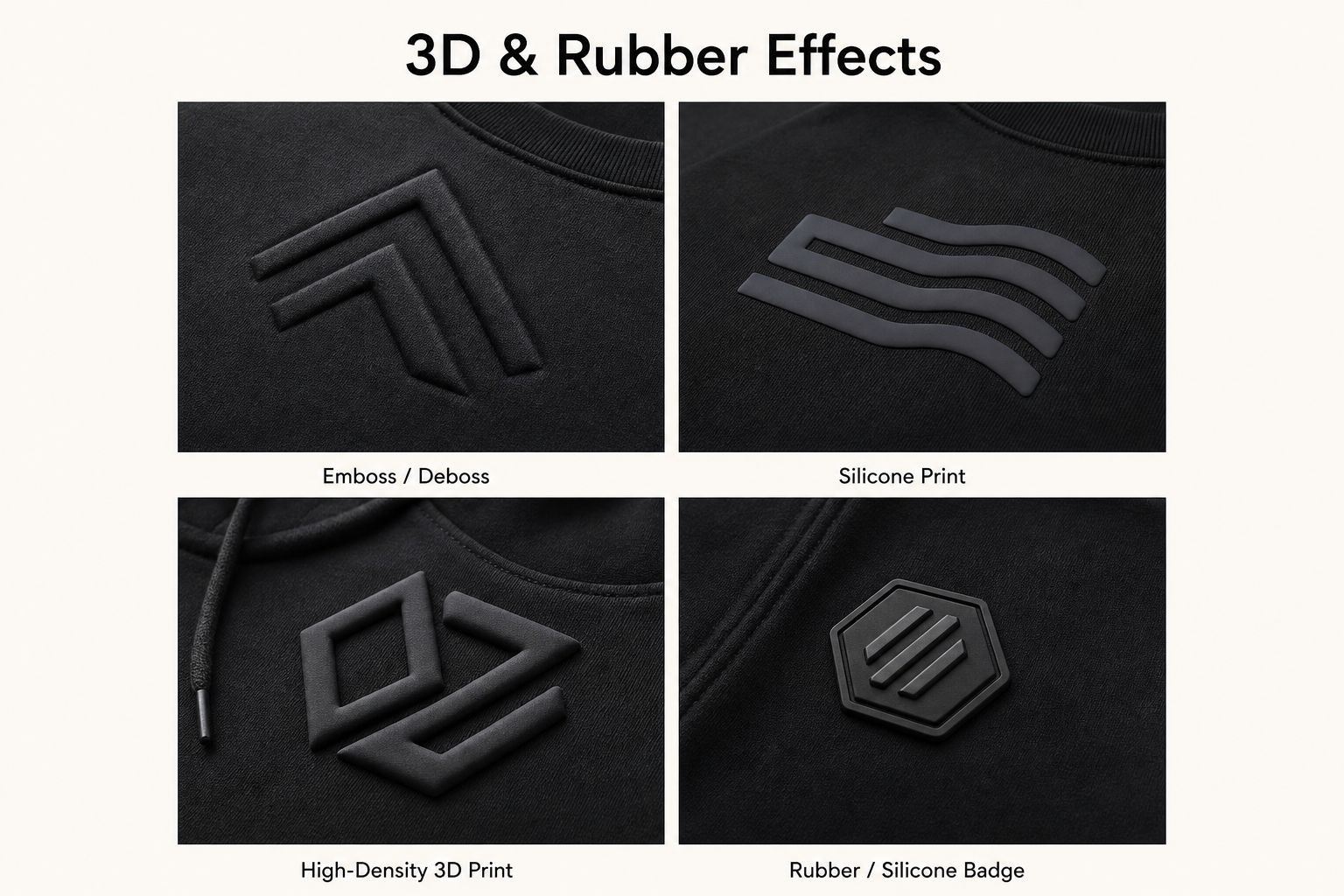
Silicone printing has become increasingly popular in sportswear and technical apparel.
Instead of creating a flat ink layer, silicone forms a flexible raised logo with a smooth rubber-like surface. It stretches well with performance fabrics and resists cracking during repeated wear.
Many outdoor and activewear brands choose silicone logos because they combine durability with a clean, modern appearance.
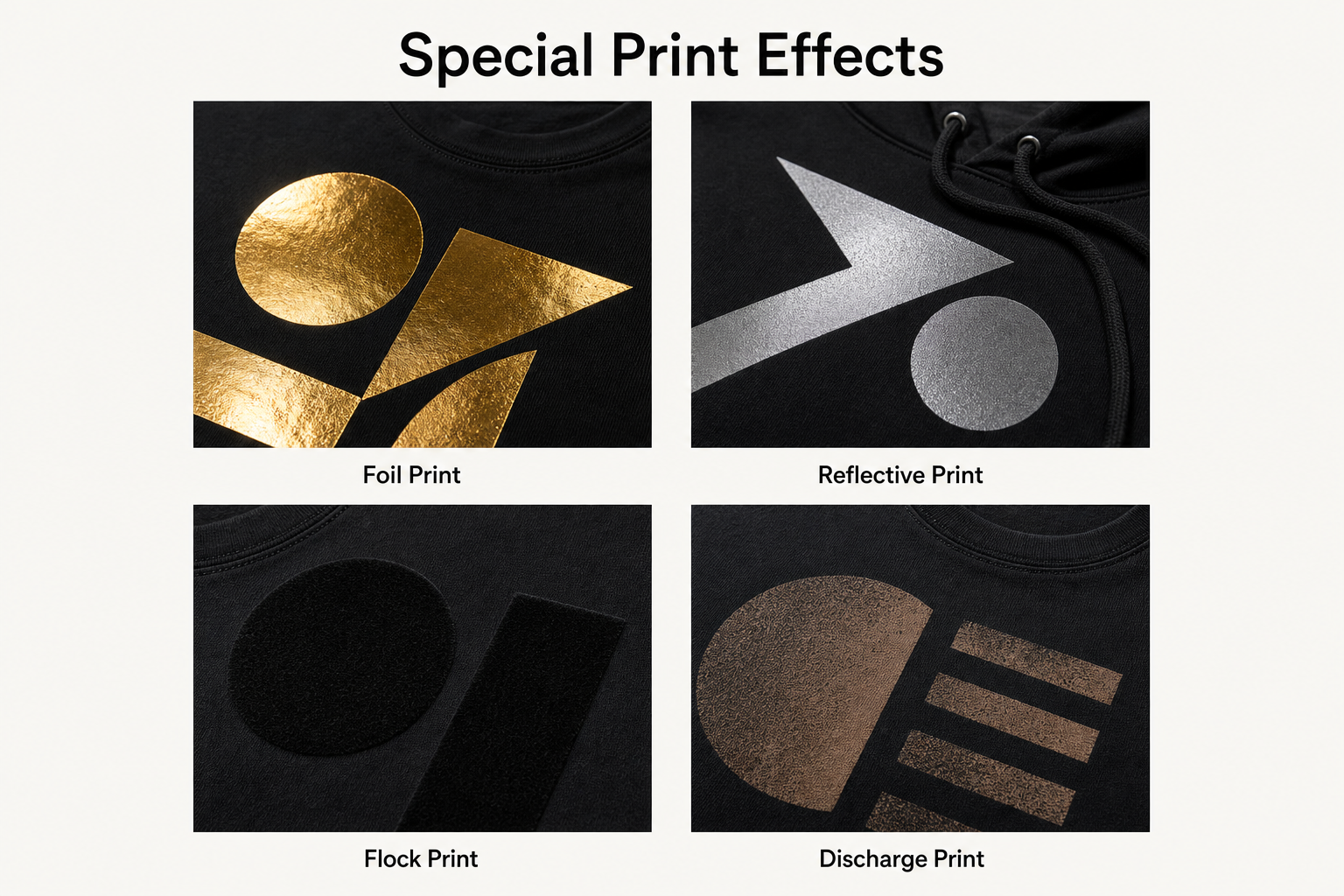
Foil Printing
Foil printing is designed to create metallic effects that ordinary ink cannot achieve.
Gold, silver, rose gold, and holographic finishes are among the most common options. These reflective surfaces are often used for fashion collections, seasonal releases, or limited-edition products where visual impact is more important than subtle branding.
Like many specialty finishes, foil requires proper garment care to maintain its appearance over time.
Reflective Printing
Reflective printing contains materials that bounce light back toward its source, making graphics much more visible under headlights or flash photography.
Although it was originally developed for safety apparel, reflective printing is now widely used in running wear, outdoor clothing, cycling gear, and fashion streetwear.
Many brands combine reflective logos with minimalist designs to create garments that look understated during the day but stand out at night.
Flock Printing
Flock printing creates a soft velvet-like texture by bonding fine fibers onto adhesive.
The finished surface feels very different from ordinary printing and gives logos a warm, textured appearance. It has been used for decades in fashion and remains popular for retro graphics, varsity designs, and premium branding.
Because the texture itself is the highlight, flock printing is generally more suitable for simple artwork than highly detailed illustrations.
Discharge Printing
Unlike traditional printing, discharge printing removes the garment’s original dye before introducing new color. The result is a print that becomes part of the fabric instead of sitting on top of it.
One of the biggest advantages is the exceptionally soft hand feel. On dark cotton garments, discharge printing can produce vintage-looking graphics without leaving a heavy layer of ink.
The process works best on 100% cotton fabrics dyed with suitable reactive dyes, so fabric selection should always be confirmed before production.
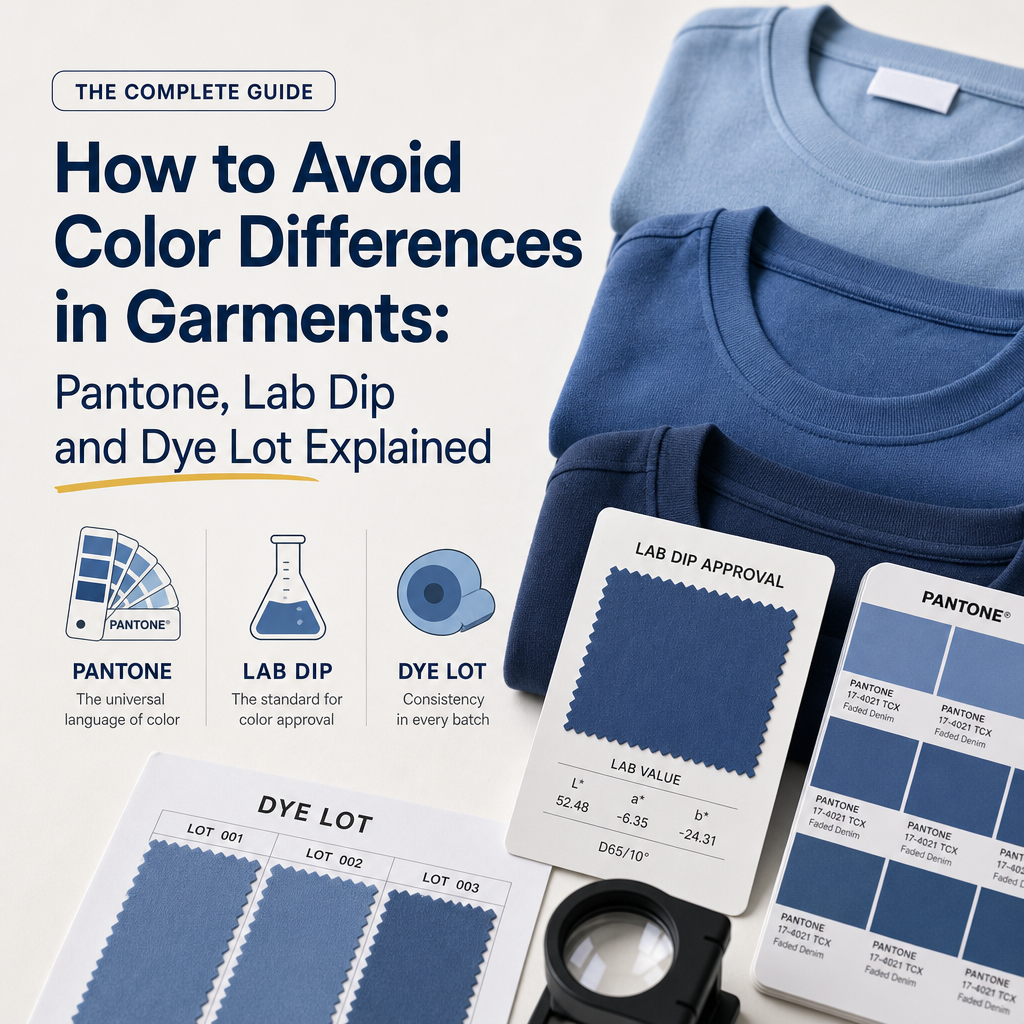
Garment Dye
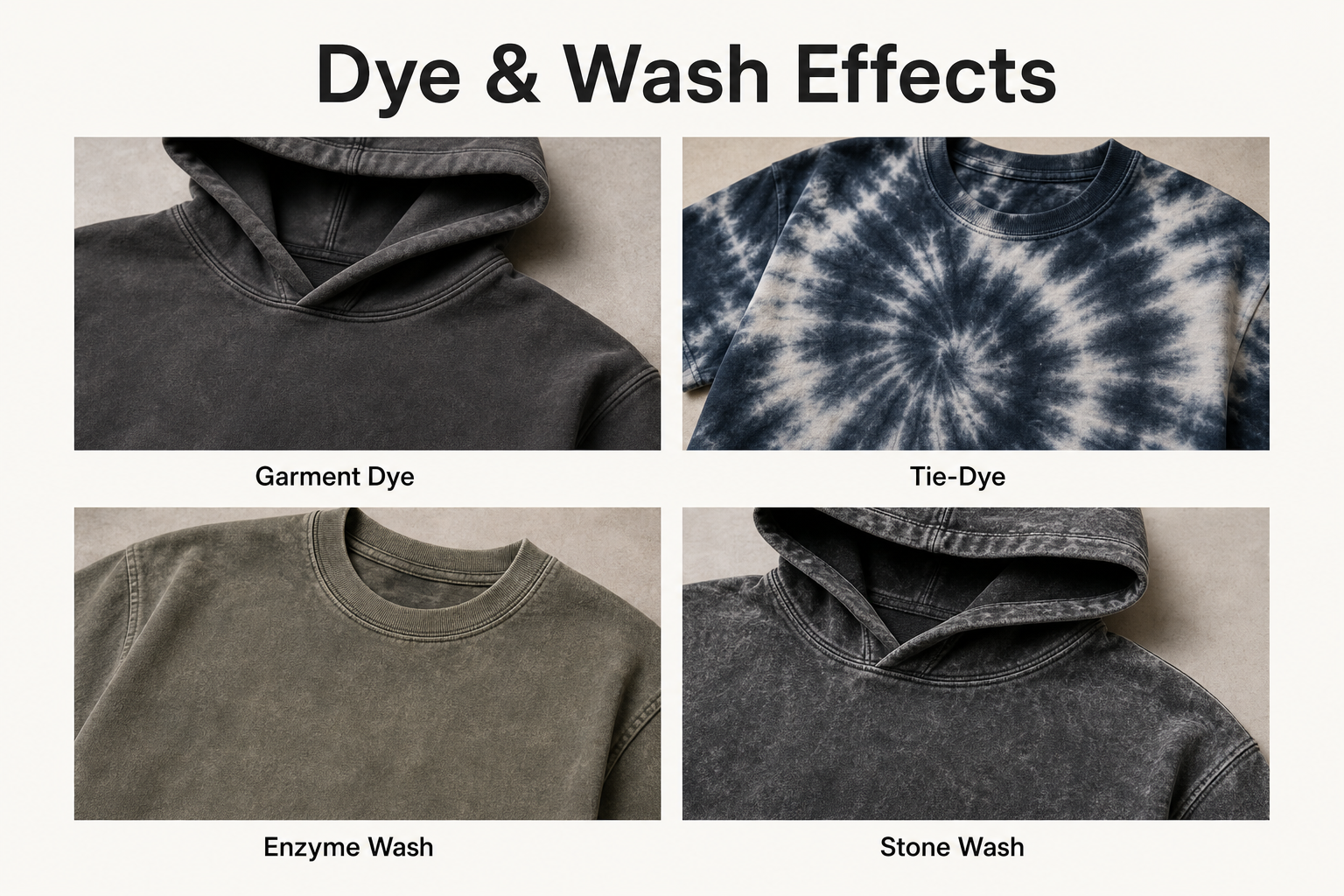
Garment dyeing takes place after the garment has already been sewn.
Because the finished piece is dyed as a whole, the seams, edges, and panels absorb color slightly differently. Those natural variations give every garment its own character, which explains why garment-dyed T-shirts have become popular among lifestyle and premium casual brands.
Tie Dye
Tie dye has evolved far beyond the colorful patterns associated with earlier fashion trends.
Today’s techniques include subtle mineral washes, tonal effects, and carefully controlled color transitions that fit modern streetwear collections. Since every garment develops slightly different patterns during the dyeing process, no two pieces are exactly the same.
That uniqueness is often one of the biggest selling points.
Enzyme Wash
Enzyme washing uses natural enzymes to remove loose fibers from the fabric surface.
The treatment leaves cotton garments softer to the touch while also reducing pilling. Many premium T-shirts and hoodies receive an enzyme wash before shipment because customers immediately notice the smoother hand feel.
Unlike heavy washing techniques, enzyme washing has very little effect on the garment’s overall appearance.
Stone Wash
Stone washing creates the worn-in look that many vintage collections aim to achieve.
The process softens the fabric while gradually fading the color, giving garments a naturally aged appearance. Modern factories may use pumice stones, enzyme-assisted methods, or newer washing technologies to achieve similar effects with better consistency.
Stone washing remains a popular finish for hoodies, sweatshirts, denim, and heavyweight cotton garments.
Choosing the Right Technique
When customers ask which decoration method they should choose, there isn’t a universal answer. The decision usually comes down to four questions:
- How many garments will be produced?
- What type of artwork is being used?
- Which fabric has been selected?
- What price point is the collection targeting?
A simple logo for 2,000 T-shirts may be better suited to screen printing, while a limited-edition collection with detailed artwork may benefit from DTG. If the goal is to create a premium brand image, embroidery or silicone logos may be worth the additional investment. Vintage collections often combine garment dyeing, stone washing, or discharge printing to achieve a softer and more lived-in appearance.
Discussing these details early with your manufacturer can prevent unnecessary sampling, reduce production costs, and shorten development time.
Why Brands Work with Vison
At Vison, we manufacture OEM apparel for brands, wholesalers, and distributors in Europe, North America, and Australia. Our production covers T-shirts, hoodies, jackets, pants, and sweaters, supported by five production lines and a complete range of printing, embroidery, dyeing, and washing processes.
Our role is not simply to manufacture garments. We work with customers during product development to recommend decoration techniques that match their artwork, budget, production volume, and quality expectations. This approach helps avoid unnecessary costs while ensuring the finished product reflects the original design.
If you’re developing a new apparel collection or looking for a reliable OEM manufacturing partner in China, our team is ready to support your next project.
Website: https://visonclothing.com
Email: [email protected]
Conclusion
Decoration techniques influence far more than appearance. They affect production cost, durability, lead time, and even how customers perceive your brand. Understanding the strengths and limitations of each process makes it easier to choose the right solution and build collections that perform well in both the market and everyday wear.