When wholesalers develop a new clothing range, fit is usually one of the first things we discuss.
A buyer may already know the fabric, color, and target price. The problem often comes when they describe the fit with a word such as “oversized” or “baggy.”
Those words are useful for explaining an idea, but they are not enough for production.
An oversized T-shirt can have a long body or a shorter body. A boxy T-shirt can be wide without being extremely oversized. The same applies to hoodies and cargo pants.
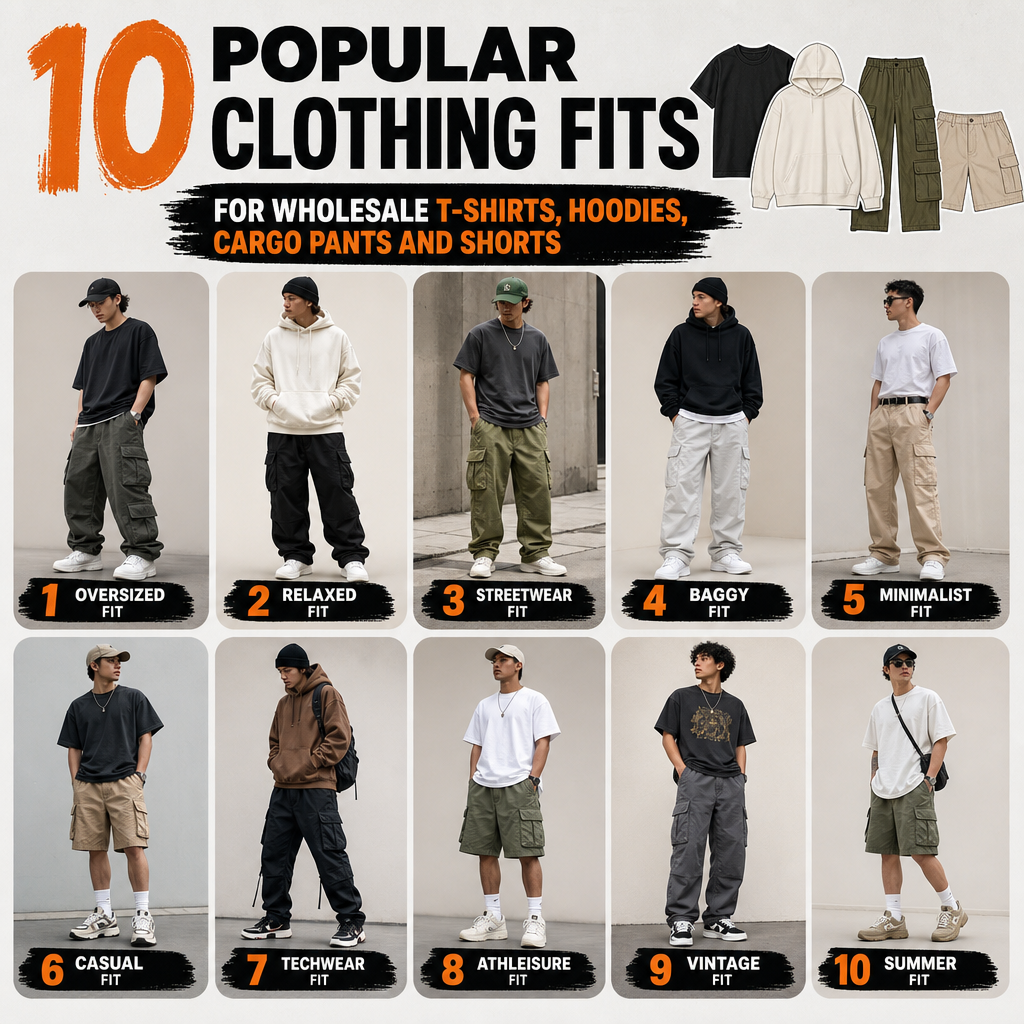
From our work with clothing brands and wholesale buyers, these are 10 fits we see regularly in product development.
1. Oversized T-Shirt
Oversized T-shirts remain a common choice for streetwear.
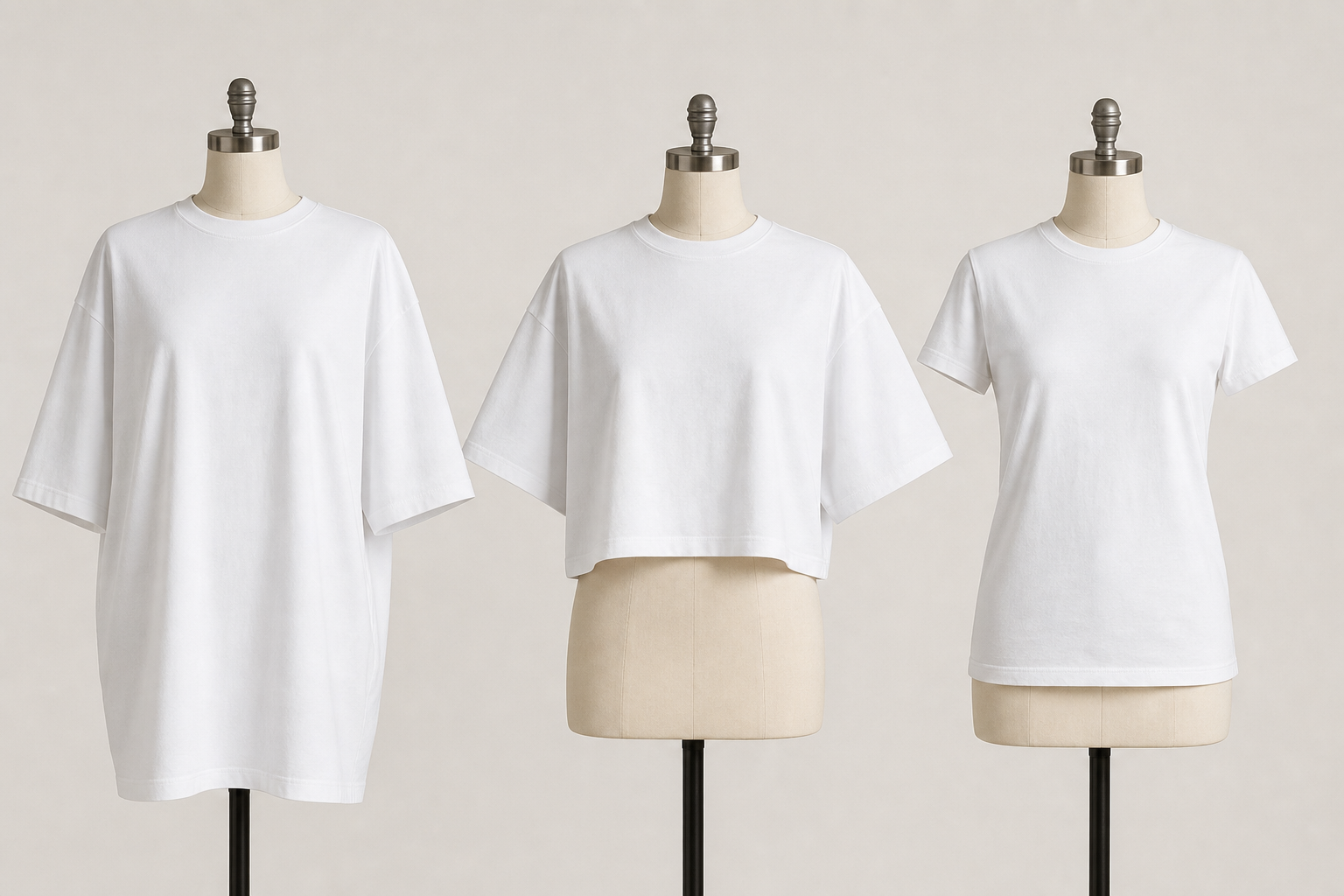
The body is usually wider than a standard T-shirt, and the shoulder may sit lower on the arm. Some brands also shorten the body, while others keep a longer length.
That difference matters.
A T-shirt with a very wide chest and long body will have a different look from a short, wide T-shirt.
Fabric weight also changes the result.
A 180 GSM cotton jersey will fall quite softly. A 240 GSM or 280 GSM heavyweight cotton jersey will usually hold more shape.
If a buyer wants an oversized T-shirt with a strong streetwear look, I recommend confirming the measurements together with the fabric specification.
2. Boxy Fit T-Shirt
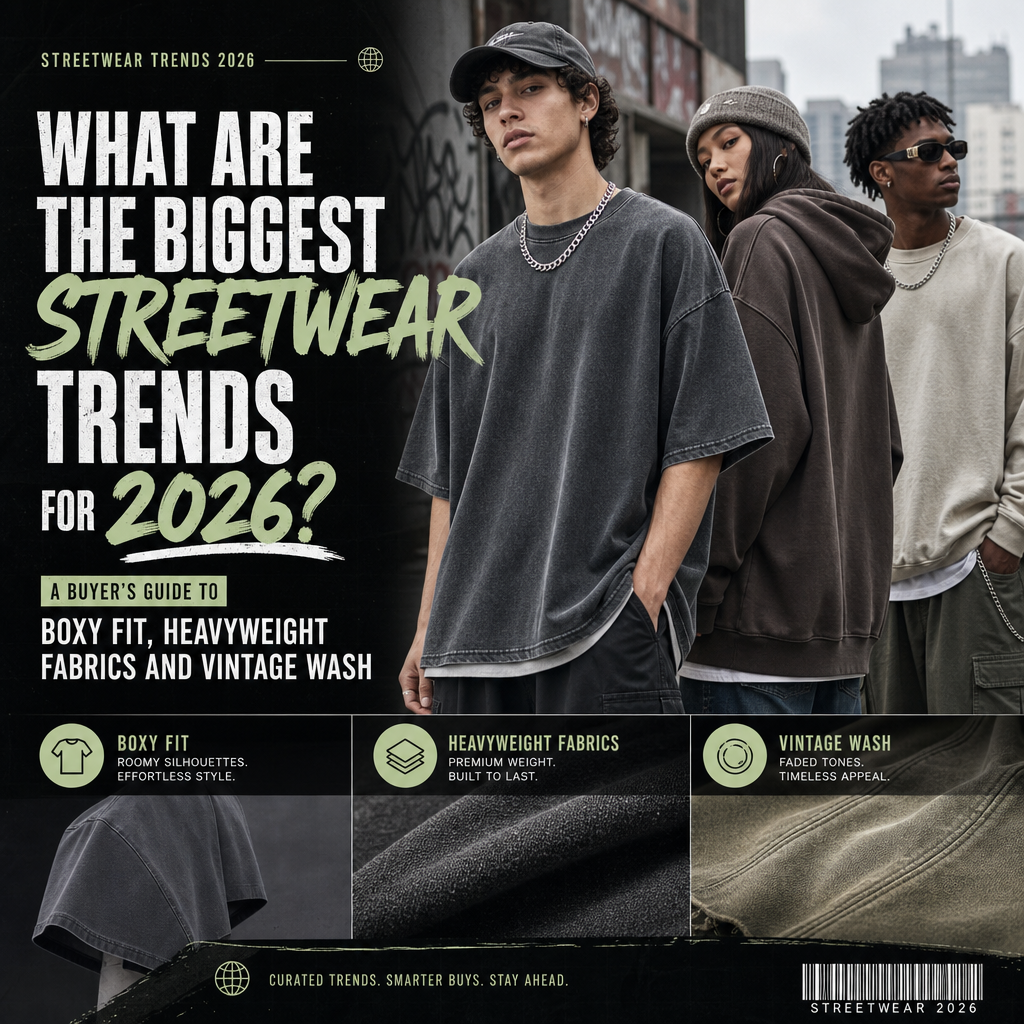
Boxy Fit has become a popular choice for premium streetwear.
The body is wide, but the length is usually more controlled than on a conventional oversized T-shirt.
This gives the garment a wider and shorter appearance.
Heavyweight cotton works well with this shape because the fabric can support the silhouette.
One mistake we see during development is using a standard T-shirt pattern and simply increasing the chest width.
That does not always create a good Boxy Fit.
The shoulder, chest, sleeve, and body length need to be considered together.
A physical sample is usually the easiest way to judge whether the proportions are right.
3. Regular Fit T-Shirt
Regular Fit is still useful for wholesale collections.
It does not have the strong silhouette of an oversized or boxy T-shirt, but that can actually be an advantage.
A regular T-shirt can appeal to a broader customer base. It also works well for basic collections where the buyer wants a familiar shape rather than a strong fashion statement.
This type of fit is common in promotional apparel, everyday basics, casualwear, and some private-label collections.
For wholesalers testing a new market, regular fits can also be a practical starting point because customers already understand the shape.
4. Drop Shoulder Hoodie
Drop Shoulder is widely used in contemporary hoodies.
The shoulder seam is positioned lower than on a standard hoodie, creating a relaxed appearance.
The body does not necessarily need to be extremely oversized.
This is important when using heavyweight fabrics.
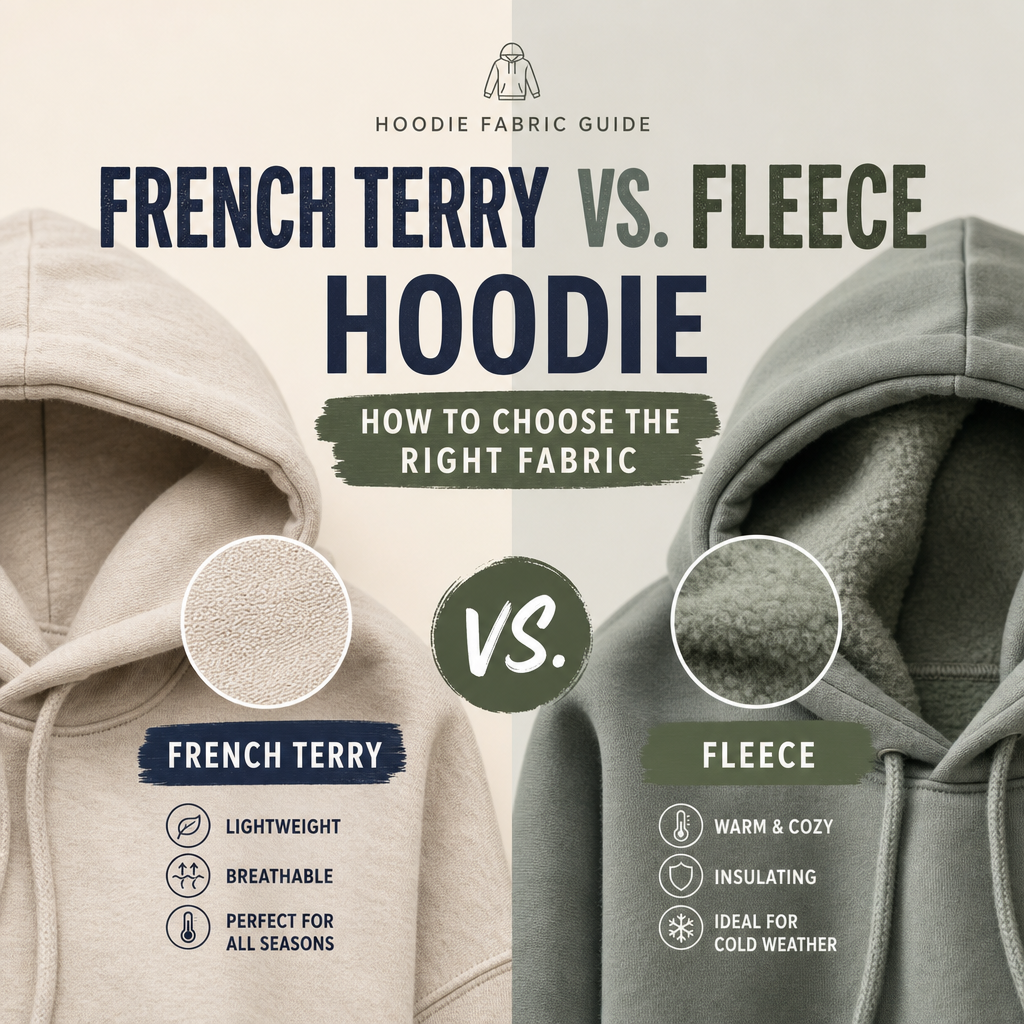
A 400 GSM French Terry hoodie can have a substantial look without becoming too bulky. A heavy fleece creates a different result because the brushed interior adds more volume.
When developing a Drop Shoulder hoodie, we normally check the shoulder width, chest width, sleeve length, and body length together.
Increasing all of them too much can make the hoodie look larger than intended.
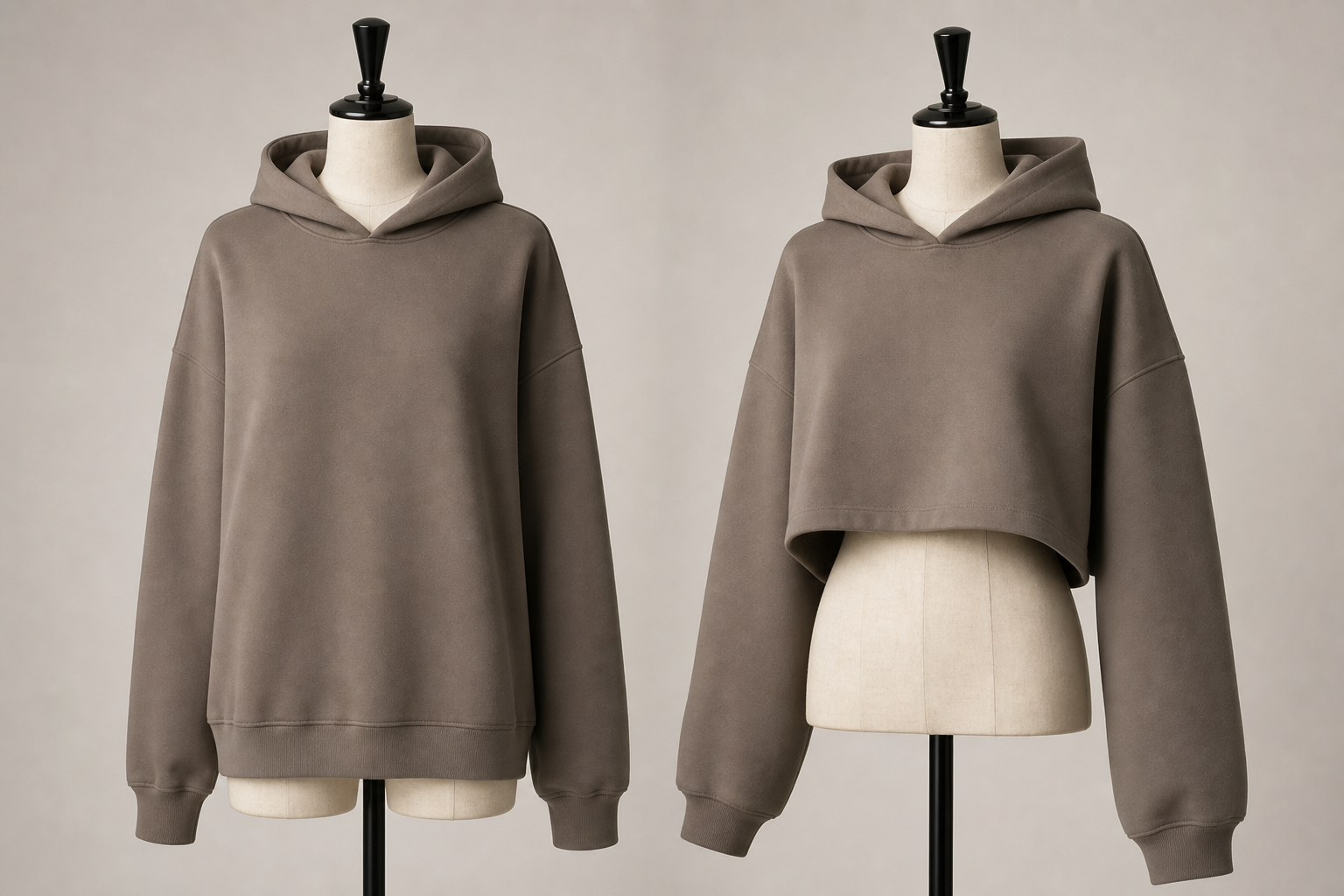
5. Cropped Boxy Hoodie
A Cropped Boxy Hoodie has a shorter body with more width through the chest.
This fit is more fashion-oriented and is often used for contemporary streetwear collections.
Body length needs particular attention here.
If the hoodie is only a few centimeters longer or shorter than intended, the proportions can change noticeably.
The waistband also affects the final appearance.
For this reason, I would not recommend approving this type of hoodie from a measurement sheet alone. A sample worn on a real person gives much better information.
6. Relaxed Cargo Pants
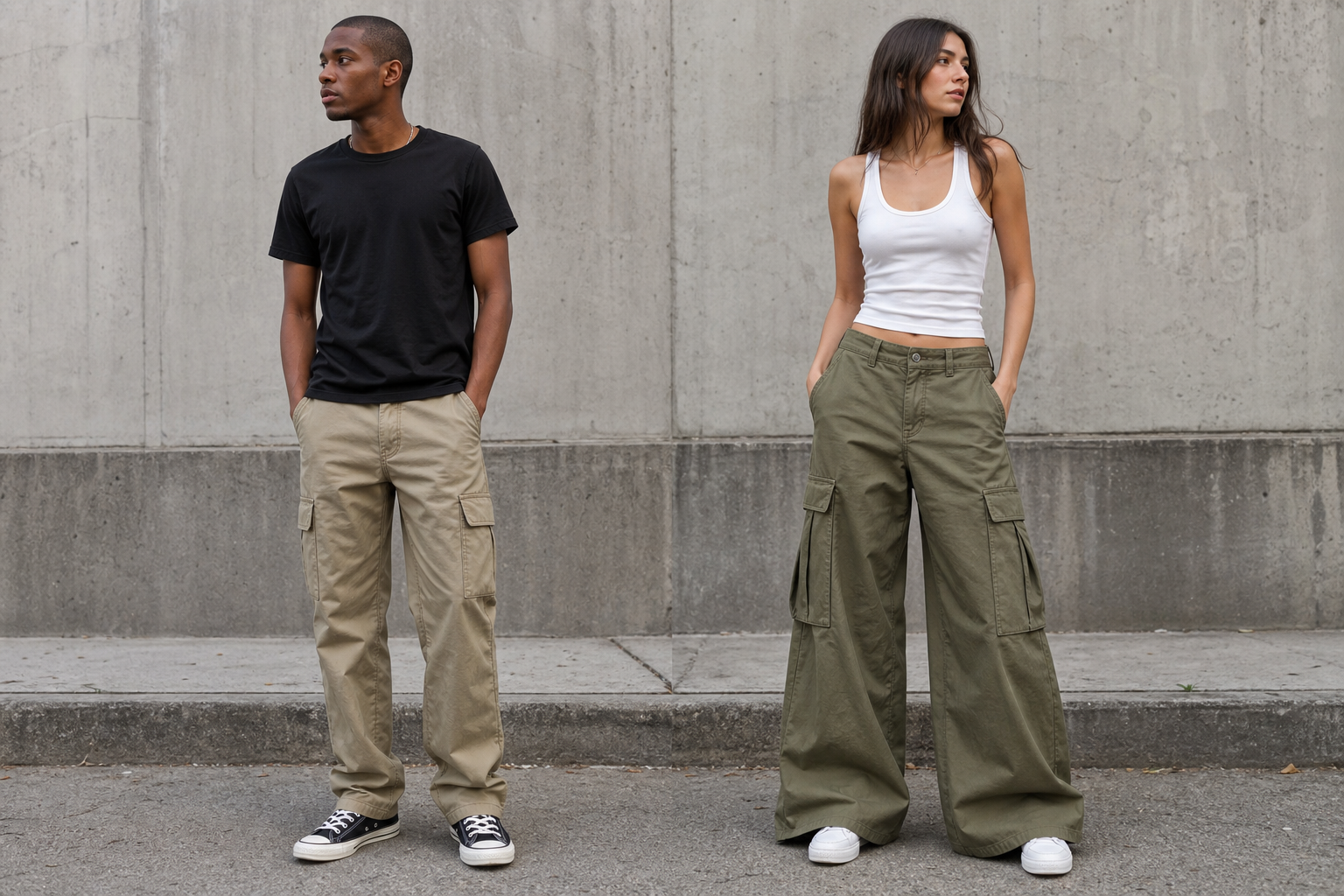
Relaxed cargo pants give the wearer more room through the thigh and leg than a regular pair of trousers.
The style works well with casual streetwear because it does not look as narrow as a traditional cargo pant.
The pockets are part of the design.
Large pockets create a stronger utility look. Smaller pockets make the pants look cleaner.
Pocket placement also affects how the legs appear.
When we develop cargo pants, we usually confirm the pocket size and position during the sample stage rather than leaving these details to production.
7. Wide-Leg Cargo Pants
Wide-Leg cargo pants take the relaxed silhouette further.
The extra width gives the pants a stronger streetwear appearance, especially when paired with an oversized T-shirt or heavyweight hoodie.
Fabric choice becomes important.
A soft cotton twill will fall differently from a stiff canvas.
If the fabric is too rigid, the legs may stand away from the body instead of falling naturally.
For this reason, the pattern should be tested with the actual production fabric.
A wide-leg pattern that looks good on paper may need adjustment once the fabric is made into a garment.
8. Straight-Leg Pants
Straight-Leg pants have a more controlled shape.
The leg remains relatively consistent from the thigh down toward the hem.
This makes them easier to wear with different tops and suitable for customers who do not want an oversized silhouette.
For wholesalers, straight-leg pants can be useful when building a collection with both fashion-led and more familiar products.
They are also easier to pair with different footwear.
The fit may look simple, but details such as the rise, thigh width, knee width, and leg opening still need to be specified clearly.
9. Relaxed Fit Shorts
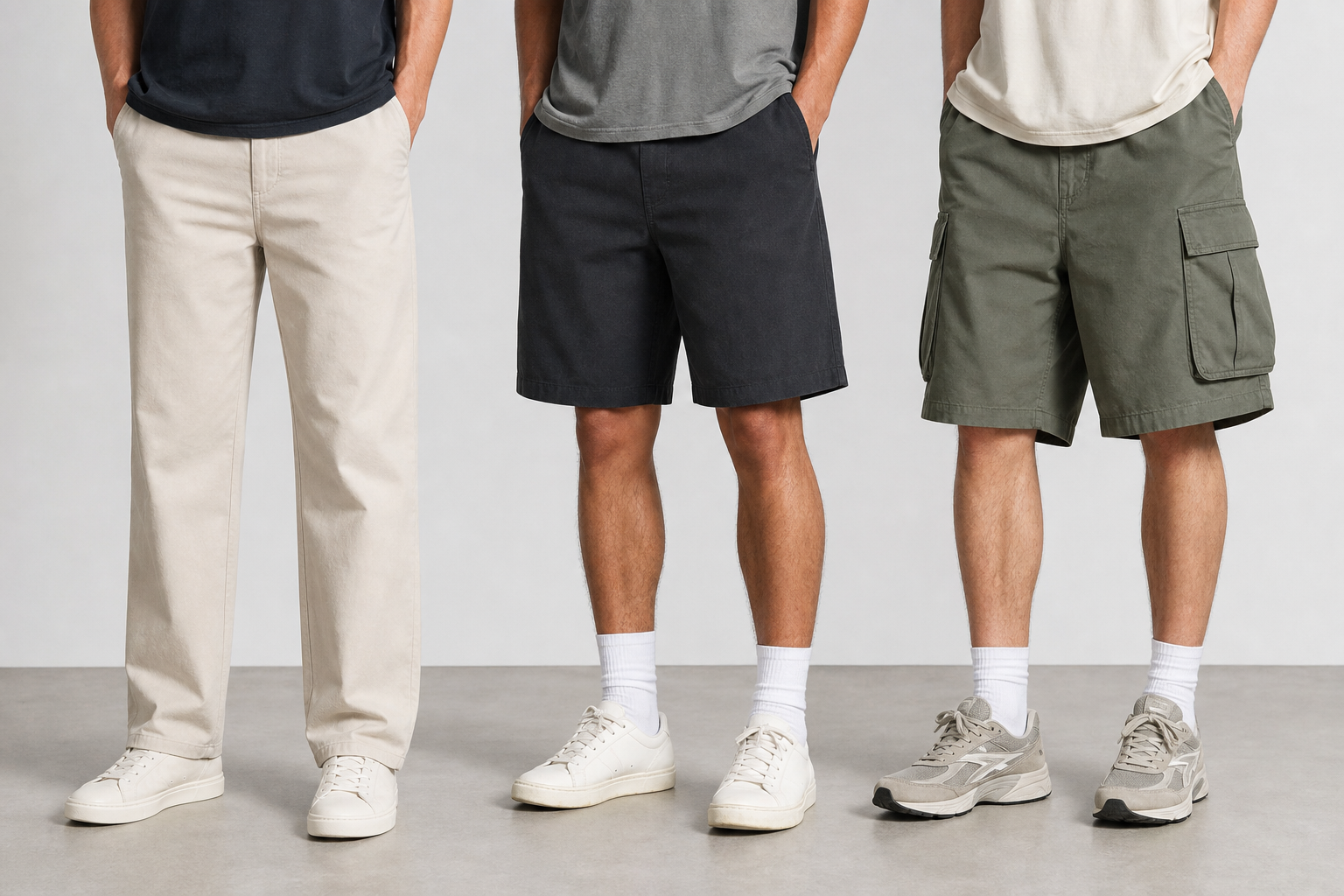
Relaxed shorts give more room around the thigh without going fully into a baggy silhouette.
They are common in casual and streetwear collections.
Length is one of the main points to confirm.
A shorter inseam gives the shorts a more athletic appearance. A longer inseam feels more relaxed and works well with oversized tops.
There is no single correct length.
A buyer targeting European customers may choose a different proportion from a brand selling mainly in the US.
Instead of writing “long shorts” in a Tech Pack, it is better to give the actual outseam or inseam measurement.
10. Baggy Cargo Shorts
Baggy cargo shorts have a wider leg and usually include utility-style pockets.
They work well for summer streetwear and can be paired with oversized T-shirts or loose hoodies.
The main issue is volume.
The shorts already have a wide silhouette. If the cargo pockets are also very large, the garment can become visually heavy.
Pocket placement makes a noticeable difference.
Fabric choice matters too.
Lightweight cotton twill is suitable for warmer weather. Ripstop or canvas can give the shorts a more substantial workwear appearance, although heavier fabrics may feel uncomfortable in hot climates.
Which Clothing Fits Are Most Suitable for Wholesale?
There is no single fit that every wholesaler should carry.
The right choice depends on the type of customer you sell to.
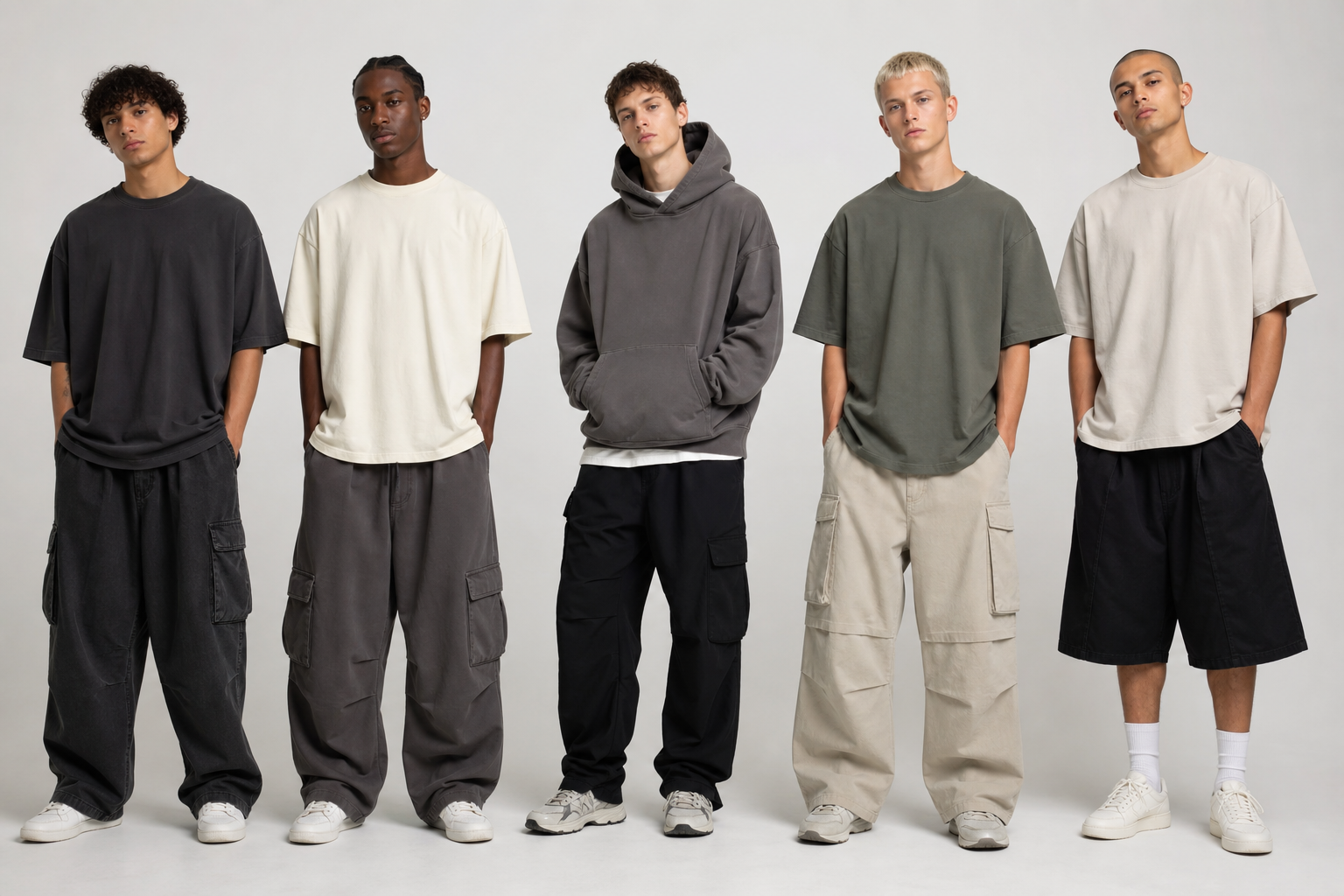
For a streetwear-focused range, Boxy T-shirts, oversized T-shirts, Drop Shoulder hoodies, relaxed cargos, and wider shorts are common options.
For a broader wholesale market, Regular Fit T-shirts and Straight-Leg pants can provide a more familiar choice.
You do not have to build an entire collection around one silhouette.
A wholesaler can combine a few fashion-focused styles with basic fits. This gives retailers more flexibility when they build their own product range.
What Should a Wholesaler Tell the Manufacturer?
This is where many fit problems begin.
A buyer may send a picture and write:
“We want an oversized T-shirt.”
The factory still has to guess what “oversized” means.
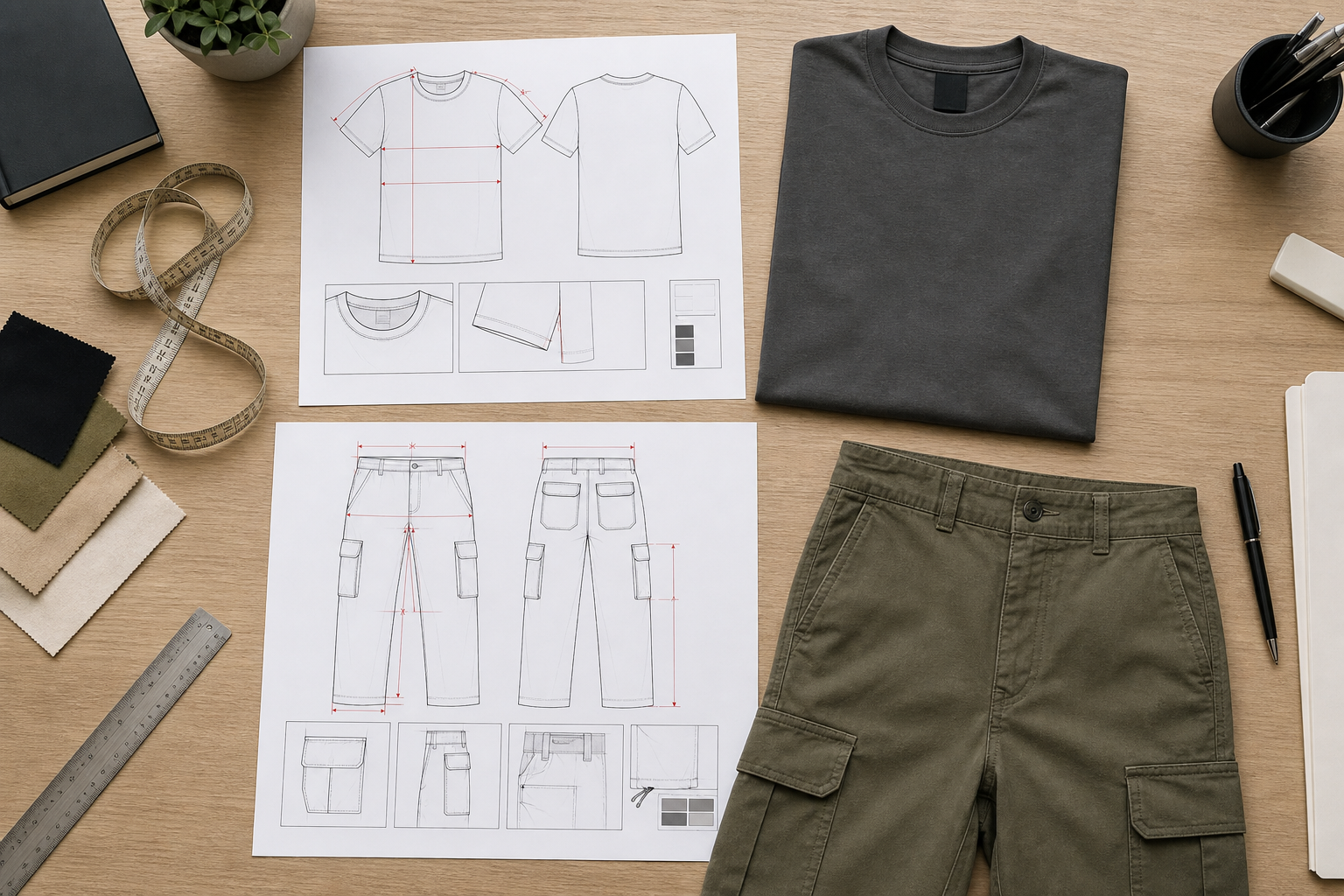
Instead, provide the measurements.
For a T-shirt, the Tech Pack should normally include the chest width, body length, shoulder width, sleeve length, and sleeve opening.
For pants, the buyer should provide the waist, rise, thigh, inseam, and leg opening.
A reference garment is also useful.
If the factory has a physical sample to compare with, it becomes much easier to understand the intended shape.
This is particularly important when working with an overseas custom clothing manufacturer.
Different suppliers may interpret the same fit name differently.
Does Fabric Weight Change the Fit?
Yes.
The pattern alone does not determine how a garment will look.
Take a heavyweight T-shirt as an example.
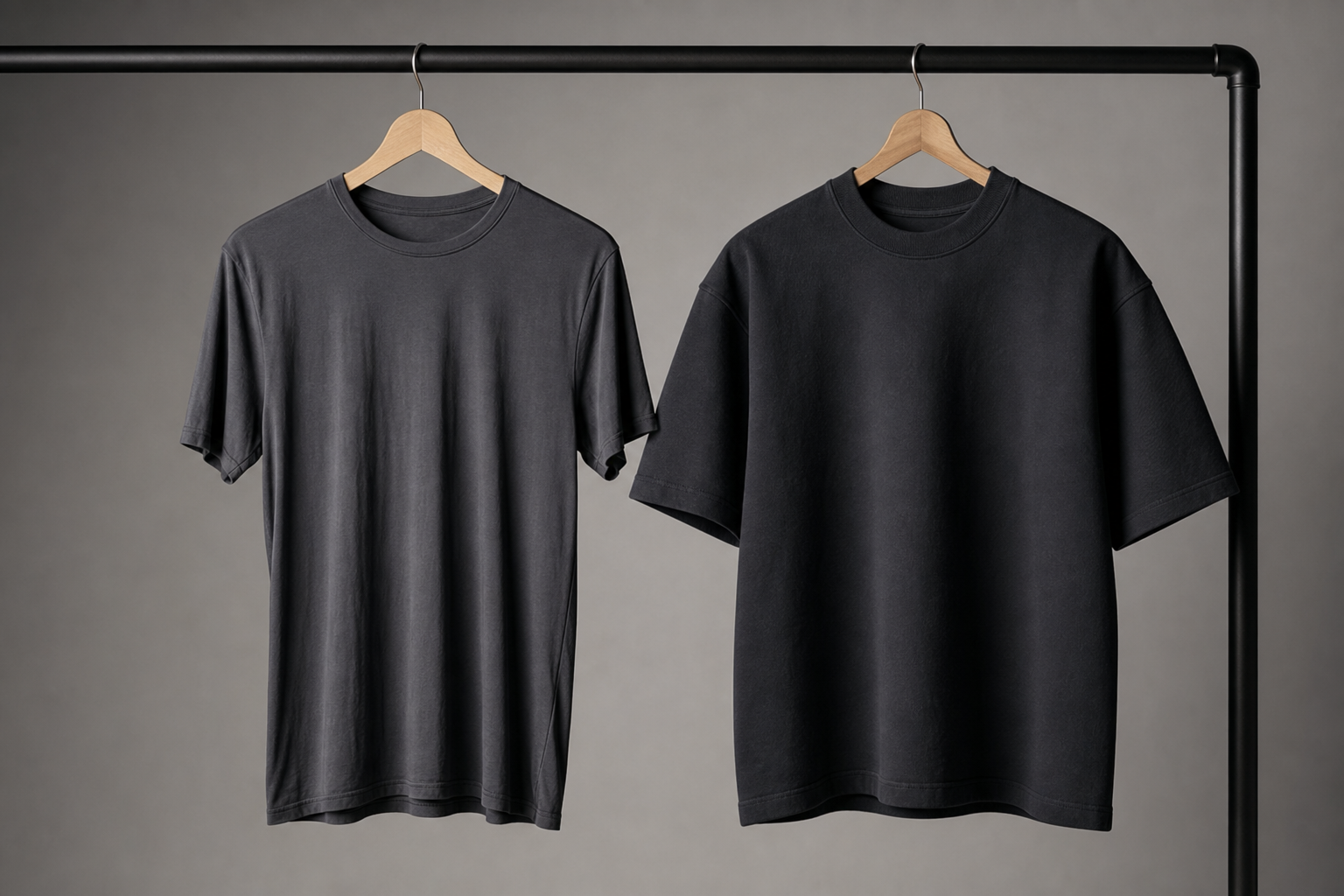
A lightweight jersey may fall close to the body. A 260 GSM cotton jersey has more body and can make the same pattern look wider and more structured.
Hoodies behave in the same way.
A 450 GSM brushed fleece has more volume than a lighter French Terry.
Cargo pants can show the same difference.
A stiff cotton canvas can make a wide-leg pattern look much larger than expected, while a softer twill will usually fall closer to the body.
This is why fabric and fit should be developed together.
Which Fits Are Common in European and US Streetwear?
There is strong demand for relaxed silhouettes in the streetwear market.
For brands developing products for Europe and North America, these fits are worth considering:
Boxy T-shirts
Oversized T-shirts
Drop Shoulder hoodies
Heavyweight hoodies
Relaxed cargo pants
Wide-Leg cargo pants
Baggy shorts
These are not guaranteed bestsellers.
A good fit still needs the right fabric, color, graphics, price, and product positioning.
The customer also matters.
A skate-inspired brand may choose a much wider silhouette than a brand focused on minimalist everyday clothing.
How Much Does Fit Affect the Cost?
Fit itself is not normally the biggest cost factor.
The amount of fabric used does matter.
A very wide T-shirt uses more fabric than a regular T-shirt. The same applies to wide-leg pants.
This can affect the fabric consumption per piece.
Pocket construction can also increase the cost of cargo pants.
A simple straight-leg pant and a cargo pant with multiple functional pockets are different products from a production perspective.
For wholesalers, this is worth considering when comparing supplier quotations.
If two suppliers quote very different prices, check the specifications before assuming one factory is simply more expensive.
How We Develop Clothing Fits at Vison Clothing
At Vison Clothing, we manufacture OEM apparel for brands, wholesalers, and apparel buyers.
When a customer sends us a reference product, we do not rely only on terms such as “oversized” or “Boxy Fit.”
We check the measurements.
For example, two brands may both ask for an oversized T-shirt but want completely different body lengths.
One may want a heavy 260 GSM cotton T-shirt with a short body.
Another may want a lighter T-shirt with a longer body and wider sleeves.
Both products can be called oversized.
The pattern is still different.
During sampling, we can check the fit together with the fabric.
If the customer wants a washed or heavyweight product, we also need to consider what happens after washing. A garment may look correct before washing and change slightly afterward.
For overseas buyers, an approved sample becomes an important reference for bulk production.
If you have a reference garment, Tech Pack, or target measurements, you can send them to us before sampling. We can review the fit and fabric requirements before production.
Quick Comparison of the 10 Fits
| Fit | Product | Typical Use |
|---|---|---|
| Oversized | T-Shirt | Streetwear |
| Boxy | T-Shirt | Premium Streetwear |
| Regular | T-Shirt | Basic / General Wholesale |
| Drop Shoulder | Hoodie | Streetwear |
| Cropped Boxy | Hoodie | Fashion / Contemporary |
| Relaxed | Cargo Pants | Casual Streetwear |
| Wide-Leg | Cargo Pants | Trend-led Streetwear |
| Straight-Leg | Pants | Everyday / Casual |
| Relaxed | Shorts | Casual / Summer |
| Baggy Cargo | Shorts | Streetwear / Utility |
FAQ
What is the most popular T-shirt fit for streetwear?
Oversized and Boxy Fit T-shirts are widely used in current streetwear collections. The exact proportions depend on the brand.
What is the difference between oversized and Boxy Fit?
An oversized T-shirt is generally larger overall. A Boxy Fit focuses more on width and a shorter or more controlled body length.
Are Drop Shoulder hoodies good for heavyweight fabrics?
Yes. Drop Shoulder works well with heavyweight French Terry and fleece. The pattern needs to be adjusted according to the fabric weight.
What is the most common cargo pants fit for streetwear?
Relaxed and Wide-Leg cargo pants are both common. The choice depends on the brand’s style and customer base.
Does a wide-leg fit use more fabric?
Usually, yes. A wider pattern increases fabric consumption, which can affect the garment cost.
What measurements should I give a clothing manufacturer?
For T-shirts, provide measurements such as chest, body length, shoulder, sleeve length, and sleeve opening. For pants, include waist, rise, thigh, inseam, and leg opening.
Does heavyweight fabric change the appearance of a fit?
Yes. Heavier fabric normally creates more structure and volume, so the same pattern can look different with a heavier material.
Which clothing fit is easiest to sell wholesale?
There is no universal answer. Regular and relaxed fits can appeal to a wider market, while oversized and Boxy styles are often more suitable for streetwear-focused buyers.
Should I send a reference garment to the factory?
If you have one, it can be very useful. A physical sample gives the factory a much clearer idea of the intended fit and construction.
Final Thoughts
Fit names are useful when discussing a product, but they are not production specifications.
“Boxy,” “oversized,” and “baggy” can mean different things from one brand to another.
For wholesale production, actual measurements are much more reliable.
If you are developing a streetwear collection, start with the customer and the way you want the garment to sit on the body. Then work out the measurements and choose the fabric around the pattern.
At Vison Clothing, we work with brands and wholesale buyers on custom T-shirts, hoodies, cargo pants, shorts, and other apparel.
If you have a reference garment or Tech Pack, send it to us. We can review the fit before sampling and help identify any measurements that may cause problems during production.