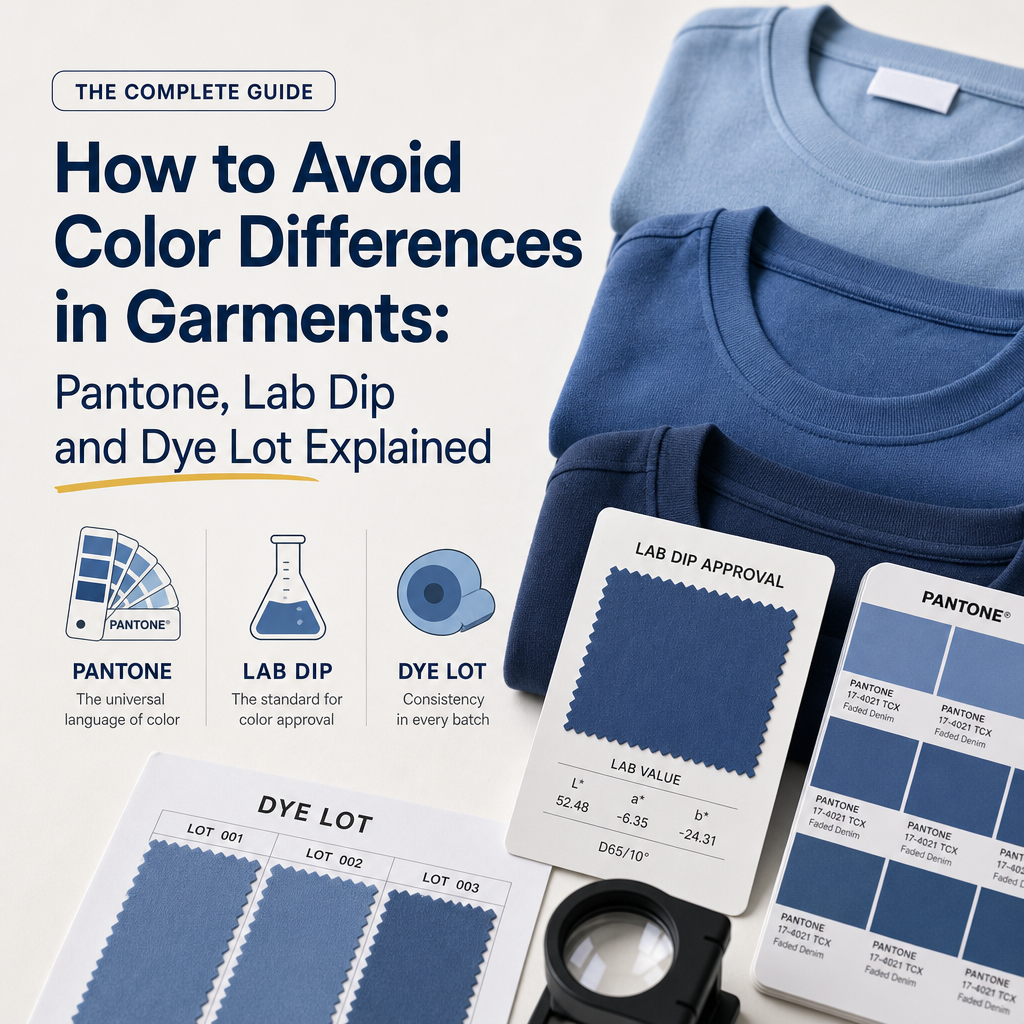
Color problems are common in apparel production, especially when a brand is developing a new color or ordering the same color across different production batches.
A buyer may send a Pantone number and expect the fabric to come back exactly the same. In reality, this is not always possible. The fabric itself, dyeing process, finishing, washing, and production batch can all affect the final shade.
We often see this during T-shirt and hoodie production. A color may look correct on the first sample but appear slightly different when the bulk fabric arrives. Sometimes the difference is small. Sometimes it is obvious when two garments are placed next to each other.
The good news is that most color problems can be reduced if the color is approved properly before bulk production.
Here is how we normally look at Pantone matching, Lab Dips, and dye lot differences when developing garments for overseas customers.

Is a Pantone Color Enough for Garment Production?
Pantone is a useful starting point, but it should not be treated as the only color reference.
For example, a buyer may specify a textile color such as Pantone 19-0303 TCX for a T-shirt.
The dyeing mill can use this reference to develop the fabric color. But the result still needs to be checked on the actual fabric.
This is because Pantone references and fabrics do not have the same surface.
A color viewed on a Pantone swatch can look different when it is dyed onto cotton jersey or French terry. Fabric construction, weight, texture, and finishing all affect how the eye sees the color.
This is particularly noticeable with heavyweight cotton garments.
A 180 GSM single jersey and a 280 GSM French terry may both be dyed to the same Pantone reference, but the finished colors can still look slightly different.
For this reason, we normally recommend using Pantone as the target and a physical fabric sample as the production reference.
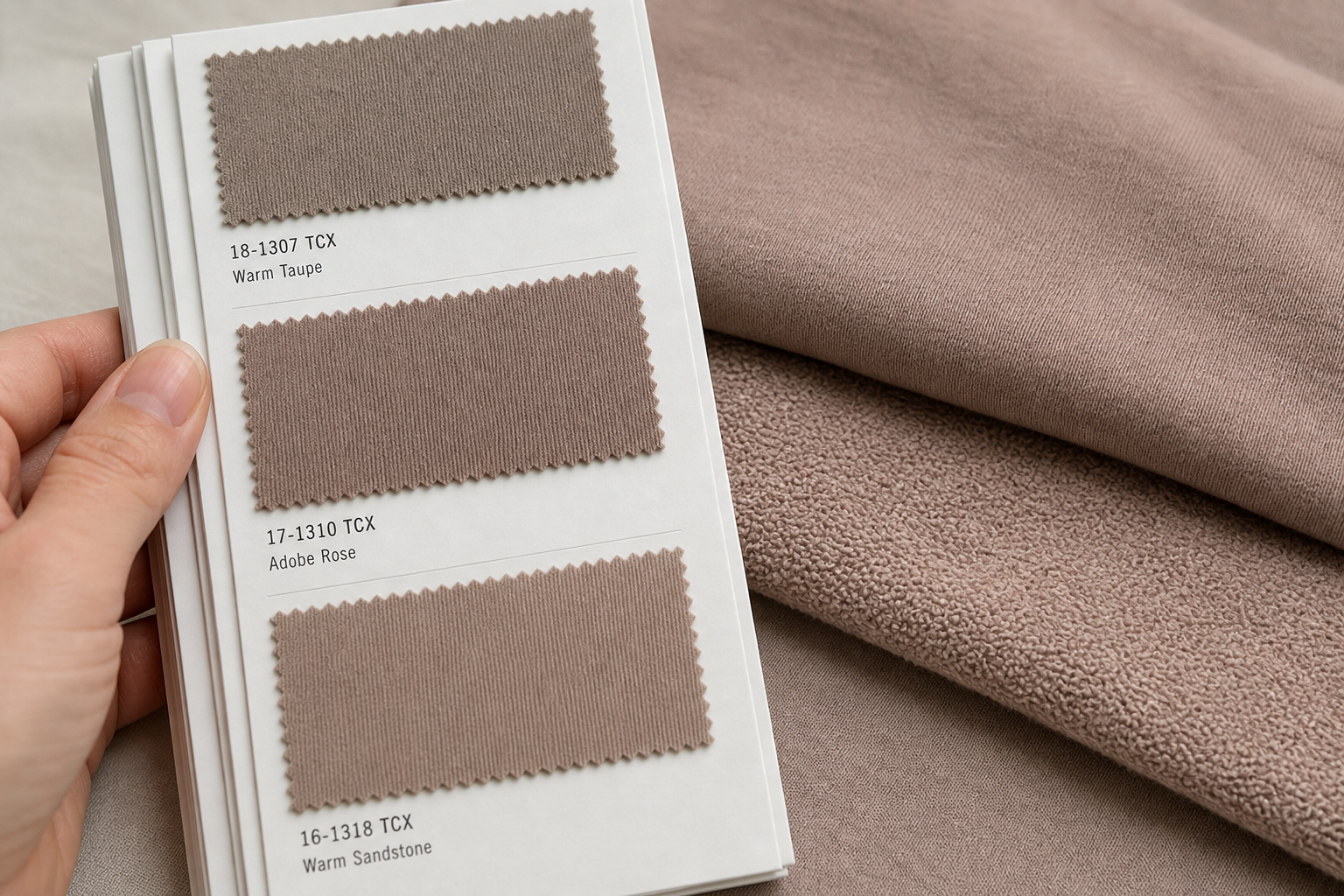
What Is a Lab Dip?
A Lab Dip is a small piece of fabric dyed by the mill before bulk production.
It is basically a trial run.
The dyeing mill uses the requested fabric and develops a dye formula to get as close as possible to the target color.
The factory then sends the Lab Dip to the buyer for approval.
If the shade is too warm, too cool, too dark, or too light, the mill can adjust the formula and make another Lab Dip.
Once the buyer approves the result, that approved Lab Dip becomes an important reference for bulk production.
For custom colors, this step can prevent a much bigger problem later.
Imagine ordering 3,000 T-shirts and discovering that the bulk fabric is not the color the brand expected. At that point, changing the fabric can affect both cost and delivery time.
It is much easier to correct the color while the order is still at the sampling stage.
Why Can the Bulk Fabric Still Look Different From the Lab Dip?
This is where dye lot control becomes important.
A Lab Dip is made on a small quantity of fabric. Bulk fabric is produced in much larger quantities and may need to be processed in several dyeing batches.
The same dye formula does not always produce a perfectly identical result in every batch.
Small differences in fabric preparation, dye concentration, temperature, processing time, or finishing can affect the final shade.
This is called dye lot variation.
The difference may be very small and acceptable. In other cases, it can be visible when garments from two different lots are placed together.
This is why approving a Lab Dip is important, but it is not the only color control step.
What Is Dye Lot Variation?
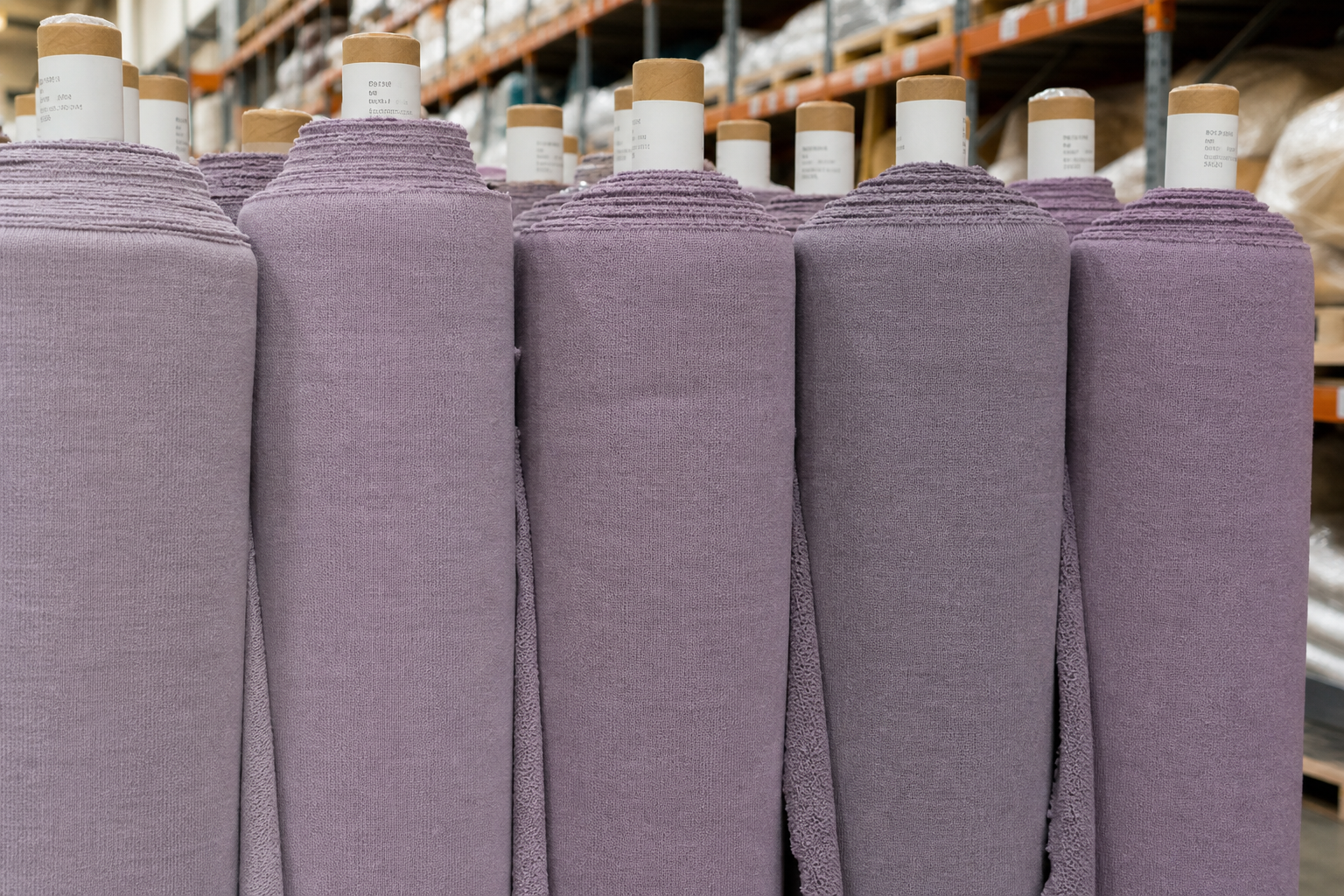
A dye lot is a specific batch of fabric processed during the dyeing process.
If an order requires more fabric than can be dyed in one batch, the mill may divide the production into several lots.
For example:
- Lot A
- Lot B
- Lot C
All three lots may follow the same approved color standard.
There can still be a small difference between them.
This is not necessarily a sign that the factory used the wrong color. It is a normal production issue that needs to be controlled.
The problem starts when different shades are mixed without checking them.
For example, if the front panels of a hoodie come from one shade lot and the sleeves come from another, the difference can be very noticeable.
For solid-color garments, this is something we pay attention to during cutting and production.
Why Does the Same Pantone Look Different on Different Fabrics?
The fabric has a big influence on the final appearance.
Cotton absorbs dye differently from polyester. A cotton-polyester blend behaves differently again.
Even within cotton fabrics, the result can change depending on the yarn, knitting construction, GSM, and finishing.
This is why a Pantone match should always be considered together with the fabric specification.
If a brand wants the same color on a 220 GSM cotton T-shirt and a 450 GSM cotton hoodie, it is better to approve the color separately on each fabric.
Trying to force one Lab Dip to work as the exact visual reference for every fabric can create unnecessary problems.
What Should Buyers Approve Before Bulk Dyeing?
For a custom garment color, we recommend that the buyer approve the actual fabric before bulk production starts.
The basic information should include the Pantone reference and fabric specification.
The Lab Dip can then be compared against the target.
If the buyer approves it, the approved sample should be kept and clearly identified.
This sounds simple, but it matters when several people are involved in a project.
A designer may have one color reference. The purchasing team may have another file. The factory may have a sample from an earlier development round.
If there is no clearly marked approved color standard, it becomes difficult to know which version should be used for bulk production.
A physical approval sample is often more useful than another email describing the color.
What Is a Shade Band?
A shade band is used to show the acceptable range of color variation within a production batch or across batches.
The mill can compare the dyed fabric with the approved standard and identify different shades.
The factory can then keep similar shades together during cutting.
This is particularly useful for larger orders.
Suppose a brand orders 8,000 black T-shirts. The fabric is produced in several dye lots.
If all the fabric is mixed together without shade control, the finished garments may have slightly different blacks.
The difference may not be obvious when looking at one garment.
Put several hundred pieces on a warehouse floor, however, and the variation can become much easier to see.
Separating shade lots during production helps reduce this problem.
Should Different Dye Lots Be Mixed in One Garment?
As a general production practice, we try to avoid mixing noticeably different dye lots within the same garment.
This is especially important for garments with large fabric panels.
A hoodie with a slightly darker body and lighter sleeves can look wrong even when both fabrics are technically within the general color range.
The cutting department should know which fabric lots belong together.
If there is a noticeable shade difference, the lots should be identified and handled separately.
For some products, a slight variation between two individual garments may be acceptable. A visible difference between two panels of the same garment is usually much harder for a buyer to accept.
Can Washing Change the Garment Color?
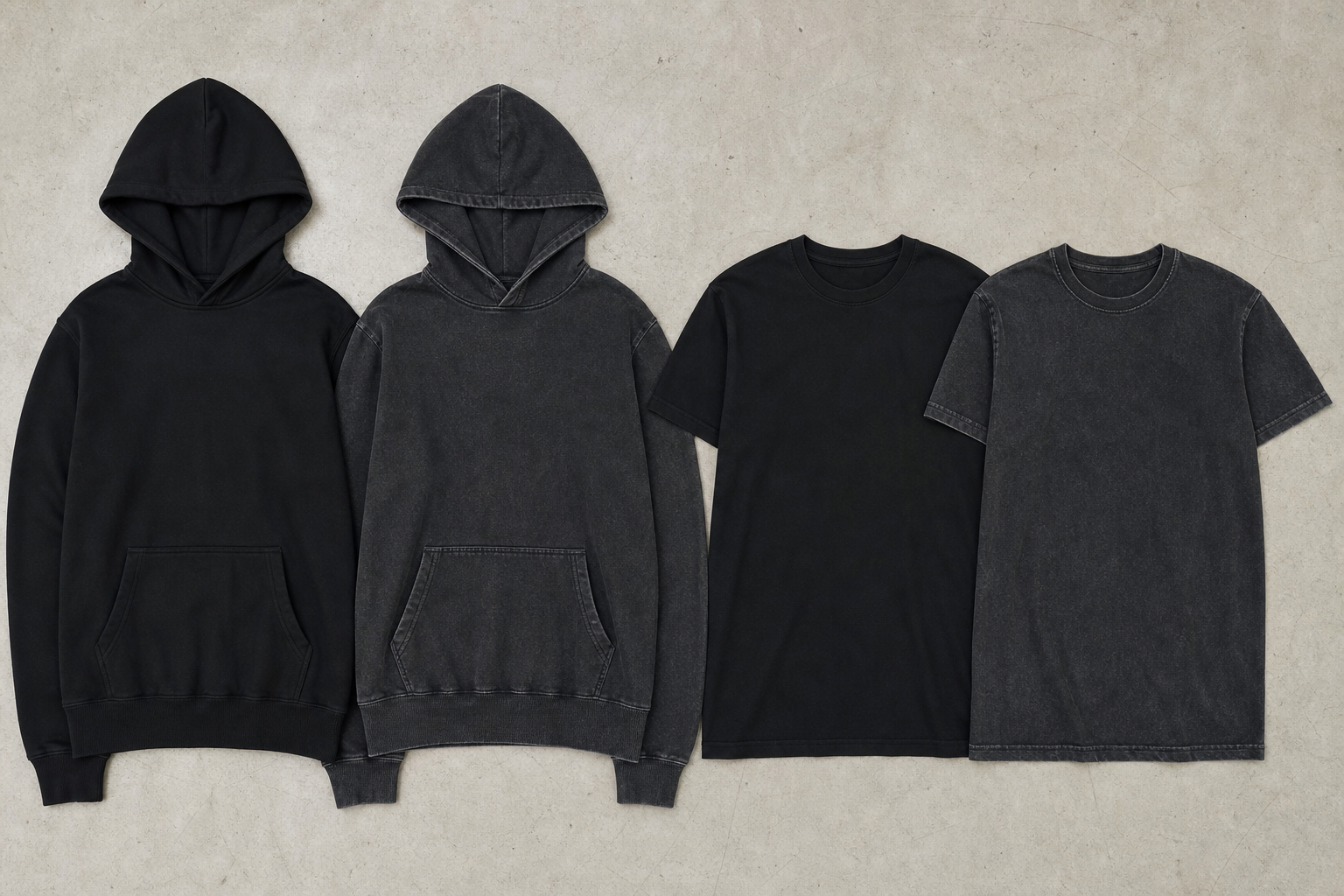
Yes.
This is particularly important for washed T-shirts, hoodies, and streetwear products.
A garment may be dyed first and then undergo enzyme washing, stone washing, acid washing, or another finishing process.
The washing process can change the depth and appearance of the color.
For example, a black fabric may look deep black before washing but become a softer, faded black after washing.
That change may be part of the design.
For this type of product, approving only the fabric before washing is not enough. The buyer should also review the finished garment or development sample.
If the brand has a specific vintage or washed effect in mind, the sample should be treated as the visual reference for bulk production.
Black Is Not Always Just Black
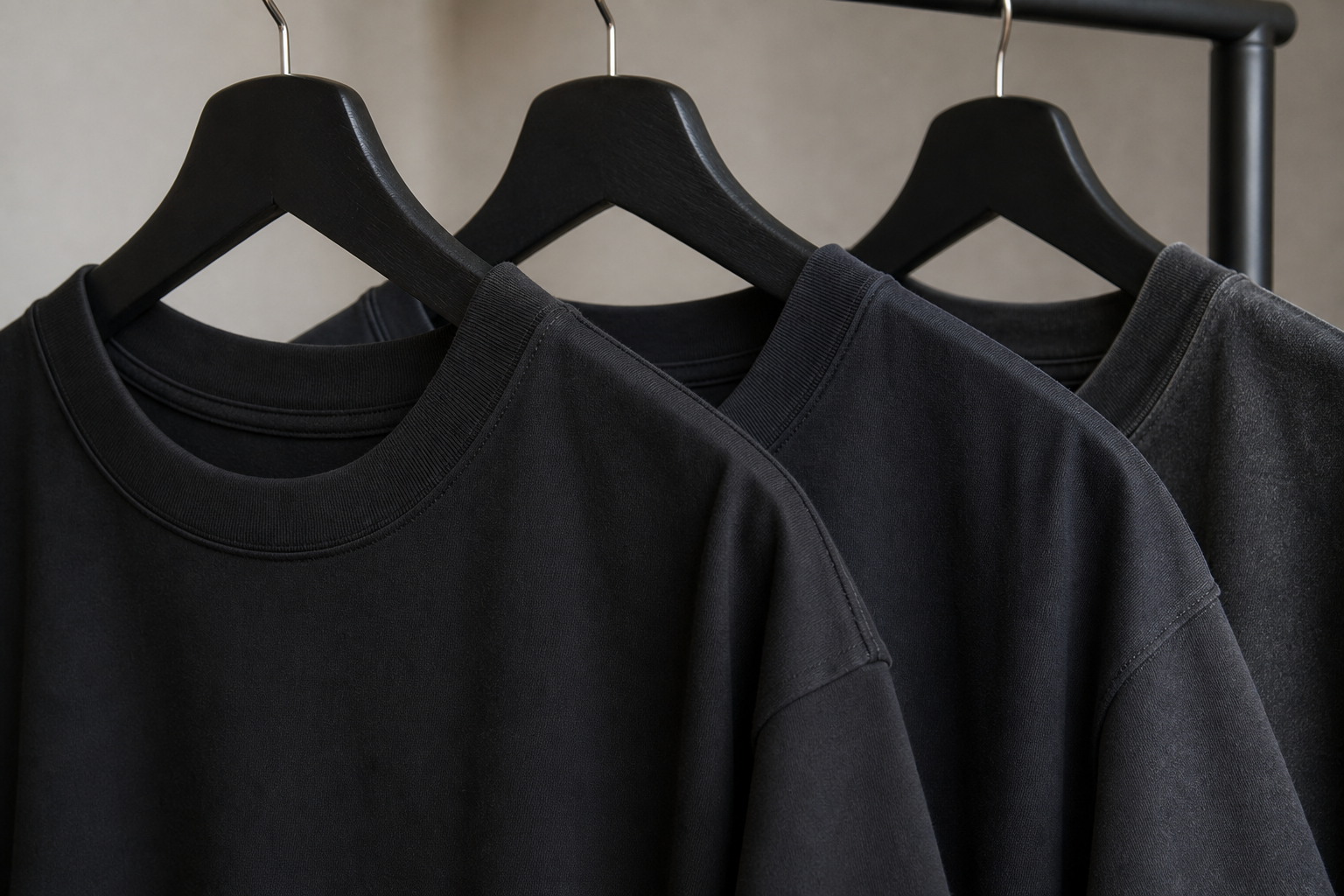
Black garments are often assumed to be easy to match.
In practice, black can be quite sensitive.
One black may have a blue undertone. Another can look slightly warmer. A washed black can have a grey or faded appearance.
These differences may not be obvious from a digital image.
They become much easier to see when two garments are placed side by side.
If a brand uses black repeatedly across different collections, it is worth keeping an approved physical standard.
This becomes even more important when the garments are produced at different times or by different mills.
What About Pantone Colors for Screen Printing?
Pantone can also be used as a reference for printing, but the fabric underneath the print matters.
The same ink can look different on a white cotton T-shirt and a black hoodie.
Printing on dark garments may require a base layer, which can affect the final color.
The buyer should therefore approve the actual print on the intended fabric whenever color accuracy is important.
For larger graphics, we also recommend checking the print position and size against the approved artwork.
If the garment will be washed, the print should be checked after washing as well.
A print can look correct when new but change after repeated washing if the process has not been properly controlled.
How Do We Control Color During Bulk Production?
At the factory level, color control should start before bulk fabric is produced.
The Pantone reference gives the mill the target.
The Lab Dip shows what that target looks like on the actual fabric.
After approval, bulk dyeing can begin.
When the fabric arrives, different lots can be checked against the approved reference. If there is a noticeable difference, the factory should identify the fabric before it reaches the cutting stage.
During cutting, different shade lots should be managed separately where necessary.
The same principle applies to finished garments.
If a production order contains several color lots, the QC team should know about them before the final inspection.
This gives the factory a chance to identify a problem before the shipment leaves.
How Should Buyers Check Color During QC?
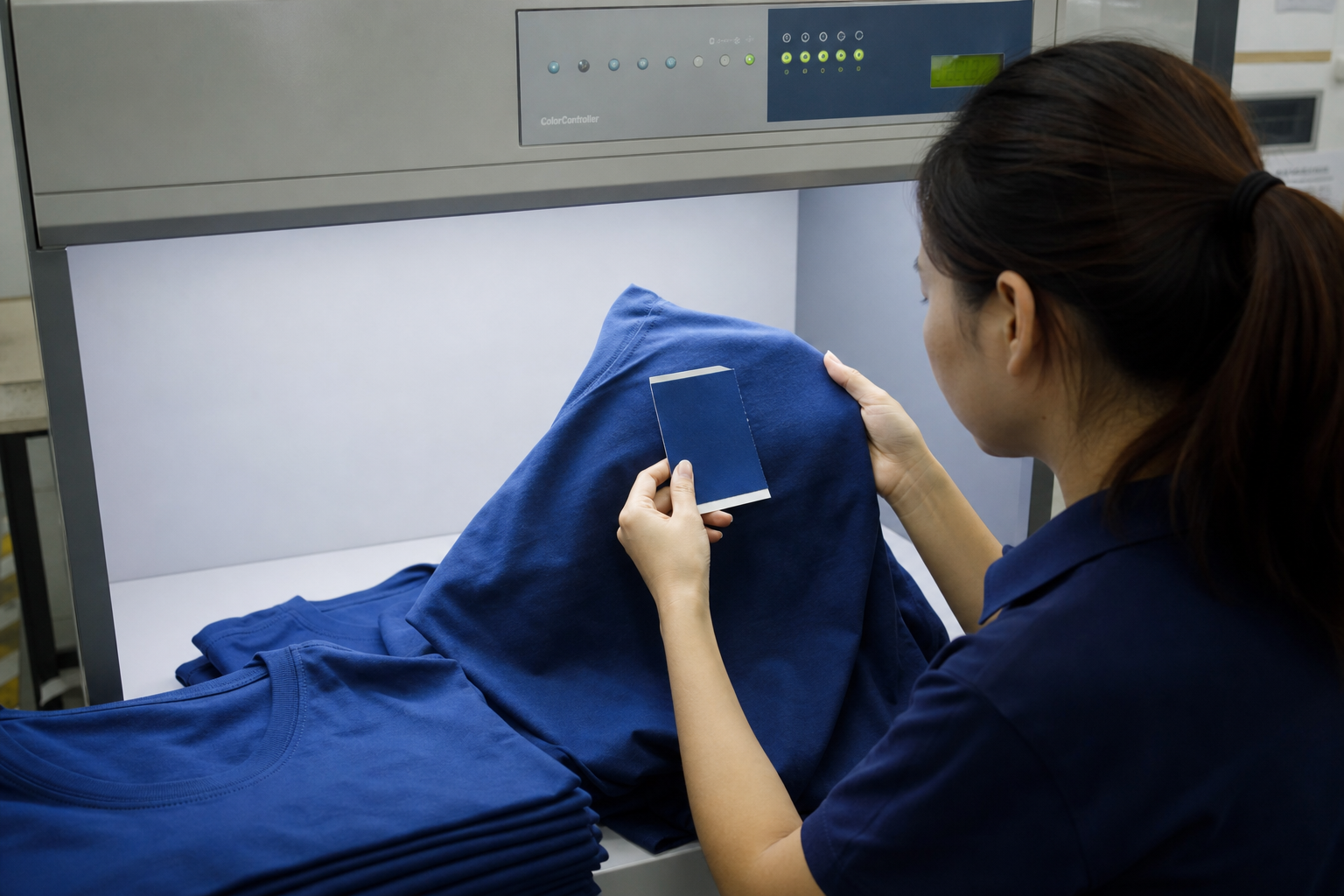
The lighting condition matters.
A garment can look slightly different under a factory’s fluorescent lights compared with daylight.
For important color approvals, a controlled lighting environment is preferable.
The inspector should compare bulk production with the approved physical standard rather than relying on a digital photo.
It is also useful to compare garments from different parts of the production lot.
For example, if the order contains 5,000 T-shirts, checking one garment from one carton does not tell you much about color consistency across the whole shipment.
Sampling should cover different production batches where possible.
The goal is not to demand that every piece has zero visual variation. The goal is to make sure the variation is within the agreed standard.
Common Color Control Mistakes
Only Sending a Pantone Number
A Pantone reference gives the factory a target, but it does not show how the color will look on the final fabric.
Skipping the Lab Dip
For custom colors, skipping color approval can create a problem that is expensive to fix later.
Approving the Color Too Late
Bulk fabric should not be produced before the buyer has approved the color standard.
Mixing Different Dye Lots
Different lots should be identified and controlled during cutting.
Checking Color Only on a Screen
Photos and computer screens are not reliable color standards.
Ignoring the Washing Process
A washed garment can look noticeably different from the fabric before washing.
Using Only Descriptive Color Names
Terms such as “cream,” “olive,” or “dark green” leave too much room for interpretation.
A Pantone reference plus an approved physical sample gives the production team much clearer instructions.
Garment Color Approval Checklist
Before bulk production, I recommend checking:
- Pantone reference confirmed
- Fabric specification confirmed
- GSM confirmed
- Lab Dip approved
- Physical color standard retained
- Bulk dyeing approved
- Dye lots identified
- Shade variation requirements confirmed
- Washing effect checked where applicable
- Print color approved separately
- Final color inspection method agreed
The purpose of this checklist is not to add unnecessary paperwork.
It is simply to make sure the buyer and factory are looking at the same color.
How We Handle Color Matching at Vison Clothing
When a buyer sends us a new garment color, we first look at the fabric that will be used.
A Pantone reference gives us the target, but the fabric determines how that color will actually appear.
For custom colors, we can arrange Lab Dip development before bulk fabric production.
Once the buyer approves the color, the approved sample is kept as the reference for production.
For washed garments, we also need to consider what happens after washing. This is particularly important for heavyweight T-shirts and hoodies, where the fabric surface and wash effect can change the appearance considerably.
We also pay attention to dye lots during production. If a large order requires more than one dyeing batch, the fabric should be checked and managed before cutting.
For an overseas buyer, this process makes communication easier. Instead of discussing whether a color is “a little darker” or “slightly warmer,” both sides can refer to the same approved sample.
FAQ
Can Pantone guarantee an exact garment color?
No. Pantone provides a standardized reference, but the final result depends on the fabric and production process. For apparel, a Lab Dip or physical fabric approval is a better production reference.
What is a Lab Dip in garment manufacturing?
A Lab Dip is a small dyed fabric sample made by the dyeing mill before bulk production. The buyer reviews it and approves the color before the mill proceeds with bulk dyeing.
Why can two dye lots have different colors?
Small changes in fabric and dyeing conditions can affect the final shade. Even when the same formula is used, two production batches may not look completely identical.
What is dye lot variation?
It is the difference in color between separate batches of dyed fabric. The difference can be very small or clearly visible, depending on the fabric and color.
Should I approve a Lab Dip before bulk production?
For custom colors, yes. It is much easier to adjust a Lab Dip than to correct a large quantity of finished fabric.
Can washing change garment color?
Yes. Washing can alter the shade and surface appearance. For washed garments, the buyer should approve the finished effect rather than relying only on an unwashed fabric sample.
How can I reduce color differences in bulk garments?
Use a clear color reference, approve the Lab Dip, control dye lots, keep shade groups separated where necessary, and check the finished garments against the approved standard.
Final Thoughts
Most color problems are easier to prevent than to fix.
The Pantone number gives the dyeing mill a target. The Lab Dip lets the buyer see that target on the actual fabric. Once bulk production begins, dye lot control becomes important.
For brands producing T-shirts, hoodies, and other apparel, I would not recommend relying on a Pantone number alone.
Approve the fabric color before bulk dyeing, keep the approved sample, and make sure the factory knows which standard to follow.
If the garment will be washed or printed, check the finished result as well. That is where many color differences become noticeable.
At Vison Clothing, we work with brands, wholesalers, and apparel buyers on OEM apparel production. If you already have a Pantone color, fabric specification, or Tech Pack, you can send the details to us before bulk production. We can review the requirements and advise on the appropriate color development and approval process.