Whether you’re building a new fashion label or expanding an established collection, fabrics and garment construction are only part of the final product. The trims and packaging you choose shape how customers experience your brand from the moment they receive the order.
A heavyweight hoodie with premium fabric can feel less valuable if it uses a low-quality woven label or generic packaging. On the other hand, thoughtful details such as a high-density woven label, custom hang tag, and retail-ready packaging can strengthen brand recognition without changing the garment itself.
At Vison Clothing, many private label projects begin with garment development, but the finishing details often determine how polished the final product looks. Labels, trims, and packaging should be planned during product development rather than added just before production.
Why Apparel Trims Matter
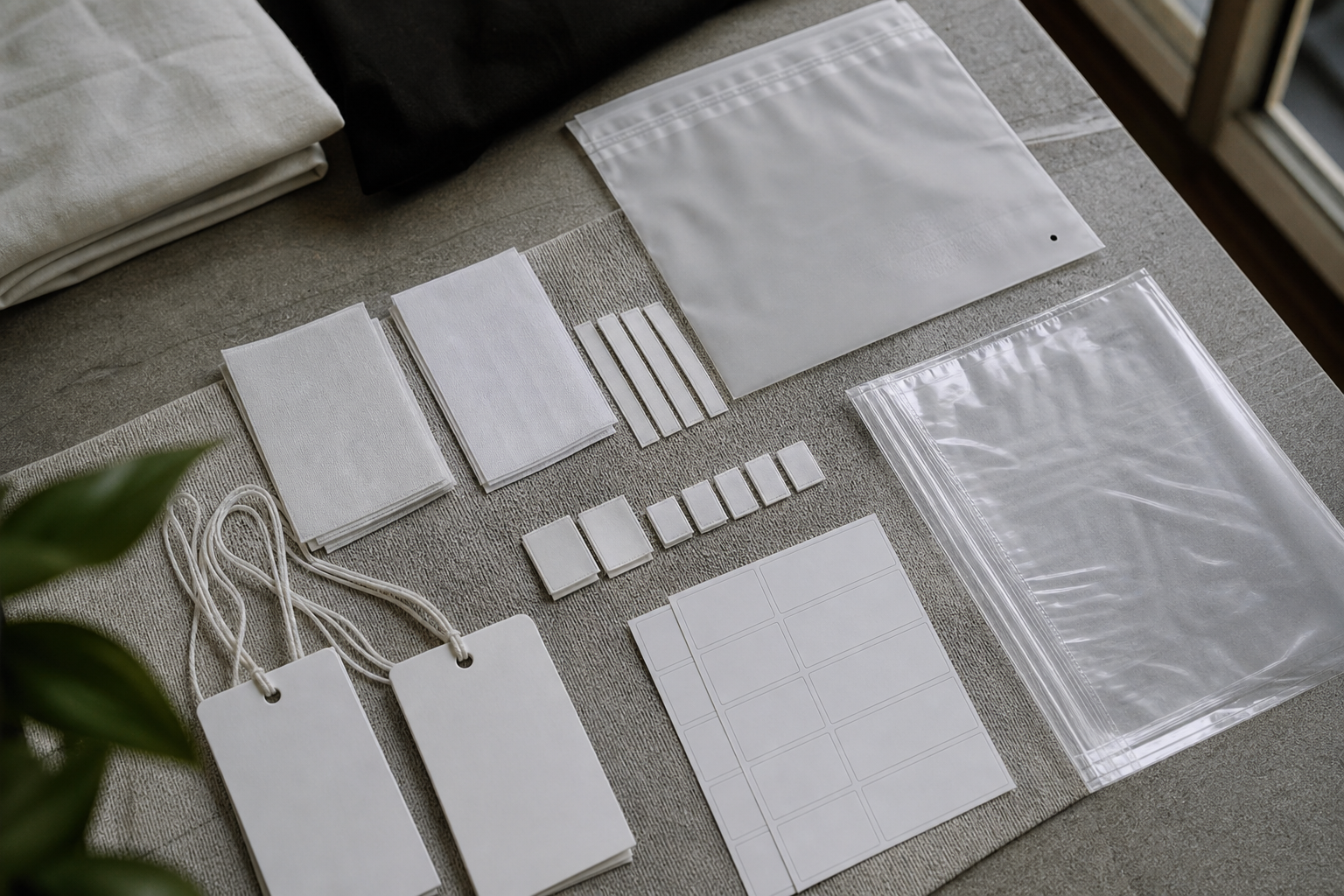
Apparel trims include every component that completes a garment beyond the main fabric.
Common trims include:
- Woven labels
- Care labels
- Size labels
- Hang tags
- Drawcords
- Eyelets
- Zippers
- Buttons
- Neck tape
- Polybags
- Cartons
Each trim serves a purpose. Some communicate your brand identity, while others provide legal information or improve product presentation.
For apparel brands selling through retail stores or e-commerce, these details also influence the customer’s first impression.
Main Labels: Your Brand’s Signature
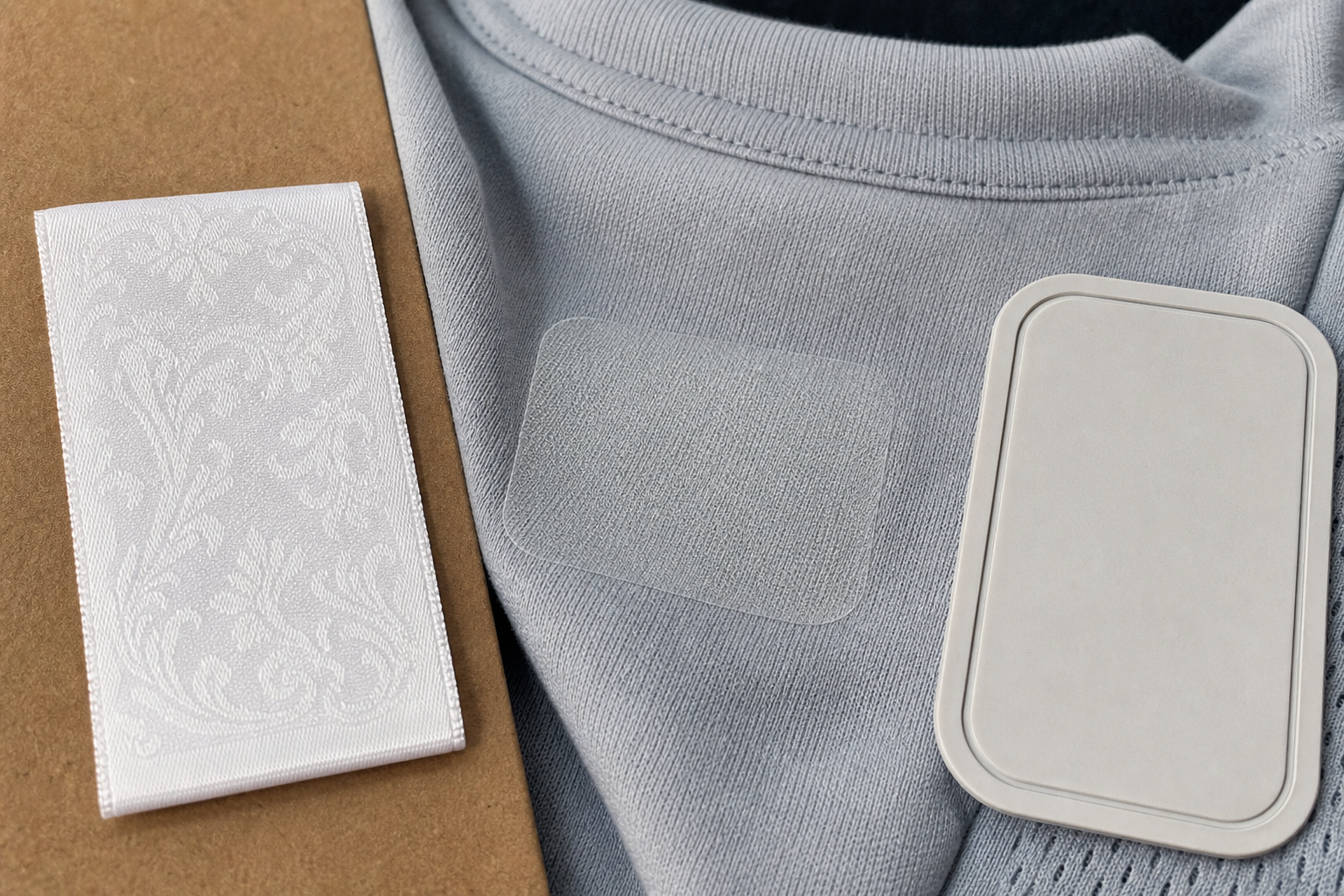
The main label is usually the first branded element customers notice after opening the package.
Its purpose goes beyond displaying a logo. It represents your brand’s identity and should match the positioning of your collection.
Woven Labels
Woven labels remain the most common choice for premium apparel.
They offer:
- Long service life
- Clear logo definition
- Professional appearance
- Excellent durability after repeated washing
Damask woven labels are widely used for premium streetwear because they produce fine details while remaining soft against the skin.
Printed Labels
Printed neck labels have become increasingly popular, especially for lightweight T-shirts and activewear.
Benefits include:
- No neck irritation
- Cleaner appearance
- Lower production cost
- Comfortable for everyday wear
Many oversized T-shirts combine a printed neck label with a woven side label to maintain branding while improving comfort.
Silicone, TPU and Leather Labels
For heavyweight hoodies and premium collections, brands often add silicone badges, TPU patches, or PU leather labels.
These materials create stronger visual contrast and are commonly used on limited collections or higher-priced products.
The label material should complement the garment rather than compete with it.
Care Labels: Small Details That Matter
Care labels are often overlooked during product development, but they contain information required by retailers and consumers.
Depending on the market, a care label may include:
- Fiber composition
- Washing symbols
- Country of origin
- Manufacturer information
- RN or registration numbers where applicable
- Size information
- Production batch details
Incorrect care labels can lead to relabeling before shipment, creating unnecessary delays and additional costs.
When exporting to Europe or North America, always confirm local labeling requirements before production begins.
Size Labels
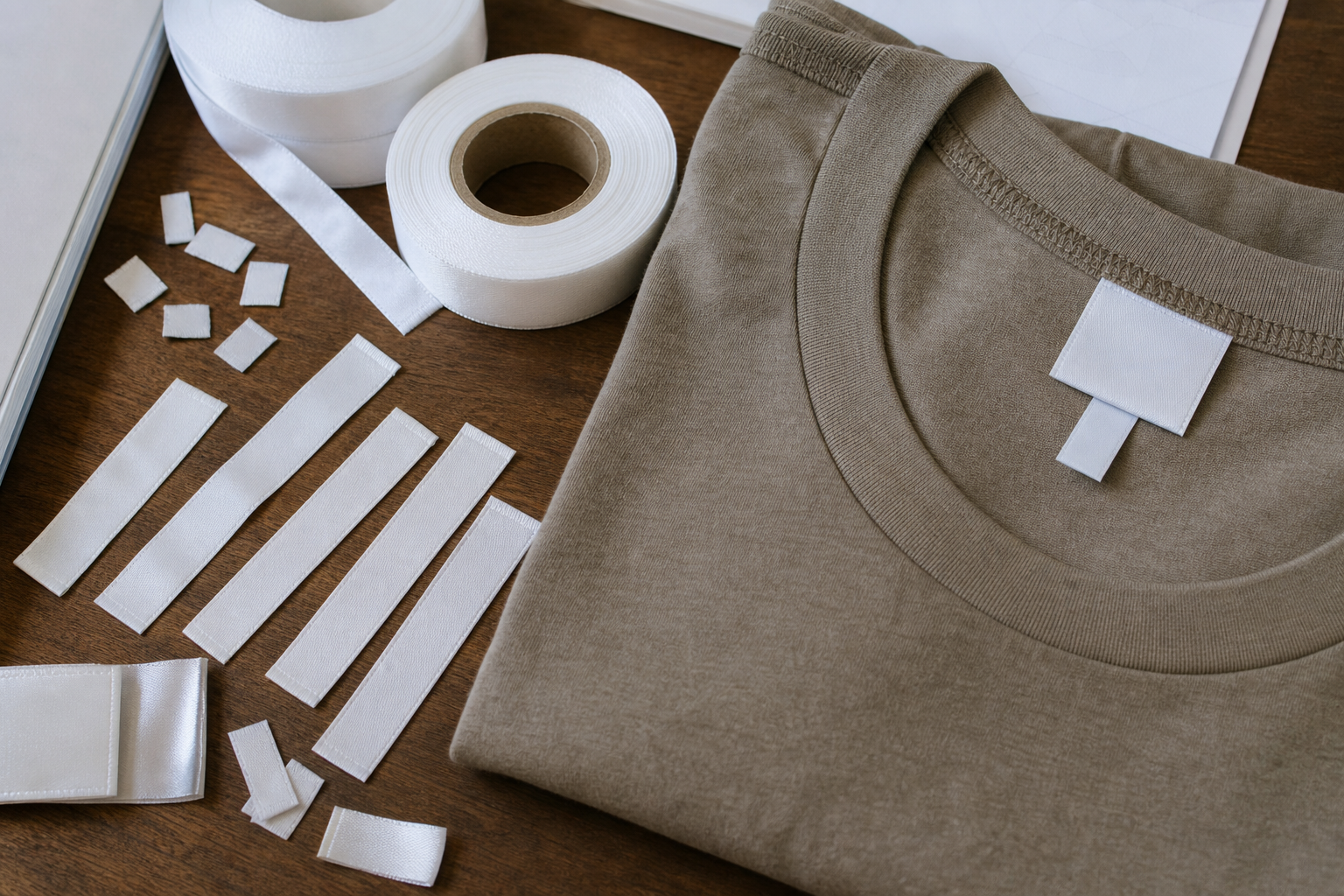
Size labels make inventory management easier for retailers and improve the shopping experience for customers.
The most common options include:
Woven Size Labels
Suitable for premium garments and long-term durability.
Printed Size Labels
Often combined with heat-transfer neck printing.
They create a cleaner neckline and reduce irritation.
Combination Labels
Many fashion brands use a printed neck logo with a separate woven size tab sewn into the side seam or neckline.
This approach balances comfort with brand consistency.
Hang Tags: More Than a Price Tag
A hang tag often introduces your brand before customers even try on the garment.
It can communicate your design philosophy, sustainability message, material information, or collection story.
Paper selection influences how premium the product feels.
Popular options include:
- 300 GSM coated paper
- 350 GSM matte paper
- Black core paper
- Kraft paper
- Recycled paper
- Cotton paper
Additional finishing techniques include:
- Spot UV
- Foil stamping
- Embossing
- Debossing
- Soft-touch lamination
Luxury brands generally prefer thicker paper stocks with subtle finishes, while minimalist brands often choose recycled paper with clean typography.
The design should reflect your overall brand identity rather than simply display a logo.
Packaging Shapes the Customer Experience
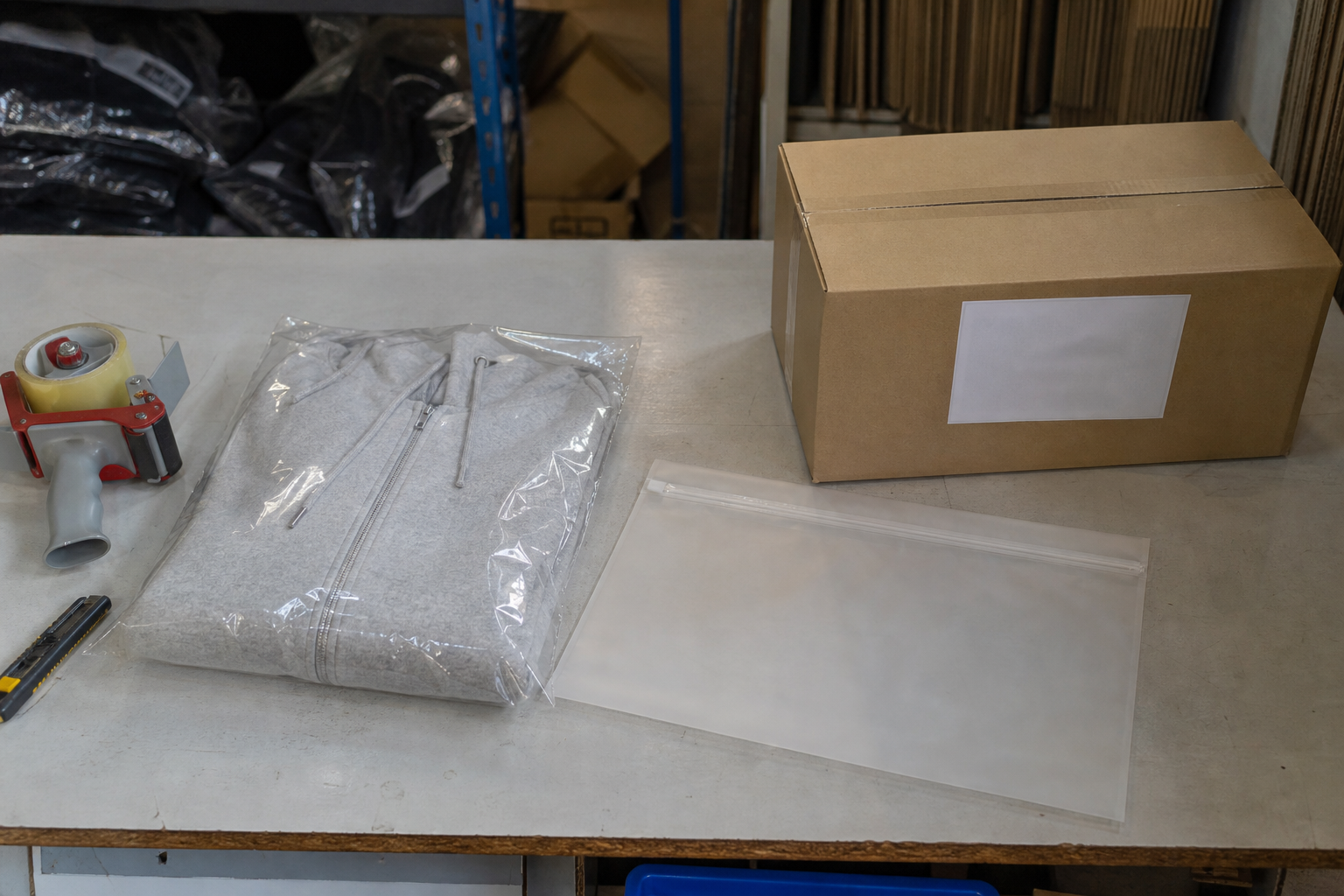
Packaging is the final stage of manufacturing but the first physical interaction customers have with your brand.
For e-commerce businesses, packaging also influences unboxing content shared on social media.
Common packaging options include:
Standard Polybags
Suitable for wholesale orders and cost-efficient production.
Frosted Zip Bags
Frequently used by premium streetwear brands.
They offer better presentation and can be reused by customers.
Recycled Packaging
Many European brands now request recycled or biodegradable packaging to support sustainability goals.
Carton Labels
Outer cartons should include:
- Style number
- Color
- Size range
- Quantity
- Shipping marks
- Barcode labels if required
Well-organized packaging helps distributors receive and manage inventory more efficiently.
Other Trims That Influence Product Quality
While labels and packaging receive the most attention, several smaller trims also affect the finished garment.
These include:
- Drawcords
- Silicone cord ends
- Eyelets
- Snap buttons
- Metal zippers
- Elastic tape
- Neck tape
- Shoulder reinforcement tape
For heavyweight hoodies, metal accessories should be tested for color consistency and durability before bulk production.
Using high-quality trims across the collection creates a more consistent product experience.
Matching Trims to Different Brand Positions
Different brands require different trim combinations.
Premium Streetwear
- Damask woven label
- Frosted zip bag
- Thick matte hang tag
- Silicone logo patch
- Custom barcode sticker
Sustainable Fashion
- Organic cotton label
- Recycled paper hang tag
- Compostable packaging
- Soy-based printing
Essentials Collection
- Printed neck label
- Minimal woven size tab
- Standard recyclable polybag
The goal is consistency.
Customers should recognize the same brand identity across every garment in the collection.
Common Trim and Packaging Mistakes
Even experienced brands occasionally overlook small details during development.
Some of the most common issues include:
- Main labels that don’t match approved artwork
- Missing size labels
- Incorrect fiber composition on care labels
- Missing washing symbols
- Hang tags printed on paper that’s too thin
- Packaging without branding
- Wrong Pantone color for labels
- Incorrect polybag dimensions
- Missing barcode stickers
- No approval sample for trims before production
Reviewing these items before bulk production helps avoid unnecessary corrections later.
Developing Private Label Apparel
Building a successful private label collection involves more than selecting fabrics and garment styles.
Brand identity is created through every detail, including labels, trims, packaging, printing, and finishing.
If you’re planning a custom apparel collection and need support with branded labels, packaging, or product development, learn more about our Private Label Apparel Services
Working with an experienced private label clothing manufacturer allows brands to coordinate garment production and branded accessories through a single supplier, making development more efficient and maintaining consistency across the collection.

FAQ
What is the difference between a woven label and a printed label?
Woven labels offer greater durability and a premium appearance. Printed labels provide a softer feel and are commonly used for T-shirts and activewear.
What information should appear on a care label?
Care labels typically include fiber composition, washing instructions, country of origin, and other information required by the destination market.
Can manufacturers produce custom hang tags?
Yes. Most OEM apparel manufacturers can develop custom hang tags based on your artwork, preferred paper, printing method, and finishing options.
What packaging is best for streetwear brands?
Many premium streetwear brands choose frosted zip bags, heavyweight hang tags, custom stickers, and branded cartons to create a stronger customer experience.
Should labels and packaging be approved before bulk production?
Yes. Approval samples help confirm colors, materials, logo placement, and finishing before mass production begins.
Final Thoughts
Labels, trims, and packaging may seem like small components, but together they shape how customers perceive your brand. Consistent branding, accurate labeling, and well-planned packaging support a smoother production process and create a more professional finished product.
For brands developing custom apparel, planning these details early makes sampling more efficient and helps ensure the final product reflects the quality and identity of the collection.